







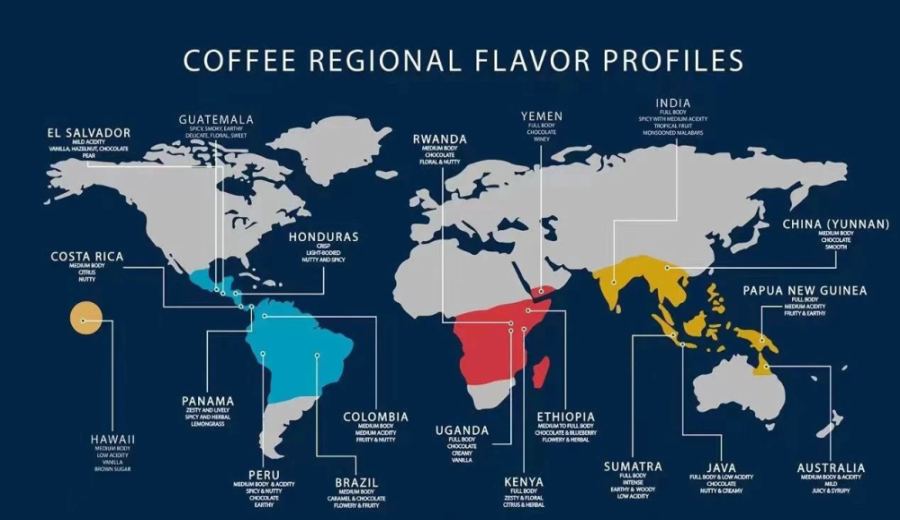
Introduction:Want to gain a deeper understanding of the unique flavor profiles of four major coffee-producing countries in the Americas — Brazil, Colombia, Costa Rica, and Panama? This article will take you on an exploration of the geographical conditions, mainstream processing methods, typical cupping characteristics of these regions, and also offer practical pour over brewing parameter suggestions to help you choose the right coffee beans based on your personal taste preferences.
As the core region of the global coffee industry, the Americas is home to many countries with distinctly flavored coffees. Among them, Brazil, Colombia, Costa Rica, and Panama are particularly beloved by coffee enthusiasts worldwide for their premium offerings. In addition to their naturally favorable conditions, these countries each excel in coffee-growing altitudes, varietal selection, and post-harvest processing techniques, resulting in diverse flavor expressions ranging from rich and balanced to bright and crisp.
Distribution of the Coffee Belt and Regional Conditions
The regions suitable for growing coffee are primarily concentrated in the tropical and subtropical zones near the equator, commonly referred to as the "Coffee Belt." Ideally, coffee trees grow at latitudes between 15°N and 25°S, where the average annual temperature remains between 16–25°C, annual rainfall is about 1600–2000 mm, and frost damage must be avoided. Altitude is a key factor influencing flavor complexity.Coffee grown at high altitudes above 1500 meters often exhibits more pronounced acidity and complex aromatic profiles.。
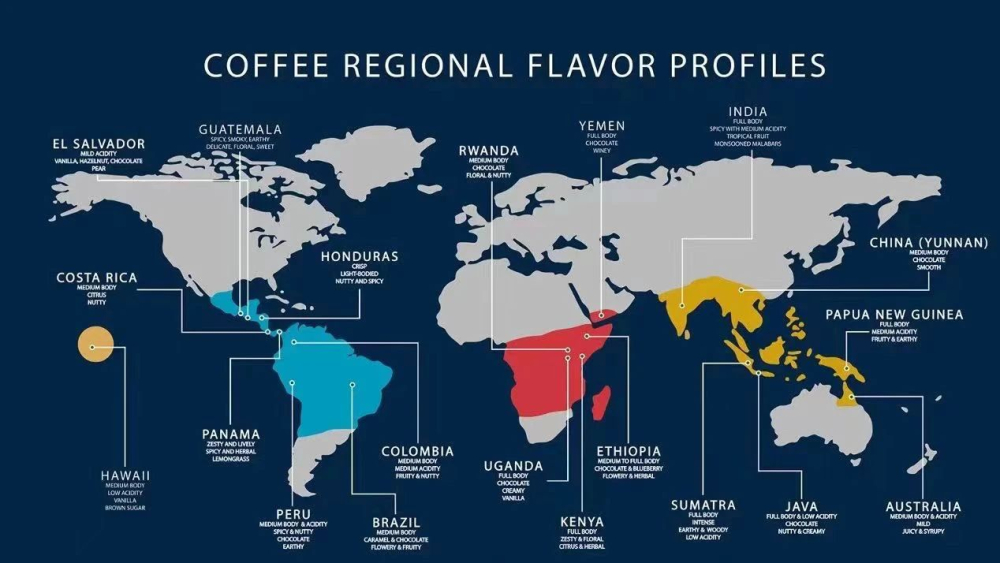
More than seventy countries around the world produce coffee, with Central and South America accounting for about 60% of global production, making it the largest supply source. Africa and the Arabian region contribute around 20%, while the rest is spread across Asia and Pacific islands. Among these, Brazil is the world’s largest coffee producer, contributing 30–50% of global output on its own; Colombia consistently ranks among the top five producers, making up approximately 10–20%. In recent years, Vietnam and Indonesia have also seen significant growth in production.
Central and South America: Balanced Sweetness and Refined Processing
Coffee from Central and South America is known for its balanced flavors, moderate acidity, and layered complexity. Most coffees here are processed using washed or semi-washed methods, yielding full-bodied beans with low defect rates that are suitable for various brewing methods, especially favored by pour over enthusiasts. The history of coffee cultivation in Latin America began in 1721 when French officers introduced coffee seedlings from Africa, which led to the establishment of the “Bourbon” variety—a highly influential branch of Arabica that took root in the region.
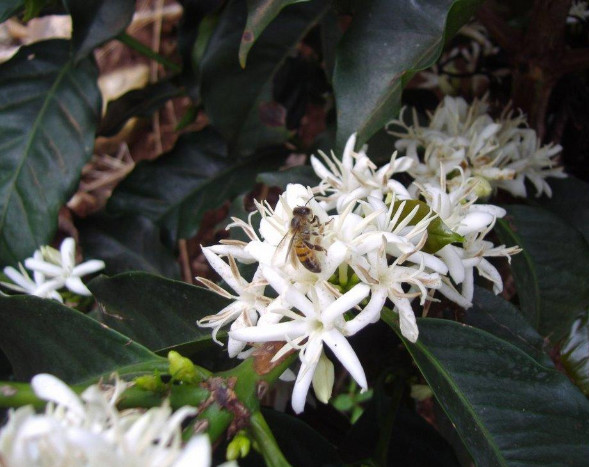
Colombia: Washed Caturra from the Huila Region
Colombia boasts a mountainous terrain that provides ideal coffee-growing conditions, with altitudes typically ranging between 800 and 1900 meters. Among these, the Huila region stands out as a key source of specialty coffee. Local coffees are usually hand-picked and processed using the washed method to preserve bright acidity and a clear flavor profile. Classic cupping notes often include dark chocolate, roasted hazelnuts, and soft cream aromas. A medium to dark roast is recommended, making it suitable for drinkers who prefer smooth and mellow flavors. For pour over, we suggest using water at 92–94°C, a 1:15 coffee-to-water ratio, and medium-coarse grind to highlight its sweetness and nutty character.
Panama: The Aromatic Artistry of the Geisha Variety
Panama gained international fame thanks to the Geisha (or Gesha) variety from Hacienda La Esmeralda, showcasing exceptional aromatic intensity and intricate flavor details. Typical characteristics include delicate citrus acidity, jasmine and white floral notes, paired with caramel and green tea-like aftertastes. Geisha performs best with light to medium roasts to preserve its vibrant acidity and unique terroir expression. For pour over, we recommend a water temperature of around 90–92°C, a fine grind, and the use of pulse pouring to enhance its aromatic layers.
Costa Rica: Bright Citrus Acidity from Tarrazú
High-altitude coffees from Costa Rica are renowned for their bright and lively acidity, with the Tarrazú region being a prime example. Coffee grown here at higher elevations benefits from volcanic soil rich in nutrients, producing beans that often feature citrus fruit acidity, syrupy sweetness, and pronounced caramel notes. A medium-light roast is recommended to preserve the vibrant fruitiness and refined mouthfeel. For pour over, use water at 90–93°C, a medium-fine grind, and maintain a steady pour rate to balance acidity and sweetness.
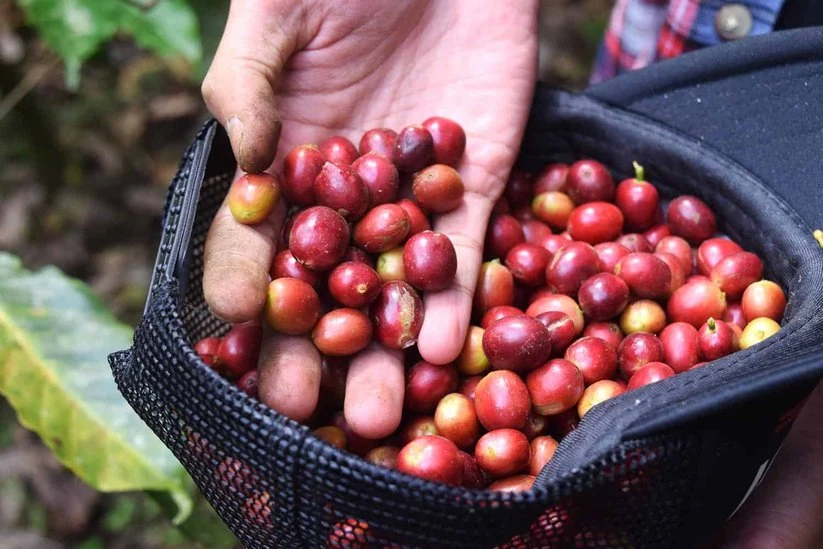
Brazil: Nutty and Creamy Notes from Cerrado
Brazil is not only the world’s largest coffee producer but also excels in crafting specialty-grade beans. Take the Cerrado region, for example, where semi-washed (pulped natural) processing methods yield low-acid, richly flavored coffees with notes of nuts, cream, and chocolate. These coffees offer a smooth mouthfeel and a warm, lingering finish. Brazilian coffee is well-suited for medium to dark roasts and is often used as a base bean in espresso blends. For pour over, we recommend a water temperature of 88–91°C, a medium-coarse grind, and you may try using a French press or AeroPress to bring out its full-bodied texture.
Whether you prefer bold, rounded profiles or bright, acidic cups, these four major coffee-producing regions in the Americas offer a wide range of choices. Understanding their regional characteristics, processing methods, and recommended brewing parameters will help you select beans that align with your taste preferences, allowing you to enjoy a unique coffee journey with every cup.
The above content is compiled by CoffeeHunters, a coffee news website.


