








Introduction:Honey processing and natural (sun-dried) processing are two common specialty coffee bean processing methods, which exhibit significant differences in flavor profiles and each have their own loyal following. This article will delve into the origins and steps of honey processing, compare the differences between yellow honey, red honey, and black honey, and contrast them with the traditional natural processing method. Through practical roasting and pour over parameters, it will guide you in mastering the key characteristics and purchasing recommendations for these two processing methods.
The expression of coffee flavors is greatly influenced by origin, variety, and processing method. Among the various processing techniques, honey processing has gradually gained market attention in recent years due to its unique sweetness and complex aromas. Although both honey processing and natural processing require sun drying, they differ significantly in processing details and final flavor outcomes. This article will take you from the origins of honey processing, step by step through its operational procedures, the grading differences of yellow honey / red honey / black honey, and provide a full comparison with traditional natural processing. Finally, supplemented with actual roasting and pour over parameters, it will give you a more comprehensive understanding of these two popular processing methods.

Honey processing (also known as Honey Process or Miel Process) originated in Costa Rica. Most coffee farms in the region are located on steep mountain slopes with difficult transportation. Traditional washed processing required transporting coffee cherries down to factories in the valley, which often led to losses during transit, affecting yield and income. In addition, due to the treacherous mountain roads, few external green bean buyers came by, and those who did often offered low prices, leaving farmers with limited sales channels and bargaining power. To address these issues, local farmers developed the honey processing method themselves, enabling on-site processing and self-marketing. This not only increased their income but also gradually developed unique flavor characteristics. Today, this technique has become one of the mainstream processing methods in several Central American regions, with Costa Rica even developing advanced techniques such as raisin honey processing and anaerobic honey processing, as seen in the Bach and Mozart coffee beans from the Musician Series.
Although the English term "honey process" includes the word "Honey," no actual honey is added during the process. The name comes from the sticky, honey-like texture that the mucilage leaves on the surface of the coffee beans as moisture evaporates during drying. The steps of the honey processing method are roughly as follows: First, the harvested coffee cherries are placed in water to remove floaters and defective beans, ensuring that only ripe, high-quality fruits remain. Next, these fruits are placed on raised drying beds for initial sun drying for about three days, with the goal of reducing the overall moisture content to around 20%. Then, specialized machinery is used to remove the skin and pulp, but the sugary mucilage layer is retained—this is a key reason why honey processed coffee is so sweet. Finally, the mucilage-covered coffee beans continue to dry until the overall moisture content drops to around 11%, at which point they can be stored.
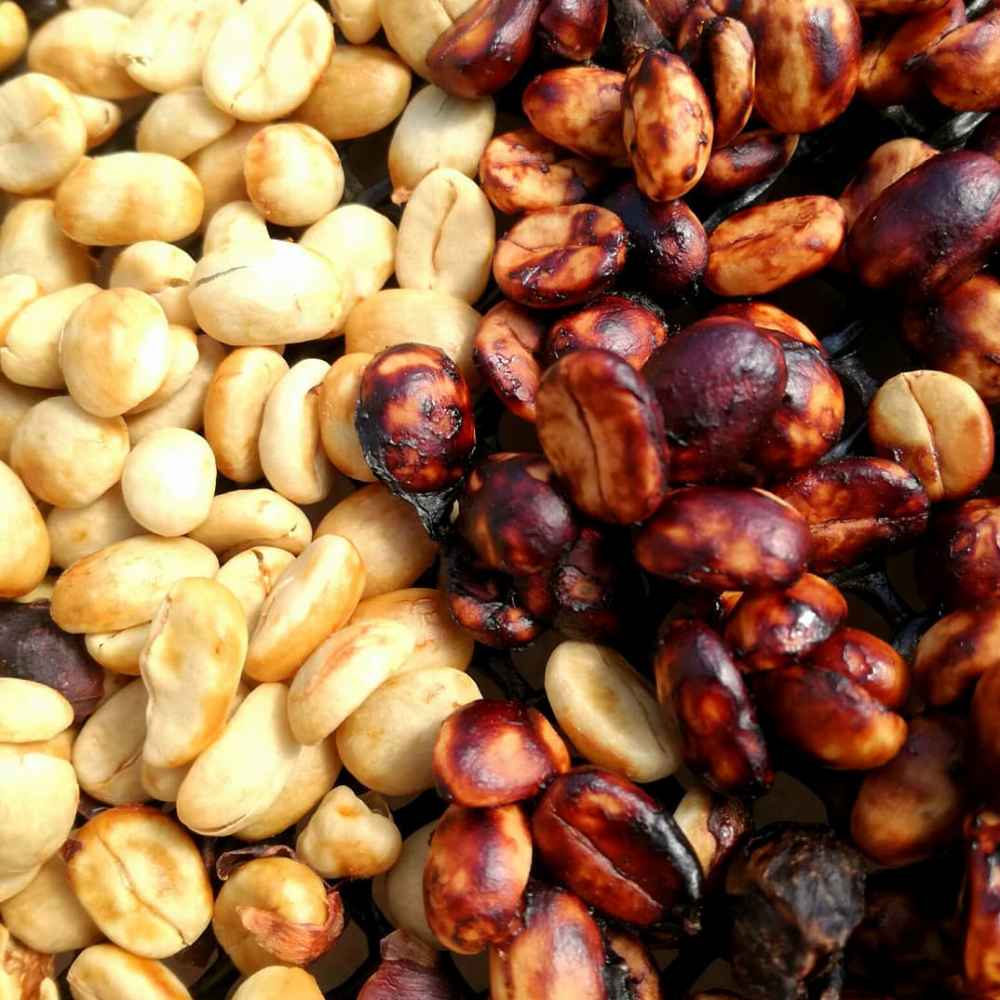
Honey processing is generally divided into three types based on the amount of mucilage retained: yellow honey, red honey, and black honey. Yellow honey processing removes about 40% of the mucilage and the beans are dried under the most sunlight, for about 8 days, requiring hourly turning to ensure even drying. Red honey retains about 75% of the mucilage (i.e., 25% is removed), with the drying period extended to around 12 days, sometimes using shading and turning the beans every few hours. Black honey, on the other hand, retains almost all of the mucilage, with a retention rate close to 100%, resulting in the longest drying time, typically exceeding 14 days, and requiring covering to avoid excessive direct sunlight and prevent rapid sugar conversion. Overall, from yellow honey to black honey, the drying conditions become increasingly stringent and management more difficult, with black honey generally considered to deliver the richest and fullest flavor profile.
The advantage of honey processing lies in combining characteristics of both washed and natural processing. Since the pulp is removed early on, it greatly reduces the risk of mold and does not require large amounts of water, making the overall processing cost relatively manageable. However, the steps of honey processing are intricate and labor-intensive, especially when mucilage is retained, requiring frequent turning and strict control of the drying environment, making it a relatively high-cost processing method.
In terms of flavor, honey processing can impart a distinct sweetness to coffee, with relatively soft acidity, delicate and layered aromas. However, if the processing is not well controlled, it may produce unpleasant off-flavors similar to vinegar, onion, or garlic, or even an earthy taste, with a less clean aftertaste. Compared to standard washed processing, the flavor risks of honey processing are indeed slightly higher, but when done well, the results can be remarkable. In addition, depending on the level of mucilage retention, yellow honey, red honey, and black honey each exhibit different flavor tendencies, with black honey usually offering the strongest sweetness and richest mouthfeel, while yellow honey and red honey strike a balance between commercial appeal and flavor complexity, providing diverse options.
Compared to honey processing, natural (sun-dried) processing is the most traditional and oldest coffee processing method. Its basic procedure includes: first manually sorting the harvested coffee cherries to remove overripe, underripe, insect-damaged, or foreign matter-containing fruits; then placing the qualified fruits on drying fields to undergo prolonged sun drying, typically for 3 to 4 weeks, until the moisture content is reduced to 11%. After drying, the beans are sent to a processing facility for hulling and de-pulping, sometimes including a polishing step. Finally, they are sorted and screened again to ensure green bean quality and properly stored.
The advantages of natural processing are its simple procedure and lower cost, and under the right conditions, it can showcase rich fermented aromas and layered complexity, particularly with outstanding sweetness. However, its disadvantages are also evident: the drying process is highly dependent on weather, and if the drying area is not clean, it can easily lead to contamination or mold. Moreover, drying the beans with pulp and skin, if not properly managed, carries higher risks of over-fermentation or mold. Nowadays, many specialty coffee farmers have adopted more precise monitoring methods, using instruments and manual observation to closely track fermentation and drying progress, effectively reducing defect rates and improving the overall quality of natural beans. Such premium natural beans are gradually gaining market recognition.
Naturally processed coffee beans typically exhibit intense flavor profiles with rich layers, often carrying wine-like notes, fermented aromas, and pronounced sweetness, with relatively low acidity. The overall mouthfeel is thicker and more complex. Compared to honey processing, natural processing generally has lower acidity but slightly less clarity, with flavor tones leaning more toward berries, delivering a richer and more complex experience.
In summary, although both honey processing and natural processing involve sun drying, they differ significantly in processing procedures, flavor characteristics, and market positioning. Honey processing combines elements of both washed and natural processing, achieving greater sweetness and body by retaining mucilage, making it ideal for coffee lovers who enjoy intense fruitiness and sugary profiles. Natural processing, on the other hand, showcases traditional techniques with rich fermented flavors, low acidity but complex layers, and is favored by consumers seeking original flavors and complex textures. If you wish to explore the actual performance of both methods, try tasting Costa Rican coffee beans roasted and brewed using different processing methods to experience their flavor differences and unique charm.


The above content is compiled by CoffeeHunters, a coffee news website.


