







Introduction:Delve into the two renowned Mandheling-producing regions of Sumatra—Lake Toba and Lake Tawar—and explore their unique flavor profiles, historical backgrounds, and the mysteries of the wet-hulling processing method. This article will help you understand the differences between the “Two Lakes, Two Mandhelings” and provide practical pour-over brewing tips and roasted bean selection advice to help you more accurately appreciate the charm of this classic Indonesian coffee.
When it comes to classic Indonesian coffees from Sumatra, the “Two Lakes, Two Mandhelings” is an indispensable topic. This term refers to Mandheling coffee produced in the two major lake regions of Sumatra—Lake Toba and Lake Tawar. Although both regions are located in Sumatra, differences in geography and microclimate give rise to distinctly different coffee beans. Mandheling from the Lake Toba region typically exhibits deep, full-bodied tones, sometimes accompanied by unique herbal or medicinal aromas reminiscent of grass jelly; in contrast, Mandheling from Lake Tawar is known for its brighter fruit acidity and refreshing cedar or woody notes, offering coffee enthusiasts a completely different taste experience.
As Indonesia’s largest island, Sumatra lies on the equator and boasts fertile volcanic soil and a diverse climate, making it an ideal location for coffee cultivation. The high-altitude mountainous areas here are often shrouded in clouds and mist year-round, with significant day-night temperature variations, ample rainfall, and nutrient-rich volcanic ash soil, all of which contribute to a robust foundational flavor profile in the coffee beans. Indonesia’s history of coffee cultivation dates back to the late 17th century, when Dutch colonists introduced coffee from Java, initially focusing primarily on the Typica variety. However, the devastating leaf rust epidemic of 1869 nearly destroyed the local Typica plantations, prompting farmers to switch to more disease-resistant varieties such as hybrid strains like Tim Tim and Catimor, many of which eventually became the foundation of today’s Mandheling coffees.
Speaking of Mandheling, one cannot overlook its most iconic processing method—the wet-hulling process (Giling Basah). Indonesia’s climate is humid and rainy, with average annual humidity often reaching 70% to 90% and frequent rainfall, making traditional sun-drying or washed processing methods difficult to carry out smoothly. Wet-hulling is a semi-washed processing method that falls between washed and natural processes: after the coffee cherries are depulped, they undergo brief fermentation and partial mucilage removal through washing, followed by initial drying to reduce the moisture content of the beans to around 30% to 40%. At this stage, farmers sell the parchment beans to processing mills, where further hulling takes place. This hulling process, conducted under higher friction, often results in greenish-gray raw beans and easily forms the characteristic “elephant ear” defects. Due to the beans being exposed to high humidity and friction throughout the process, Mandheling develops unique herbal, spicy, and woody aromas, which become key identifiers of its flavor profile.
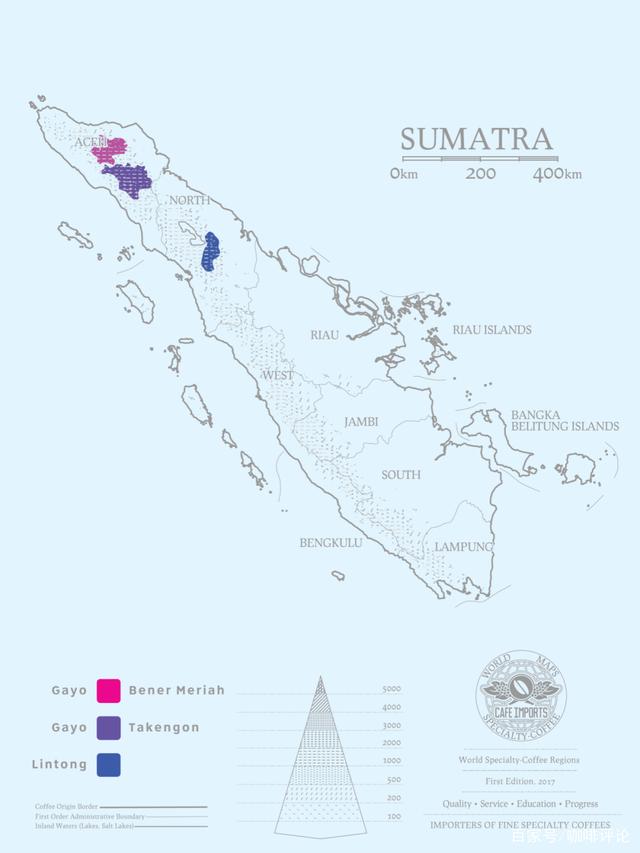
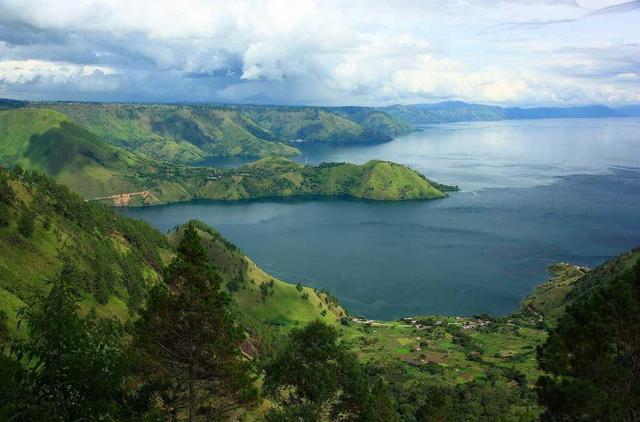
Among the many producing regions in Sumatra, Lake Toba and Lake Tawar are the two most representative Mandheling origins. Lake Toba, the world’s largest volcanic lake, is located in northern Sumatra at an altitude of about 1,400 meters, with a tropical rainforest climate that is humid and rainy. Coffee plantations here are mostly distributed on highland slopes, where sunlight filters naturally through the vegetation without the need for additional shading. In contrast, Lake Tawar, located in Aceh Province near the Gayo Mountains, sits at an elevation of 1,200 to 1,800 meters. The region enjoys a cool climate with significant day-night temperature differences, and its volcanic soil is rich in minerals. Coupled with widespread organic farming practices, this environment contributes to the layered and refreshing flavor profile of Lake Tawar Mandheling. The area is predominantly cultivated by the Gayo ethnic group, and their coffee often features bright fruit acidity along with delicate floral and woody notes.
When it comes to high-quality Sumatran Mandheling, one must mention the Golden Mandheling produced by PWN (Pawani Coffee Company). PWN is a long-established Indonesian coffee exporter that has been dedicated to exporting premium coffee to markets such as Japan since 1957. The company carefully selects top-grade coffee beans from Sumatra’s finest producing regions and employs multiple rounds of hand-picking to ensure quality, resulting in an extremely low defect rate. It is understood that PWN’s Golden Mandheling selection criteria include: bean size of 18–19 mesh or above, fewer than 3 defective beans in a 300-gram sample, a grade of G1, and a dark green color with uniform size. These stringent selection standards have earned PWN Golden Mandheling an outstanding reputation in the market.
For coffee enthusiasts who enjoy pour-over brewing, the bold richness and spicy notes of Mandheling, when paired with the correct extraction method, can reveal even more layers of complexity. It is recommended to choose freshly roasted coffee beans (with the optimal tasting period being within 4–7 days post-roast) and use a Kono filter dripper for pour-over. The design of the Kono dripper reduces airflow, extending the water absorption time of the coffee grounds and facilitating even extraction, thereby highlighting the full-bodied mouthfeel. Recommended brewing parameters are: water temperature of 87–88°C, 15 grams of coffee grounds, a 1:15 coffee-to-water ratio, and a medium grind size (approximately 70% through a #20 sieve). During brewing, a three-stage pouring method can be employed: the first stage involves a 30-milliliter bloom pour to initiate degassing of the coffee grounds; the second stage adds 100 milliliters to bring out rich crema and aroma; the final stage slowly pours 95 milliliters in the center. The entire process requires careful control of the water flow to avoid over-extraction, which can lead to bitterness.
The final brewed Mandheling coffee typically presents aromas of dark chocolate, nuts, and caramel, accompanied by herbal, pine, and spicy notes. Its texture is full-bodied and solid, with a long-lasting finish that carries a subtle fruit acidity. Whether you are new to Sumatran coffee or already familiar with Mandheling, the “Two Lakes, Two Mandhelings” offer a chance to discover unique surprises and depth of flavor.
The above content is compiled by CoffeeHunters, a coffee news website.


