








Introduction:Water temperature is one of the key factors that influence the flavor expression of pour over coffee. Even just a few degrees difference can lead to vastly different taste profiles from the same coffee beans. This article presents an actual test of Panama Geisha Huadie (Butterfly) coffee beans brewed at 90°C and 93°C, analyzing in detail—from extraction concentration values, aroma layers, sweetness, and off-flavors—the real impact of water temperature differences, and offering practical brewing temperature suggestions for medium-light roasted beans.
During the pour over brewing process, water temperature plays an extremely critical role. It not only affects the extraction efficiency of the coffee but also directly determines the final flavor experienced when drinking. Higher temperatures tend to extract more intense and vivid flavors, including bright acidity and rich sweetness, while lower temperatures may result in under-extraction, making the coffee taste weak and lacking in complexity. In this test, we used Panama Geisha Huadie coffee beans as the sample, brewing them at both 90°C and 93°C. Through scientific data and sensory evaluation, we delve into the specific effects of temperature on flavor and extraction yield.

Many pour over enthusiasts have had this experience: using the same beans and the same grind size, just a change in water temperature can lead to dramatically different coffee outcomes. The common understanding is that higher temperatures help bring out richer and more complex flavors, while lower temperatures tend to produce softer and lighter tastes. But where exactly do these differences manifest? Is a 3°C gap enough to cause a noticeable sensory difference? We take you through this exploration with real test data and actual tasting experiences.
For this experiment, we selected Panama Geisha Huadie coffee beans sourced from Panama. These beans consist of 70% Geisha variety, naturally exhibiting intense tropical fruit notes and floral characteristics, making them highly suitable for observing the impact of water temperature on flavor. The experimental setup used two typical values within the commonly recommended water temperature range—90°C and 93°C—for pour over brewing, followed by concentration testing and sensory evaluation of the brewed coffee.
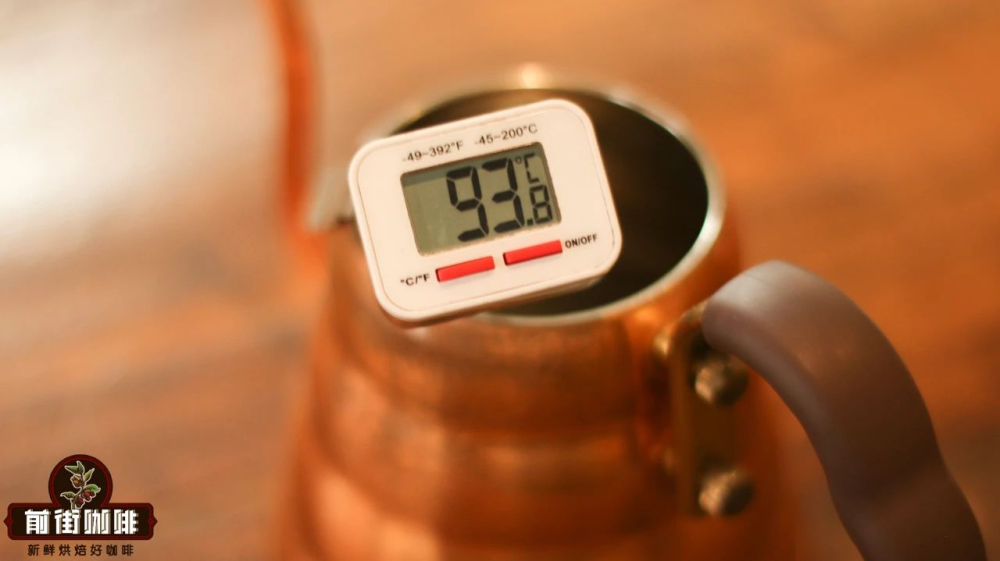
According to the test results, coffee brewed at90°Chad a concentration of1.32%, while switching to93°Craised the concentration to1.40%. This mere 3°C difference increased the extraction yield by approximately1.2%, showing a clear gap in the data. Although concentration isn’t the sole determinant of flavor, it directly reflects the amount of extracted substances, thereby influencing the overall richness of the mouthfeel.
Looking further at the performance of the 93°C group, in terms of aroma profile, this cup of coffee exhibited a clearer and more varied aromatic spectrum than the 90°C brew, with distinct fruity notes and delicate ginger flower nuances, giving it a more three-dimensional smell. Upon tasting, the sweetness was more pronounced. Although still grounded in citrus-like acidity, it carried a hint of warming sweetness reminiscent of crystallized ginger, with clear layers and a longer aftertaste. Overall, the 93°C-brewed coffee clearly outperformed the 90°C group in terms of flavor expression, sweetness delivery, and aroma complexity.
However, 93°C is not without its drawbacks. When the coffee slightly cooled, some tasters could detect a faint almond-nutty note accompanied by slight astringency, which is usually related to the over-extraction of certain compounds at higher temperatures. Therefore, even though higher temperatures can bring out more nuanced flavors, they still need to be carefully controlled to avoid the risk of over-extraction.

Based on the combined results of our tests and everyday brewing experience, we recommend setting the water temperature at around91°Cwhen brewing most medium-light roasted coffee beans. This is a relatively balanced and stable choice, helping to avoid the under-extraction caused by too low a temperature, as well as the over-extraction or astringency issues that might arise from too high a temperature. Of course, for specific regional or processing method beans—such as Ethiopia’s Uraga or Kenyan beans—which are naturally rich in flavor, bright in acidity, and layered in complexity, appropriately increasing the temperature to 93°C or even higher can help fully unlock their potential, resulting in a more outstanding overall performance.
In summary, although water temperature is just one parameter in pour over brewing, its impact is profound. Through the comparative test of 90°C and 93°C, we can not only clearly see the differences in the data, but also feel obvious changes in aroma, sweetness, layering, and off-flavors during actual tasting. Whether you’re a beginner just starting with pour over or an experienced coffee enthusiast, understanding the relationship between water temperature and flavor is a crucial step toward improving your brewing skills.
The above content is compiled by CoffeeHunters, a coffee news website.


