







Introduction:Mandheling coffee from Sumatra, Indonesia, is renowned for its unique wet-hulling processing method, often exhibiting rich spice and herbal notes, making it an ideal choice for many pour over beginners. However, the "Golden Mandheling," which commands a noticeably higher price in the market, actually hides behind it stringent selection criteria and brand certification. This article delves into the differences between the two by exploring factors such as the growing environment, bean variety characteristics, and processing variations, while also providing practical pour over recommendations and parameter settings to help readers find their most suitable Mandheling coffee experience.
With the growing trend of at-home pour over brewing, many coffee enthusiasts have started trying to brew their own coffee at home. But simply relying on online recipes isn’t enough to brew a balanced and full-bodied cup—one needs long-term practice and a deep understanding of the beans’ characteristics. Indonesian Mandheling coffee from Sumatra, with its distinctive wet-hulling process and strong regional flavor profile, has become a recommended choice for many entering the world of pour over. Among them, "Golden Mandheling" stands out the most, but its price is often significantly higher than that of regular Mandheling, which is closely related to its meticulous selection process and brand certification.
The Regional Background and Flavor Foundation of Mandheling
Mandheling coffee is primarily grown on the island of Sumatra in Indonesia. Not only is Sumatra the largest island in the country, it also features a typical tropical rainforest climate—hot, humid, and abundant in rainfall—which is very conducive to coffee tree growth. However, overall, Indonesia has limited altitude conditions, and regions capable of producing high-quality Arabica coffee are relatively scarce. Only about 25% of all coffee grown in Indonesia is Arabica, with the rest being mostly Robusta, which thrives at lower altitudes. Sumatra, however, is one of the highest-altitude regions in Indonesia, offering an ideal environment for Arabica cultivation.

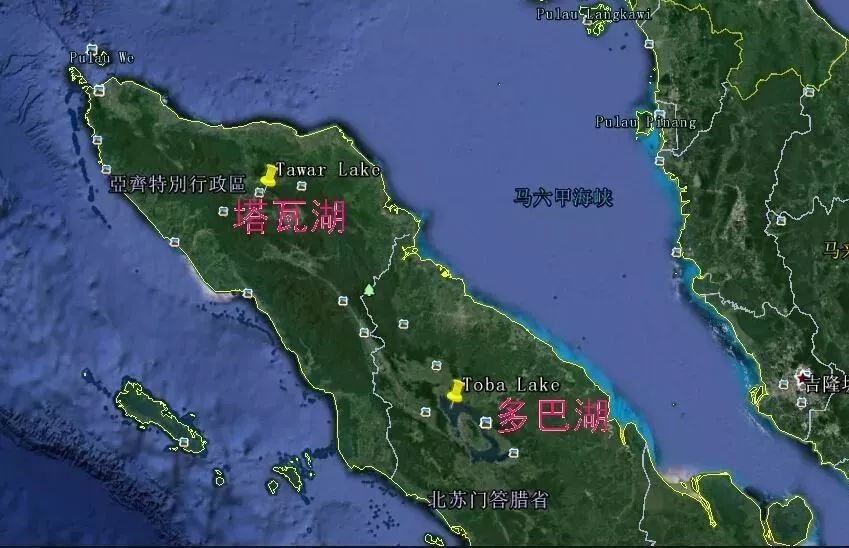
Coffee production in Sumatra is spread across a wide area. In North Sumatra, the Gayo Mountains are the main growing region, while around Lake Tawar, the Ateng variety—considered a type of Aceh coffee—is commonly planted. In contrast, coffee produced in Lintong (South Sumatra) and around Lake Toba is considered the core production area of "Mandheling." Lintong Mandheling, in particular, is well-known, referring to high-quality coffee sourced from a small area southwest of Tobahu in the Lintong administrative region. There are several notable micro-regions here, such as Sidikalang, Bergendar, Siborong-borong, and Telok Sanggul, all of which are important sources of Mandheling coffee.
Wet-Hulling: The Key to Shaping Mandheling’s Flavor
When talking about Mandheling, one cannot overlook its most iconic processing method: wet-hulling. This technique is not a compromise due to technological limitations, but rather a unique method developed in response to Indonesia’s rainy climate and lack of stable sunlight. Wet-hulling involves removing the outer pulp and parchment layers while the coffee beans are still in a semi-dry state. This process can lead to the formation of hoof-shaped cracks on the beans. Although these visual characteristics are often mistaken for defects, they are actually a typical hallmark of Mandheling.
The wet-hulling process mainly consists of two stages: first, the skin and flesh are removed, followed by about three hours of fermentation and initial drying to reduce the moisture content to 30–50%; then the mucilage and parchment layers are removed, and drying continues until the moisture content reaches 12–13%. The entire process typically takes 2–4 days. This method gives Mandheling its bold earthy, spicy, and herbal notes, and is also the key factor that distinguishes it from coffees of other regions.
Golden Mandheling: The Value of Selection and Branding
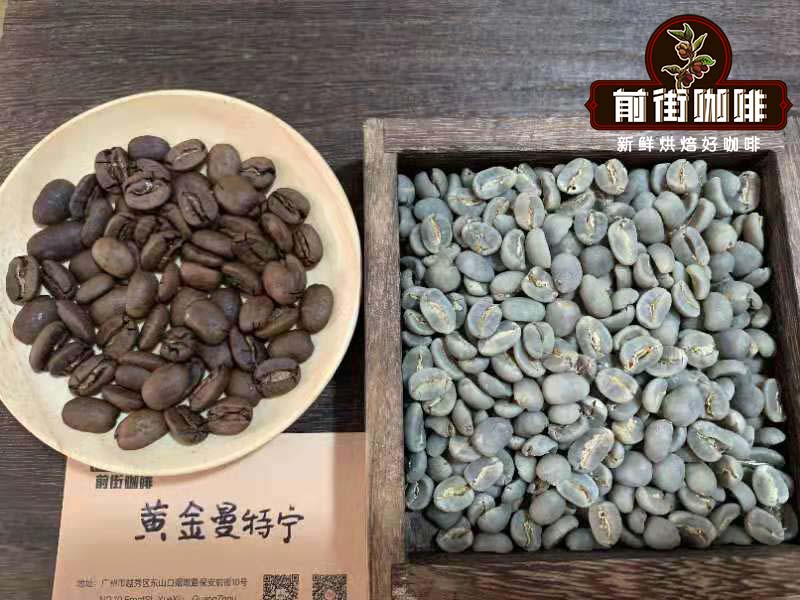
The commonly seen "Golden Mandheling" on the market is actually launched by Pwani Coffee Company (PWN), a well-known Indonesian company. PWN has long been purchasing high-quality Mandheling green beans from various production areas in Sumatra and subjecting them to multiple rounds of manual sorting, selecting only plump, defect-free beans. Only after passing through these layers of rigorous screening are the coffee beans classified as "Golden Mandheling." Precisely because of this strict selection process, its price is naturally higher than that of regular Mandheling. For example, a common 227g pack is priced at around 89 RMB, placing it in the mid-to-high price range.
More importantly, PWN has registered "Golden Mandheling" as a trademark, meaning that only beans produced by PWN that meet the standards can be legitimately called "Golden Mandheling." While there are many products on the market that claim to be "Golden Mandheling," unless they come from PWN, they can at best be considered "premium Mandheling." Consumers can identify genuine products through the PWN logo on the packaging and origin certification. Authentic products are usually packed in sacks marked with the PWN name and accompanied by officially signed certification documents.
Pour Over Parameters and Brewing Recommendations
For readers who want to try pouring Golden Mandheling at home, here is a set of parameters that have been proven effective: it is recommended to use a KONO filter cone, with water temperature controlled at around 88°C, a coffee dosage of approximately 15 grams, and a coffee-to-water ratio of 1:15. The grind size can be around a 70% pass rate through a Chinese standard No. 20 sieve, which falls within the medium-coarse grind range.
Since Golden Mandheling is usually medium to dark roasted, its flavor compounds are released more quickly. It is recommended to use a filter cone with good immersion capabilities to maintain a rich mouthfeel. During brewing, start by pouring 30 grams of water for a 30-second bloom to help release carbon dioxide, aiding in stable flavor extraction afterward. Then pour water in a circular motion from the center outward up to 125 grams, and once the water level drops, continue pouring up to 225 grams. The total brewing time is recommended to be around 2 minutes. Additionally, it’s advisable to let the coffee beans rest for 4 to 7 days before brewing to allow the flavors to mellow.
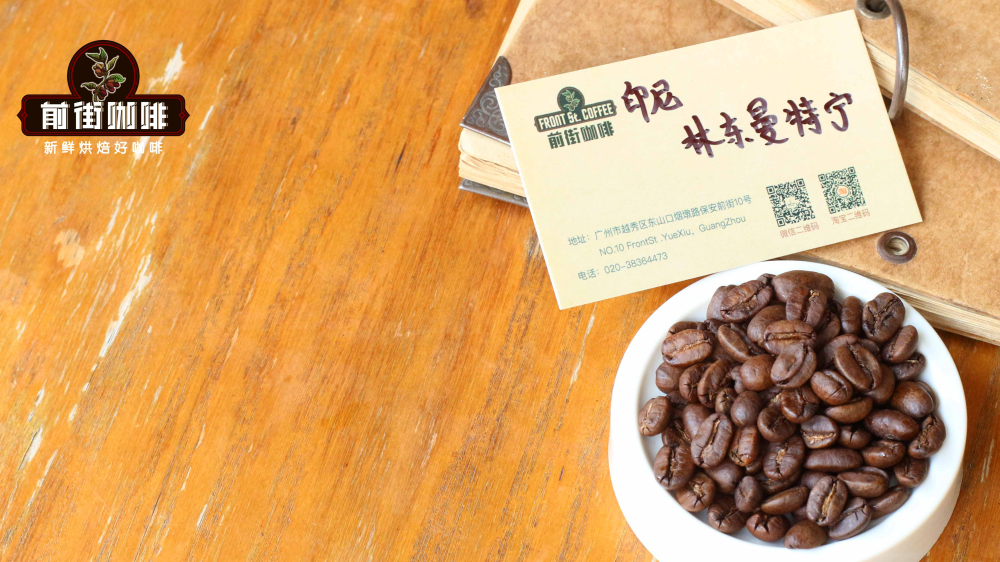
The brewed Golden Mandheling typically presents a complex flavor profile of sweet herbs, cinnamon spices, and citrus peel aromas. It has a rich and full-bodied mouthfeel, with a distinct caramel sweetness. As it cools slightly, you may even detect a melon-like finish. It is a layered and nuanced coffee, perfect for savoring slowly.
The above content is compiled by CoffeeHunters, a coffee news website.


