







Introduction:Have you ever wondered if coffee beans that blend different varieties from the same origin can still be considered single-origin? This article takes the Costa Rica Miramar and Panama Geisha & Catuai blend (aka Flower Butterfly) as examples to explore the origins of single-origin blends, differences in processing methods, and actual flavor profiles. We also provide V60 pour over parameters and techniques to help you better understand the unique charm of these types of coffee beans.
When it comes to blended coffee, most people first think of cross-origin blends aimed at achieving consistent and stable espresso flavors. However, blends come in many forms, and “single-origin blends” are a common yet often overlooked category. A single-origin blend refers to combining coffee beans of different varieties from the same origin—or even the same farm—rather than using a single variety. This blending method retains regional characteristics while leveraging the complementary traits of different varieties to deliver a richer, more layered cup. This article will use the Costa Rica Miramar Estate and Panama Boquete Geisha & Catuai blend as examples to guide you through the historical background, processing differences, and actual flavor expressions of such blends.
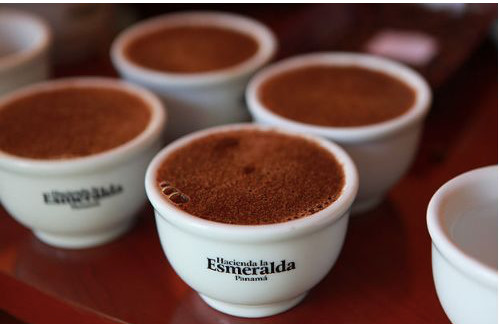
The history of the Geisha variety can be traced back to 1931, when it was first discovered in the Gesha Forest of Ethiopia. It later traveled through Kenya, Uganda, and Tanzania, eventually arriving in Costa Rica in 1953. Interestingly, the now highly acclaimed Panamanian Geisha actually originates from Costa Rica. In 1963, Don Pachi Serracin introduced the Geisha variety from Costa Rica to Panama, but due to initially low yields, it was not widely planted. It wasn’t until Hacienda La Esmeralda discovered that high-altitude Geisha exhibited unique citrus and floral characteristics, and won accolades in a 2004 coffee competition, that Geisha rose to stardom in the specialty coffee world.
Take Panama Flower Butterfly as an example. This blend was originally named “Cupid” and claimed to contain 30% Geisha. Over time, the proportion was adjusted to 50% and eventually 70%, leading to its rebranding as Flower Butterfly. However, the actual Geisha content may not be as high as labeled. Flower Butterfly is composed of three varieties: Geisha, Caturra, and Catuai, all grown on the same farm in Panama’s Boquete region, harvested and processed together. Although it features multiple varieties, it is still classified as a single-origin blend. Some consumers may wonder: can such beans still be considered single-origin coffee? The answer is yes—it may not be a single variety, but under consistent regional and processing conditions, it can still be seen as a regionally representative blend.
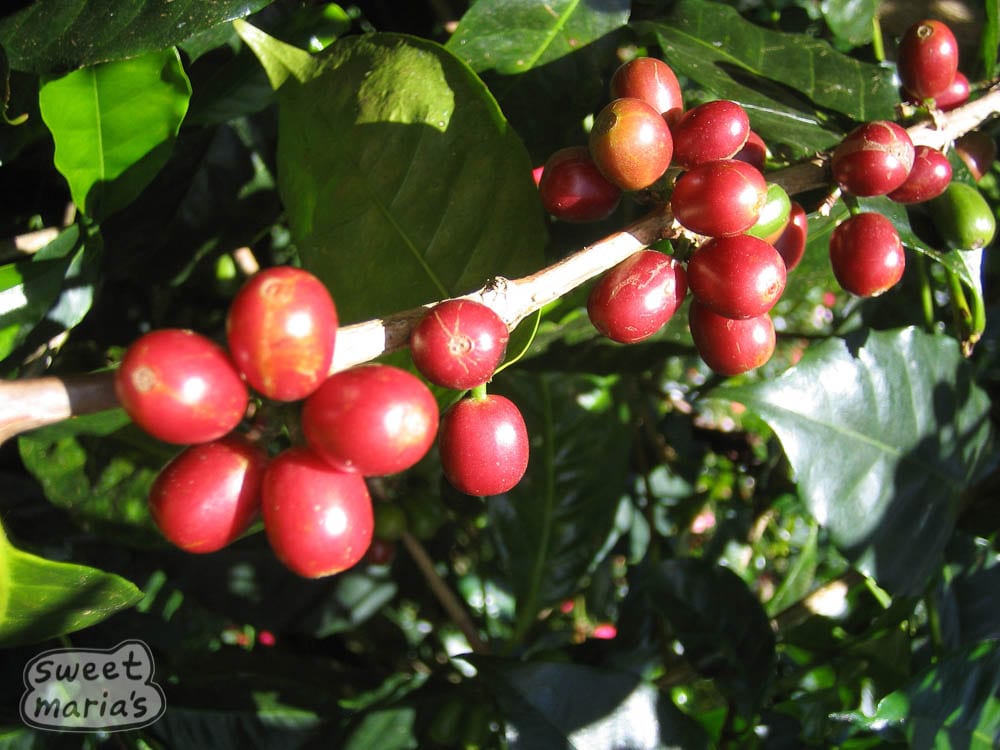
Another example is the Costa Rica Miramar Estate Geisha Blend, marketed as “Strawberry Candy Geisha Blend.” This bean is a blend of four varieties: Geisha, ET47, SL28, and MACIO, all sourced from the Miramar Estate in Costa Rica’s Tarrazú region. Notably, ET47 is an Ethiopian landrace introduced to Costa Rica by the Costa Rican Coffee Research Institute in the 1990s, primarily for research on leaf rust resistance. SL28, on the other hand, is a classic variety cultivated for high quality and disease resistance. Though low-yielding, it is renowned for its pronounced citrus and dark plum notes, along with outstanding sweetness.
In terms of processing, Panama Flower Butterfly uses traditional washed processing—removing the pulp and skin, fermenting to remove the mucilage, then washing and drying—to deliver a clean, bright acidity and distinct floral characteristics. In contrast, the Costa Rica Miramar Berry Blend employs raisin honey processing (also called zero-water process), where 100% of the mucilage is retained during drying. This method demands precise weather conditions and frequent turning, but significantly enhances sweetness and fruitiness, resulting in a richer and more full-bodied coffee flavor.
The washed processing steps are roughly as follows: first, the coffee cherry’s skin and pulp are removed, and the mucilage-covered beans are fermented in water for about 24 hours. The mucilage is then washed off with clean water, and the beans are dried until their moisture content drops to around 12%, after which the parchment is removed. For raisin honey processing, harvested berries are floated in water tanks on the same day to remove unripe or overripe beans. The selected berries are then spread on raised beds to dry for at least three days before the skins are removed and the mucilage is retained for slow drying. This entire process requires close attention to weather and turning frequency to avoid over-fermentation or uneven drying.
Finally, we conducted a V60 pour over test to share practical brewing parameters and flavor profiles. The V60 dripper, with its wide opening and spiral ribs, promotes airflow and helps improve extraction efficiency. Although its flavor layering may not be as pronounced as thicker brewers, it highlights a balanced interplay of acidity, aroma, and sweetness.
Recommended V60 pour over parameters are as follows:
- Brewing temperature: 91–92°C
- Grind size: EK43s-10 (approximately the size of fine sugar)
- Coffee-to-water ratio: 1:15
Brewing steps:
- First pour: add 30g of water, bloom for 30 seconds
- Second pour: add water up to 125g (about 95g of water), completed in about 1 minute
- When the water level drops to two-thirds of the coffee bed, pour the remaining 100g of water (total around 225g), completed in about 1 minute 40 seconds
- Total brew time: controlled between 1 minute 55 seconds and 2 minutes, finish dripping
[Flower Butterfly] Flavor profile: Dominated by floral, black tea, berry, and citrus notes, with a mild nutty aroma in the aftertaste. The overall mouthfeel is smooth, with balanced acidity, low bitterness, and a medium-length finish.
[Strawberry Candy Geisha Blend] Flavor profile: Delicate aromas of rose, grape, and dried blueberry, paired with soft fruit acidity. The almond-like aftertaste is prominent, and the sweetness is outstanding with rich layers.
The above content is compiled by CoffeeHunters, a coffee news website.


