







Introduction:Cold brew coffee excels in slow extraction at low temperatures, offering a refreshing flavor profile that balances acidity and sweetness. However, its coffee-to-water ratio is highly flexible, commonly ranging from 1:8 to 1:15. How do different ratios affect concentration, acid-sweet balance, and body? This article delves into the key parameters of cold brew—including grind size, steeping time, and water quality—while providing a side-by-side comparison of flavor profiles at ratios of 1:8, 1:10, 1:12, and 1:15. It also recommends bean varieties well-suited for cold brew, helping you find your ideal extraction method.
Through low temperatures and extended steeping, cold brew allows the aromatic and acidic compounds in coffee grounds to slowly release, creating its uniquely refreshing taste, with particularly pronounced acidity and sweetness. Compared to pour over coffee, cold brew has an extremely low barrier to entry—just coffee grounds, cold water, and a container placed in the fridge are all you need to enjoy the pleasure of home brewing.
However, many coffee enthusiasts notice that cold brew’s coffee-to-water ratio isn’t as fixed as the 1:15 commonly used in pour over. Ratios from 1:8 to 1:15 are common on the market, with 1:10 being the most prevalent. What flavor differences do these varying ratios bring, and how should you choose the one that suits you best? We’ll break it all down below.
Cold brew is an immersion-style extraction, where coffee grounds and cold water coexist over an extended period at low temperatures, resulting in a slower and gentler release of flavors. When other conditions remain constant, the lower the ratio (i.e., less water), the higher the concentration of the brew, yielding a richer flavor and thicker body—but it can also lead to over-extraction, resulting in bitterness or a salty taste. Conversely, a higher ratio (more water) means lower concentration, producing a lighter taste that may seem thin, with less distinct flavor layers.
Therefore, choosing the right coffee-to-water ratio is key to achieving a balanced flavor and ideal mouthfeel. It’s recommended to fine-tune based on personal taste preferences to find your optimal ratio.
Beyond the ratio, other cold brew parameters are equally important. Grind size should be controlled to around the coarseness of white sugar, ideally with about 80–85% of particles passing through a standard 0.85mm sieve—a setting that helps avoid over-extraction and bitterness. Steeping time is generally recommended between 6 to 16 hours: too short may result in under-extraction, while too long can extract undesirable flavors.
Additionally, water quality is a significant factor influencing cold brew performance, yet it’s often overlooked. Even with the same coffee beans and parameters, different water types can dramatically alter the final flavor. If your cold brew doesn’t taste as expected, consider checking whether your tap water or filtered water is affecting the overall outcome.
Take Kenya · Little Tomato as an example. This bean is processed using the K72 washed method, with a varietal mix of SL28 and SL34. SL28 delivers bright acidity and rich fruity aromas, stemming from its Bourbon lineage, while SL34 features gentler acidity, closer to Typica characteristics. The combination of these two varieties allows Kenya · Little Tomato to showcase deep berry notes, hints of cherry tomato aroma, and a refreshing acid-sweet balance when brewed as cold brew, making it a favorite among many cold brew enthusiasts.
In our actual tests, we used Kenya · Little Tomato with a fixed coffee dose of 18 grams, a grind size similar to that of superfine sugar (approximately 80% passing through a Chinese No. 20 sieve, EK43s setting 9.5), and a steeping time of 6 hours. Extractions were carried out at coffee-to-water ratios of 1:8, 1:10, 1:12, and 1:15, corresponding to water amounts of 144g, 180g, 216g, and 270g, respectively—all brewed under refrigeration.
The results showed that the 1:8 ratio produced the darkest brew, with intense flavors and strong acidity, even featuring a slight salty note. Berry flavors were subdued, and the finish had a hint of bitterness. The 1:10 ratio exuded a sugarcane-like freshness, with pronounced notes of red plum, berries, and pear tea. Acidity stood out, but sweetness was less apparent, and the body was somewhat heavier. The 1:12 ratio delivered the most balanced overall performance, with clear layers of flavor including small tomato, red plum, dark plum juice, sugarcane, and licorice candy in the aftertaste. Its concentration was moderate, with a well-coordinated acid-sweet-bitter balance. The 1:15 ratio resulted in the lightest-colored brew with the thinnest body, offering only subtle notes of black plum and berry acidity. The overall flavor was rather plain, but almost entirely free of bitterness.
Overall, the 1:8 ratio suffered from limited flavor release due to insufficient water, often leading to over-extraction issues. Meanwhile, the 1:15 ratio was overly diluted, lacking both richness and flavor depth. Both the 1:10 and 1:12 ratios performed well, with the 1:12 ratio excelling especially in direct consumption. However, considering real-world serving scenarios, many coffee shops still prefer the 1:10 ratio and adjust with ice cubes when serving.
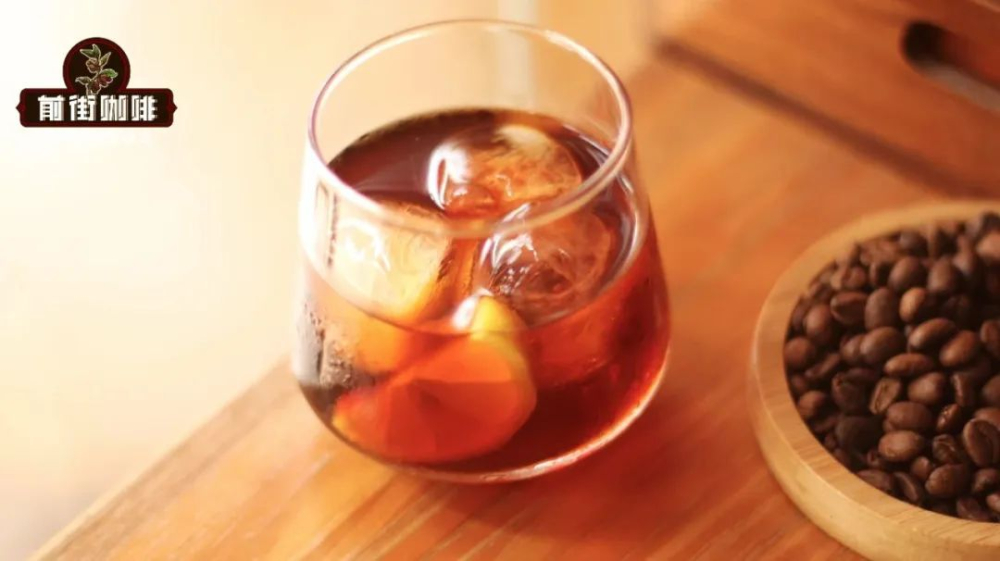
This is because cold brew is typically served as an iced drink. Adding 1 to 2 firm ice cubes can help maintain flavor balance even as the brew is diluted, catering to customers’ varying preferences for strength. As the ice melts, the flavor gradually becomes lighter, transitioning from bold to refreshing—an experience that allows more people to find their preferred drinking moment.
The above content is compiled by CoffeeHunters, a coffee news website.


