







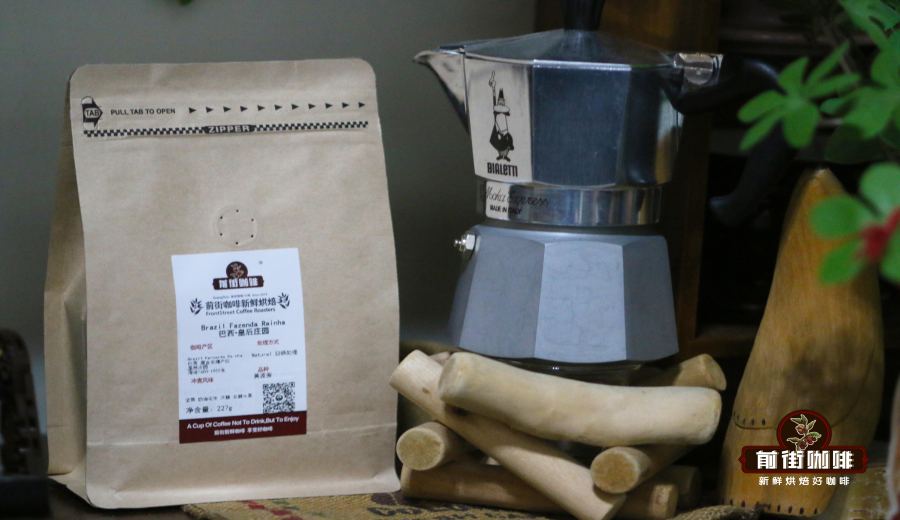
Introduction:Want to brew a Brazilian coffee that’s rich and has a caramel-like sweetness? This article will take you deep into the characteristics of medium-to-dark roasted Brazilian beans — from filter choice, brew ratio, grind size, to the practical details of three-pour brewing — teaching you how to avoid common issues like excessive bitterness or watery taste, and master the key to making a balanced, layered pour-over Brazilian coffee.
Many beginners trying Brazilian coffee beans for the first time often encounter problems such as overly bitter or thin flavors. This is actually related to the medium-to-dark roast style commonly found in Brazilian beans. However, bitterness isn’t always a negative experience — the key is distinguishing between “positive bitterness” and “negative bitterness.” The former, like the rich bitterness of nuts, chocolate, and caramel, can enhance the overall flavor complexity; the latter may involve smoky, woody, or medicinal notes, often accompanied by an unpleasant harshness on the throat.
Take the entry-level coffee beans from Brazil’s Cerrado region as an example. These beans usually have strong roasty aromas, such as nuts, caramel, roasted chestnuts, and even hints of cream and spices. These traits make them a popular starting point for many new coffee drinkers entering the world of dark roasts. However, if brewed improperly, these great flavors can easily be overshadowed by intense burnt bitterness.
In terms of equipment selection, this guide uses the Kono Mingmen filter cone. This filter is designed with ribs only on the middle and lower sections, with smooth walls on the upper half, which helps the filter paper adhere closely to the cone and restricts bypass flow, thereby extending extraction time and enhancing the rich mouthfeel. If you prefer a fuller-bodied coffee with a distinct aftertaste, this filter is a good choice.
For coffee dosage, this demonstration uses 15 grams of coffee grounds, suitable for most 1 to 2-cup filter cones. Note that the amount of coffee should be adjusted according to the capacity of your filter cone — too much or too little can affect extraction consistency and ease of operation. For daily home use, 15 to 20 grams is a more appropriate range.
The recommended brew ratio is set at 1:15. Although some sources suggest ratios as high as 1:13 or even more concentrated, overly strong extractions often sacrifice drinkability and are not conducive to highlighting flavors. A 1:15 ratio maintains a good level of richness while achieving a more balanced taste, suiting the preferences of most coffee drinkers.
Grind size is a crucial factor affecting the performance of Brazilian coffee. It is recommended to use a coarse grind that allows about 70% of the particles to pass through a #20 sieve, slightly coarser than what you’d use for light roasts. Since medium-to-dark roasted beans have a looser structure and absorb water faster, grinding too fine can lead to over-extraction, resulting in obvious burnt bitterness and astringency. On the other hand, grinding too coarse might cause under-extraction, leading to a weak, watery flavor.
As for water temperature, it’s suggested to keep it between 87 to 88°C. Too high a temperature will accelerate extraction, releasing more bitter and astringent compounds, while too low a temperature can make the coffee taste flat or even develop an unpleasant sharp acidity. A stable water temperature helps evenly release the aromatic and sweet components in the coffee.
This pour-over uses the classic three-pour technique, divided into three stages to gradually bring out the rich base and caramel sweetness of Brazilian coffee. First is the bloom stage: pour about 30 milliliters of hot water to evenly wet all the coffee grounds and help release gases, laying a solid foundation for subsequent extraction. The second stage involves pouring 100 milliliters of hot water to further extract the main flavors. Finally, the third stage adds another 95 milliliters, focusing on enhancing sweetness and rounding out the finish. Throughout the pouring process, maintain a steady water flow, preferably pouring in the center or in small circles, and avoid directly hitting the bottom of the filter cone to prevent channeling.
By following these steps and making these detailed adjustments, you’ll be able to brew a Brazilian coffee that combines a rich mouthfeel with captivating caramel sweetness, avoiding common issues like burnt bitterness or thinness, and experiencing the unique aromatic charm and layered complexity of medium-to-dark roasted beans.

The above content is compiled by CoffeeHunters, a coffee news website.


