







Introduction:Brazil is the world’s largest coffee producer, boasting a diverse range of coffee styles—from commercial-grade to specialty-level offerings. This article delves into Brazil’s coffee grading system and regional characteristics, spotlighting two best-selling beans from the industry—Cerrado Red Bourbon and Fazenda Rainha Yellow Bourbon Natural. From growing environments and variety traits, to processing methods, pour over parameters, and flavor profiles, we’ll guide you through the essence of Brazilian coffee. Whether you’re a beginner or an advanced enthusiast, you’ll find practical insights for bean selection and brewing.
When it comes to the world’s top coffee producer, Brazil stands unrivaled. This South American giant is not only known for its massive supply of commercial coffee, but also for nurturing numerous high-quality specialty beans thanks to the COE (Cup of Excellence) competition. Despite Brazil’s staggering overall production volume, the industry selects only two Brazilian beans for online and offline channels—and the reasons are worth exploring. A closer look at coffee menus reveals that each offering strives to showcase unique regional flavors. While Brazilian coffee is renowned for its consistency, its highly mechanized production model also results in relatively uniform profiles. Next, let’s take a deeper dive into the two Brazilian beans sold in our stores, starting with the everyday Brazilian bean—Cerrado Red Bourbon.
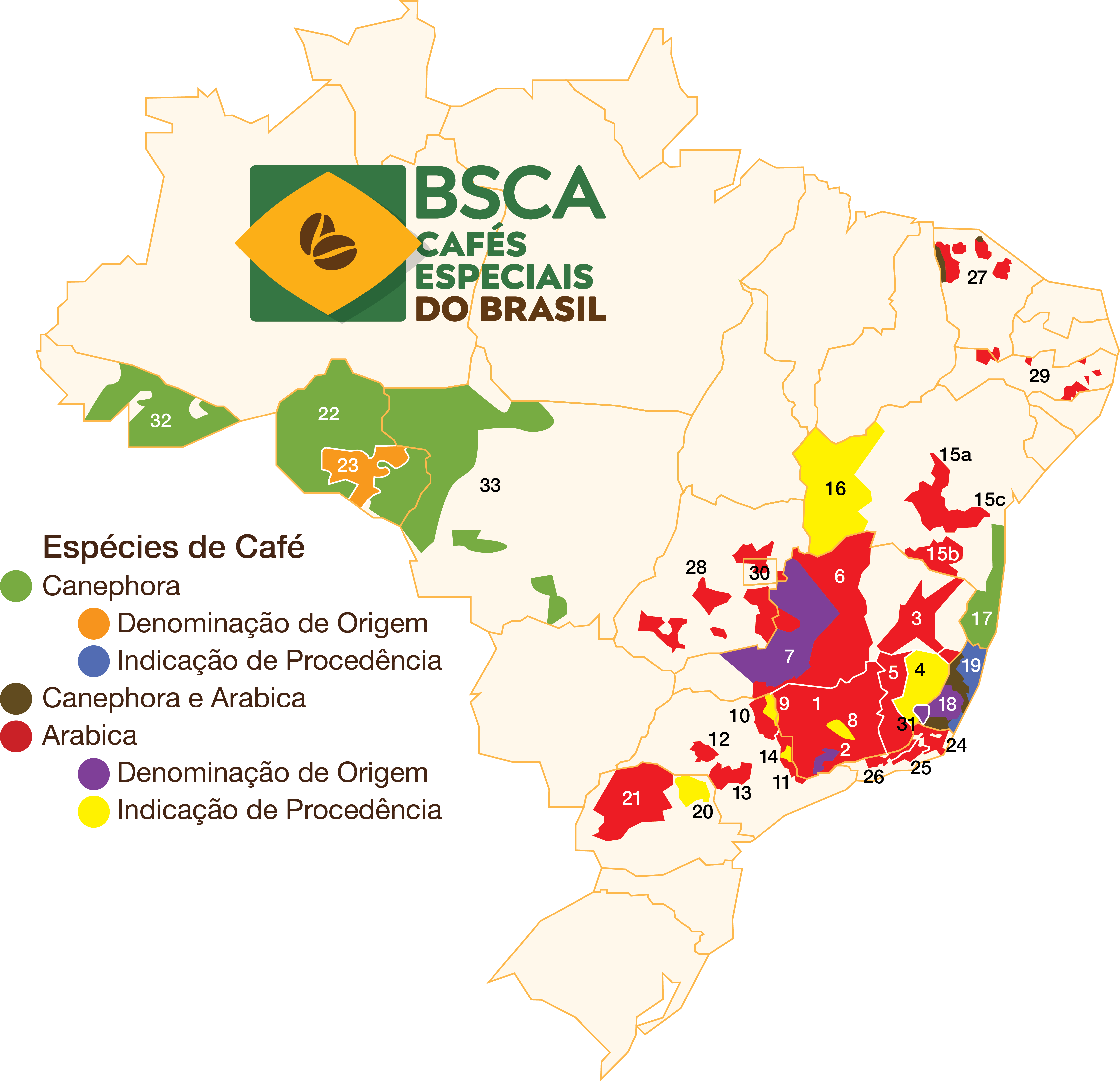
This everyday Brazilian bean hails from the South Minas region, part of Minas Gerais state. The state is home to two renowned coffee-growing areas: Cerrado and South Minas, both situated at higher altitudes. Cerrado lies in the western part of Minas Gerais, a flat plateau ranging from 750 to 1200 meters above sea level; South Minas features rolling hills between 700 and 1200 meters. Since 1999, farms in South Minas have consistently performed well in Brazil’s Cup of Excellence auctions. It is precisely because of South Minas’ potential for producing high-quality beans that this everyday bean is sourced from here.
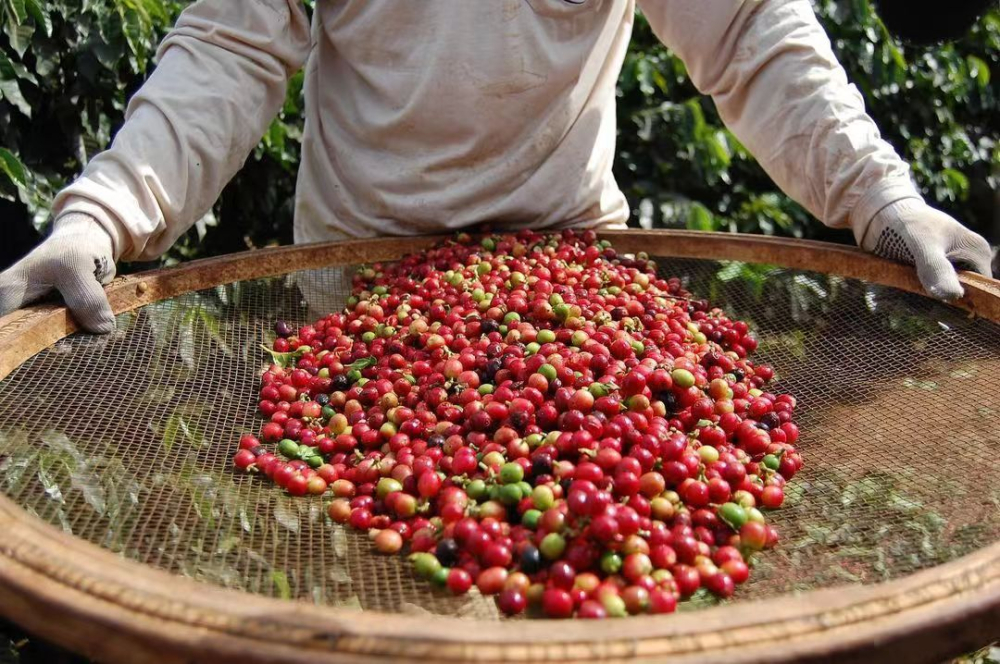
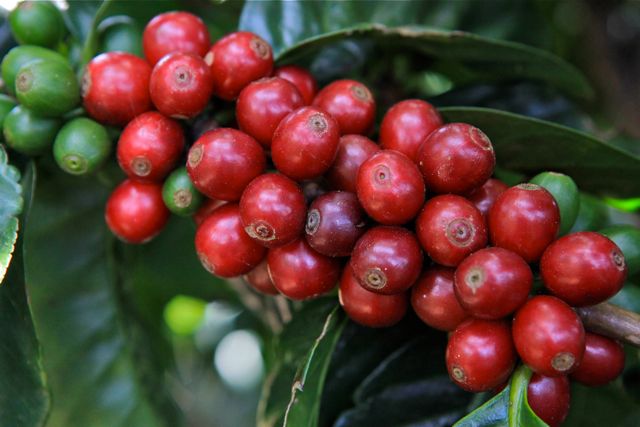
Coffee flavor is closely tied to variety. The Red Bourbon used in Cerrado is a subtype of the Bourbon variety, with coffee cherries turning wine-red when ripe and beans appearing more rounded in shape. Red Bourbon grown at high altitudes typically offers richer aromatics and brighter acidity, often delivering a layered mouthfeel reminiscent of red wine. However, the development of its fermentation-driven notes relies not only on varietal traits but also on the semi-washed (pulped natural) processing method.
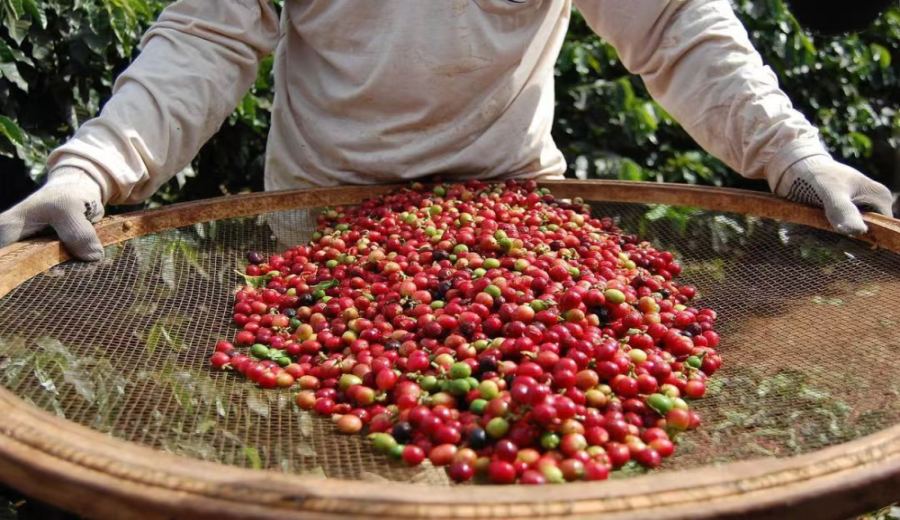
Before 1990, Brazilian coffee commonly used the traditional natural (sun-dried) process. With cherries left to dry in the sun for two to three weeks, any rain or humidity could easily introduce woody, earthy, or even moldy flavors. To address this weather-dependent issue, Brazil—leveraging its naturally drier climate—developed the pulped natural method in 1990. This technique removes the coffee cherry’s skin and pulp first, allowing precise control over the fermentation level of the mucilage-covered beans, which differs greatly from the traditional method where fruits dry intact with pulp and skin, making mucilage fermentation hard to monitor. Pulped natural falls between natural and washed processes, but skips the “tank fermentation and water rinse” steps of washing. Instead, beans are directly sun-dried. Though visually similar, the absence of a fermentation phase leads to notable flavor differences. Additionally, during pulping, overripe mucilage tends to detach easily, while unripe green skins are harder to remove—thus a secondary screening can filter out immature fruit, improving overall maturity and cleanliness of the beans, resulting in a more balanced cup.
However, the pulped natural method isn’t used across all Brazilian regions. Cerrado, with its lower humidity, still primarily employs the traditional natural process, making pulped natural the less common choice here. The Cerrado Red Bourbon selected by the industry is processed using pulped natural specifically to enhance its fermentation-derived flavors.
The other Brazilian bean—Fazenda Rainha Yellow Bourbon Natural—comes from the Mogiana region, adjacent to the southern part of Minas Gerais. Coffee here is grown among shrubs, grasslands, and other vegetation, with numerous smallholder farms operating in both traditional large-scale and modern small-scale models. The blend of modern technology and mountainous coffee cultivation culture yields high-quality green beans. Cupping reveals that beans from this area exhibit a sugarcane-like sweetness.
This Brazilian Fazenda Rainha Yellow Bourbon Natural hails from the Mogiana region of Brazil, specifically from Fazenda Rainha, at elevations between 1400 and 1950 meters. The variety is Yellow Bourbon, and the processing method is natural (sun-dried). Unlike the large-scale centralized processing common in Brazil, Fazenda Rainha employs meticulous natural processing to avoid the quality decline typically caused by bulk handling.
The bean specially selects the Yellow Bourbon variety, distinct from the Red Bourbon used in Cerrado. Its cherries ripen yellow, not the usual red. Yellow Bourbon was first discovered in Brazil in 1930 and is now mainly grown within the country. It’s believed to be a mutation resulting from a cross between a red-fruited Bourbon and a yellow-fruited Typica variant called “Amerelo de Botocatu” (discovered in São Paulo in 1871). Due to its lower yield and greater susceptibility to weather, Yellow Bourbon hasn’t been widely planted—but at high altitudes, it can deliver exceptional flavor, drawing increasing attention in recent years.
Notably, sacks of Brazilian coffee beans often feature labels such as “Brazil NY.2 SC – 17/18 FC,” which refer to Brazil’s unique three-tier grading system not used elsewhere. Given Brazil’s vast and varied growing regions and huge output, blending different beans is common to create export-specific flavor profiles—leading to inconsistent quality. Hence, “cupping” is employed for grading. By examining the green bean info, consumers can roughly assess a coffee’s quality.
Brazilian coffee grading mainly considers three dimensions: defect rate, screen size, and cup quality.
1. Grading by Defect Rate
Brazil uses a “deduction method,” classifying beans into seven grades from No.2 to No.8 based on the number of defects per 300 grams of main beans. A deduction score of 4 or below qualifies as No.2. Theoretically, a No.1 grade with zero defects exists but is extremely rare and hard to maintain consistently, so No.2 is set as the highest grade in Brazil—not No.1.
2. Grading by Bean Screen Size
Screen size is based on 1/64-inch units, screened through mesh sieves, commonly sized 14 to 20. Note that screen size refers to the shorter side (i.e., width) of the bean. In Brazilian coffee, the largest available size is 19, but it’s scarce—so 17/18 is considered the top grade.
3. Cup Quality
Includes ratings like Fine Cup (FC), Fine, Good Cup, Fair Cup, Poor Cup, and Bad Cup. Common ones are FC (Fine Cup) and GC (Good Cup). Many companies or platforms also note processing methods (e.g., natural, washed, honey) and farm information.
In the past, Brazilian coffee was dubbed “low-quality coffee,” with farmers prioritizing yield over quality—sometimes even mixing in foreign objects like soybeans or pebbles. As Brazilian coffee is named after export ports, the largest port of Rio (Rio de Janeiro) thus earned a “notoriously bad” reputation. The emergence of the COE competition aimed to change this, and the NY grading system helped standardize Brazilian coffee quality, gradually shedding its poor image.
So, what do Brazilian coffee beans taste like today? Next, let’s explore the flavor profiles of these two beans with recommended brew methods.
Industry Brewing Recommendations:
Filter: V60
Dose: 15g
Water Temperature: 90°C
Grind Size: Medium, 70% through a 20-mesh standard sieve
Brew Ratio: 1:15
Use a pulse pouring technique: bloom with 2x the coffee dose (30g water for 30 seconds), then pour in small circles up to 125g and pause when the water level nearly exposes the coffee bed, then continue pouring to 225g total. Total brew time: 2 minutes.
【Brazil Cerrado Red Bourbon】Flavor:Prominent sweetness, clean and smooth mouthfeel, gentle acidity, with dominant notes of peanut, almond, nuts, and chocolate.
【Brazil Fazenda Rainha Yellow Bourbon Natural】Flavor:Balanced and full-bodied, with almond and cocoa as the leading tones, complemented by sugarcane-like sweetness—making it a sweet, layered, and rich coffee.
The above content is compiled by CoffeeHunters, a coffee news website.


