








Introduction:The natural-processed Aricha coffee beans from Ethiopia’s Yirgacheffe region won the 2019 Africa TOH (Taste of Harvest) Natural Category Championship with a cupping score of 91. Sourced from the Adorsi washing station, these beans are celebrated for their rich floral and fruity aromas and creamy aftertaste. This article delves into the origin's characteristics, competition background, and offers practical medium-light roasting suggestions along with V60 three-pour pour-over parameters to help you brew this fruit-forward delight at home.
The natural-processed Aricha coffee beans from the Yirgacheffe region have long held a prominent place in the specialty coffee scene due to their distinctive fruity-floral profile and layered complexity. Produced by the Adorsi washing station, these beans not only claimed the championship in the 2019 Africa TOH (Taste of Harvest) Natural Category but also achieveda cupping score of 91that attests to their exceptional quality. A certain coffee brand opted for a medium-light roast to precisely capture its fermented wine-like notes, sweet maturity of fruit, and silky finish, allowing the full expression of this "fruit bomb."
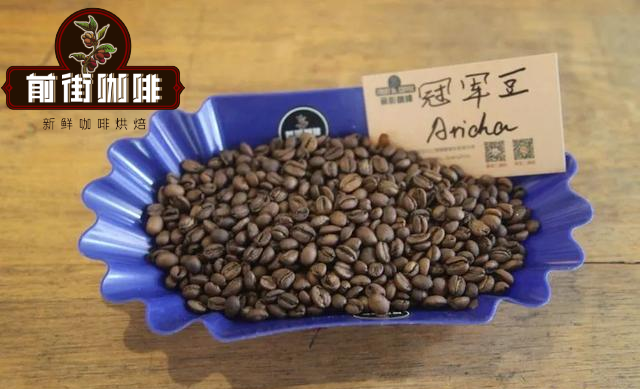
Aricha is not merely a place name but refers to the classic natural-processed beans from the Adorsi washing station. It stood out in the 2019 TOH Natural Category, showcasing highly recognizable aromas and flavors. A certain coffee brand used a medium-light roast to preserve its vivid floral and fruity notes. After multiple cuppings, this bean revealed soft fermented wine-like aromas, sweet ripe fruit tones, and a creamy, buttery aftertaste — no wonder it earned the championship title.
Yirgacheffe is originally a small town in southern Ethiopia, situated at an altitude of approximately1700 to 2200 metersabove sea level. The cool climate causes the coffee cherries to ripen slowly, allowing them to accumulate richer flavor compounds. As a result, coffees from this region generally exhibit unique bright acidity and complex aromas that captivate coffee lovers worldwide. Many local farmers even take pride in their beans possessing the "Yirgacheffe flavor."
The Aricha village where Aricha beans are grown is located just about 8 kilometers from the center of Yirgacheffe town. Kebele is the smallest administrative unit in Ethiopia, typically comprising around 500 households (approximately 3500 to 4000 people). The coffee in this area is mostly harvested from wild coffee trees in natural forests, with extremely diverse varieties — a single batch may contain 2 to 30 different varieties. Since the harvesting altitude exceeds 1850 meters and most of the coffee comes from unattributable natural forest land rather than specific estates, these coffees are usually named after the producing area "Aricha," with the variety collectively referred to as "Heirloom" or native variety. This classification is also a measure taken by the Ethiopian government to protect the genetic diversity of its local coffee.
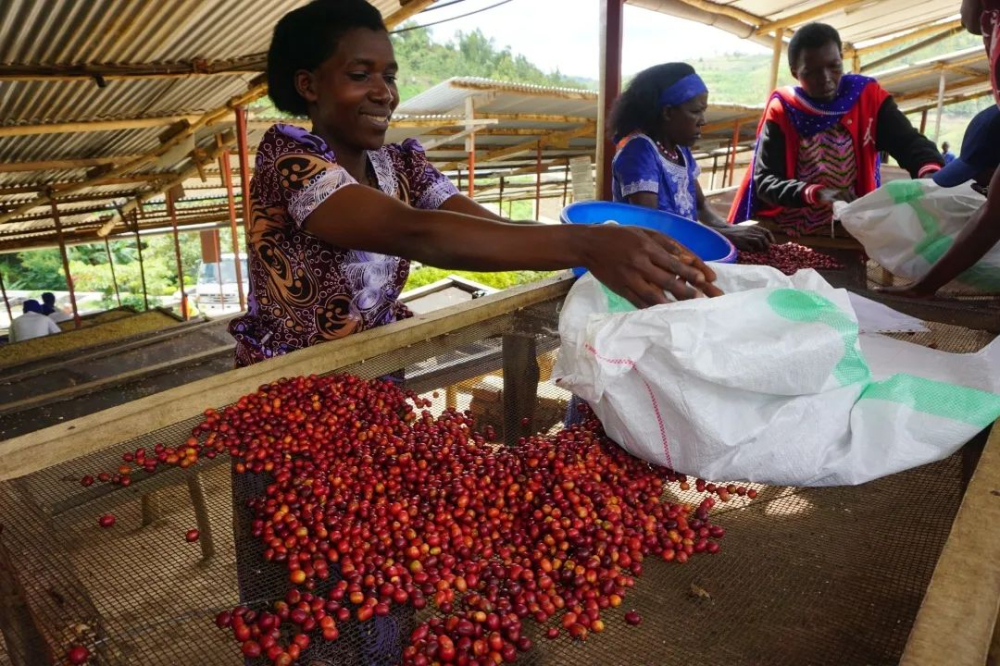 TOH (Taste of Harvest) is a coffee evaluation competition organized by the African Fine Coffee Association (AFCA), similar in nature to the COE (Cup of Excellence) in Central and South America. Participating countries include Burundi, Democratic Republic of the Congo, Ethiopia, Malawi, Kenya, Tanzania, Uganda, and Zambia — a total of eight nations. The competition is held annually during the Africa Fine Coffee Conference and Exhibition, where both domestic and international expert judges conduct rigorous cuppings based on SCAA (Specialty Coffee Association of America) standards to select top lots from each producing region.
The Aricha natural beans produced by the Adorsi washing station achievedan outstanding score of 91to win the 2019 TOH Natural Category Championship. Adorsi is part of Testi Coffee, a well-known exporter operated by the Yonis family, founded by Faysel A. Yonis in 2009. Regarding this particular bean, a certain coffee brand believes its most captivating qualities are its bright acidity and delicate floral notes, thus recommending a medium-light roast to fully showcase its "fruit bomb" character.
In terms of the roasting curve, the roast for Aricha began with a boiler temperature of165°C, initial flame power at 120, and air damper set to 3. The turning point occurred at about 1 minute and 36 seconds. When the drum temperature dropped to 148°C, the air damper was increased to 4 while keeping the flame power constant. Once the bean surface temperature reached 166°C and the beans began to turn yellow with grassy aromas dissipating, marking the start of the drying phase, the air damper was further adjusted to 5. Around 7 minutes and 37 seconds, the bean surface exhibited wrinkles and dark spots, giving off signs of toast transitioning into coffee aromas — at this stage, it’s essential to carefully listen for the first crack. By 8 minutes and 38 seconds, the first crack officially began and continued for about 1 minute and 45 seconds of development time, finally dropping the beans at195°C. According to Agtron values, the bean color was 66.2, the parchment color 78.9, with a Roast Delta of 12.7, placing it squarely within the typical medium-light roast range.
 In terms of flavor, the 2019 crop Aricha natural beans are like a “fruit bomb.” The dry aroma is intensely fruity, layered with rich dried fruits, strawberries, mangoes, and apricot jam notes. The wet aroma is syrupy sweet, akin to thick apricot pulp, wrapped in subtle honey or chocolate undertones. On the palate, the body is medium, with a mouthfeel reminiscent of fruity black tea, offering a rich and balanced flavor complexity.
For brewing recommendations, since Ethiopian coffees are often lightly roasted and the beans are relatively hard, it’s advised to usewater at 92 to 93°Cto fully elicit their floral and fruity characteristics. The grind size is recommended to be medium-fine (such as about 78% passing through a Chinese standard No. 20 sieve). Too coarse may lead to under-extraction and a thin taste; too fine may cause over-extraction and unwanted bitterness under high water temperature.
The suggested powder-to-water ratio is between1:15 and 1:16. For a stronger flavor, choose 1:15; for a clearer and more unfolded taste, opt for 1:16. A V60 dripper is recommended, using about 15 grams of coffee with a grind size similar to granulated sugar (around 78% fine powder passing through a No. 20 sieve).
The specific brewing steps are as follows: Start with a bloom using twice the coffee weight in water (about 30 grams) to wet the coffee bed and form a dome, for 30 seconds. Then, pour with a small stream in a circular motion from the inside out until reaching 125 grams for the first pour. Once the coffee bed drops to about half the height of the dripper, pour the second pour with the same fine stream until the total water volume reaches 225 grams. Finally, allow the coffee to fully drip through, with the entire process taking about 2 minutes. This brewing method effectively highlights Aricha’s ripe fruit aromas, delivering a pronounced fermented note and green grape flavor on the palate. As the temperature cools, citrus acidity and a creamy smooth mouthfeel gradually emerge, with the aftertaste leaving a juicy sensation reminiscent of ripe grapes — truly unforgettable.
The above content is compiled by CoffeeHunters, a coffee news website.


