







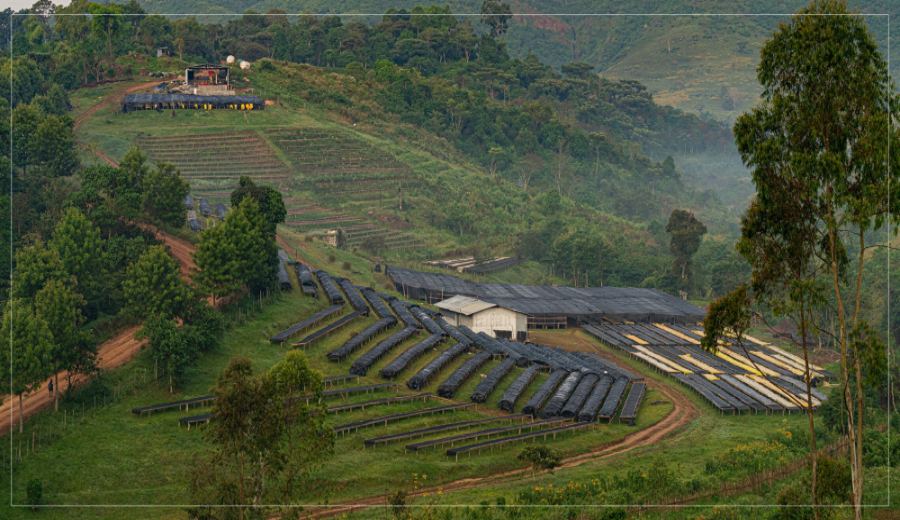
Introduction:Gesha Village is located in the Bench-Maji zone of Ethiopia and is renowned for its native wild Gesha variety. It features a diverse grading system including auction, gold, red, green, and Chaka tiers. This article delves into the discovery of Gesha Village, the grading standards of its various lots, processing details, plot characteristics, and provides expert brewing recommendations and flavor profiles. It’s an essential beginner’s guide to exploring high-quality Gesha coffee.
When people hear “Gesha,” many immediately think of the captivating floral and fruity tea-like flavors with rose aromas and citrus notes from Panama’s Hacienda La Esmeralda. However, hidden in Ethiopia’s southern Bench-Maji region lies a treasure trove nurturing the native wild Gesha variety — Gesha Village Coffee Estate. Established in 2011 by documentary filmmaker Adam Overton and photographer Rachel Samuel, this estate not only boasts a stunning natural environment but has also established a rigorous grading system and comprehensive flavor traceability, making it a focal point in the specialty coffee world.
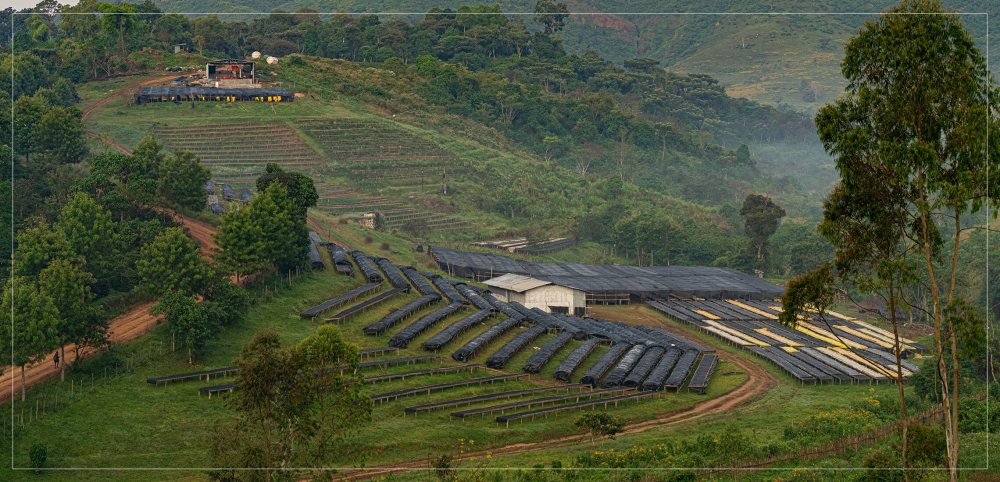
The Gesha that most people are familiar with usually refers to the variety grown at Panama’s Hacienda La Esmeralda. Since making its debut in international green coffee competitions such as the Best of Panama (BOP) in 2003, it has been celebrated for its unique floral and tea-like flavor profile. However, the Gesha from Ethiopia’s Gesha Village, although sharing the same name as its Panamanian counterpart, is an entirely different variety — both in appearance and genetics. Therefore, the Gesha from Gesha Village deserves to be reacquainted as an Ethiopian native variety.
The story dates back to 2007 when director Adam Overton and his wife Rachel Samuel were filming a documentary about coffee for the Ethiopian government. During their journey, they visited the Gera Coffee Forest in the Bench-Maji region and heard the name “Gesha” for the first time. In 2009, through interactions with BOP judges and the renowned mule farm owner Willem Boot, they were inspired to search for the origin of Gesha. In 2011, they returned to the area and explored multiple “Gesha villages” in Bench-Maji. Eventually, they discovered various wild coffee trees in a jungle surrounded by pristine forests — the Gori Gesha Forest — including the now-famous native Gesha.
They collected seeds from these wild Gesha trees, carefully selected them, and planted them at Gesha Village. The estate was established under the name “Gesha Village Coffee Estate.” The entire estate spans approximately 471 hectares, with about 320 hectares dedicated to coffee cultivation. The soil is nutrient-rich reddish-brown loam, and the planting density is controlled at 7,000 coffee trees per hectare. This area, known as “Oma,” derives its name from a highly respected religious leader. It not only boasts breathtaking scenery and a pleasant climate, but its altitude also provides ideal growing conditions for coffee. It takes about two days by car from the capital Addis Ababa to reach this coffee sanctuary.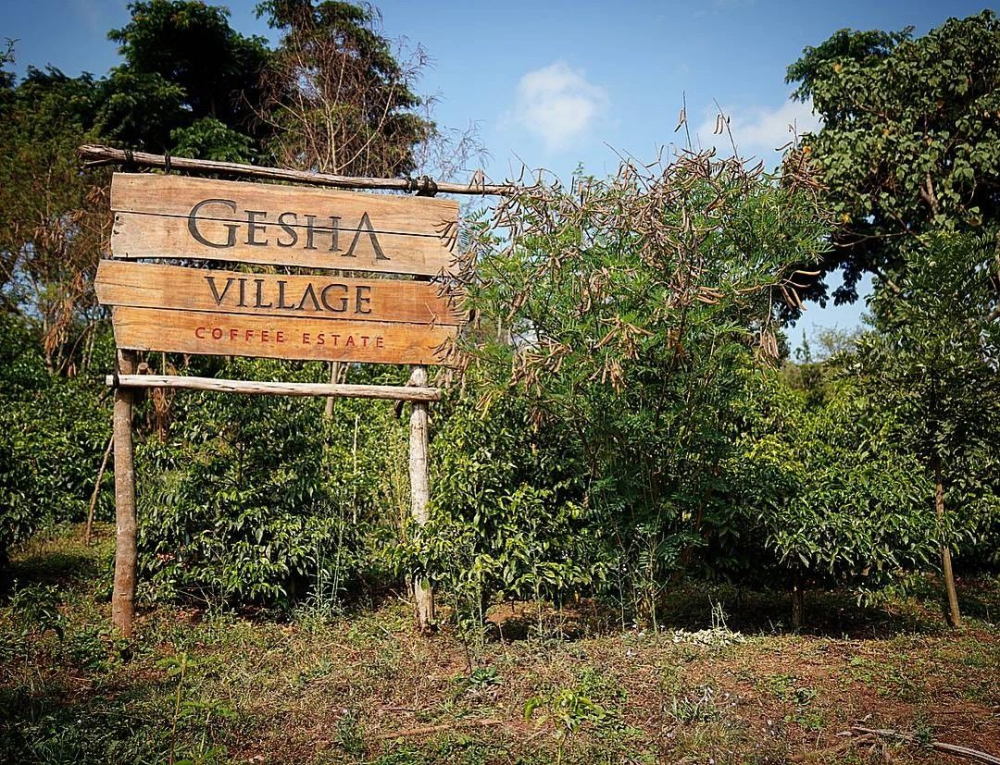
Gesha Village has a complete and strict grading system, categorized by quality and rarity into: auction lots, gold, red, green, and Chaka tiers. Each grade has a clear definition and flavor characteristics, representing different values for consumption and collection.
【Auction Lots】: Accounting for only 3.7% of the annual production, these are the estate’s top-tier coffees, available exclusively through global auctions since 2018. The 2018 auction lots scored between 88.15 and 92.67 in cupping, and are divided into “Champion’s Reserve” and “Farm Reserve.” For example, Lot RSV.6 was one of the auction lots that year. Such coffees are usually available in just tens of kilograms, making them extremely rare.
【Gold Lots】: Making up about 10% of the annual output, these are the next highest tier after auction lots, known for their complex and layered flavors, often used in international competitions or by high-end roasters. Take batch Oma 059, for instance, which uses the Gesha 1931 variety, processed via natural drying for 32 days, and grown at altitudes between 1,931-2,040 meters. Recommended pour over parameters: coffee-to-water ratio 1:15, medium-coarse grind (80% passing through a 20-mesh sieve), water temperature 91°C, using a V60 dripper. Pulse pouring can highlight its rich notes of wine, citrus, and berries.
【Red Lots】: Representing about 15% of annual production, these have good traceability, cup scores exceeding 88 (per SCA standards), clear flavors, and high cost-performance. Common varieties include Gorigeisha, processed naturally. Recommended pour over: coffee-to-water ratio 1:15, fine sugar grind (EK43s setting 10), water temperature 91°C, V60 with pulse pouring. Flavor notes include coconut, licorice, cream, toffee, and citrus, overall balanced and mellow.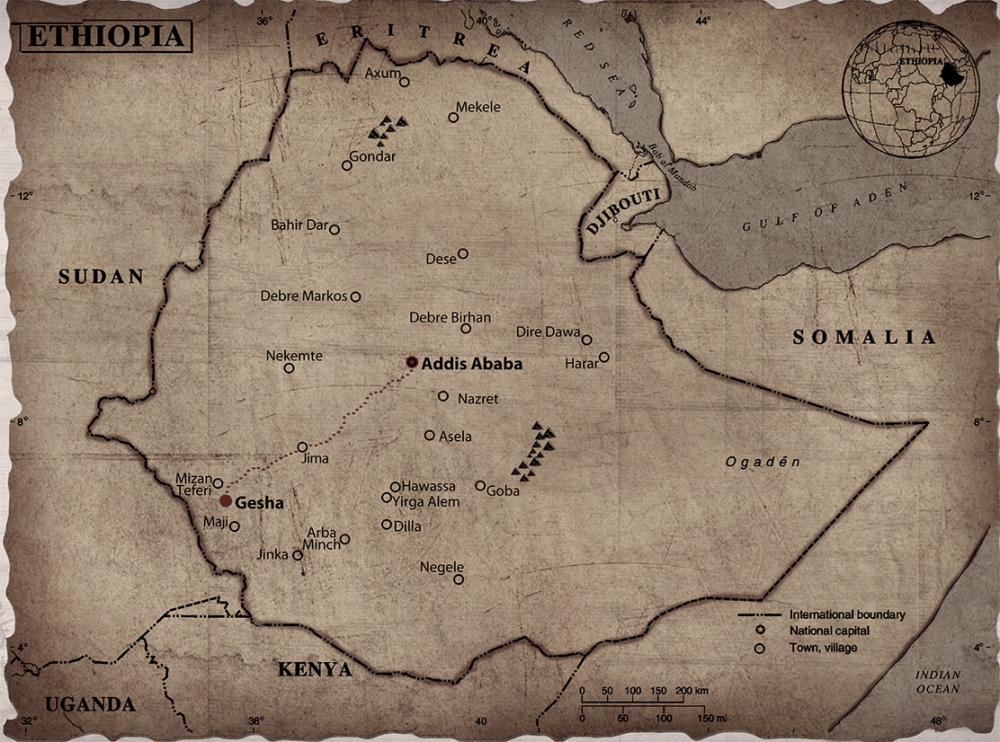
【Green Lots】: Sourced from single plots and single varieties, each batch can be fully traced back to the farm plot, variety, and processing date, ideal for coffee enthusiasts who want to understand origin details.
【Chaka Lots】: These are blended batches, comprising various coffees from different plots and across the entire harvest season. Main varieties include Gorigeisha, Gesha 1931, and Illubabor, with both natural and washed processing methods. Their flavors are softer, featuring citrus and grapefruit acidity, along with aromas of cream, chocolate, and caramel. Suitable for everyday drinking.
Gesha Village’s natural processing method (including gold, red, and Chaka lots) is meticulous: floaters and impurities are first removed, then the coffee cherries are placed on African-style raised beds, spread thinly and covered with plastic sheeting for sun drying. During this period, insect-damaged and unripe beans are repeatedly sorted, and the entire drying process lasts 18-30 days to ensure concentrated and stable flavors.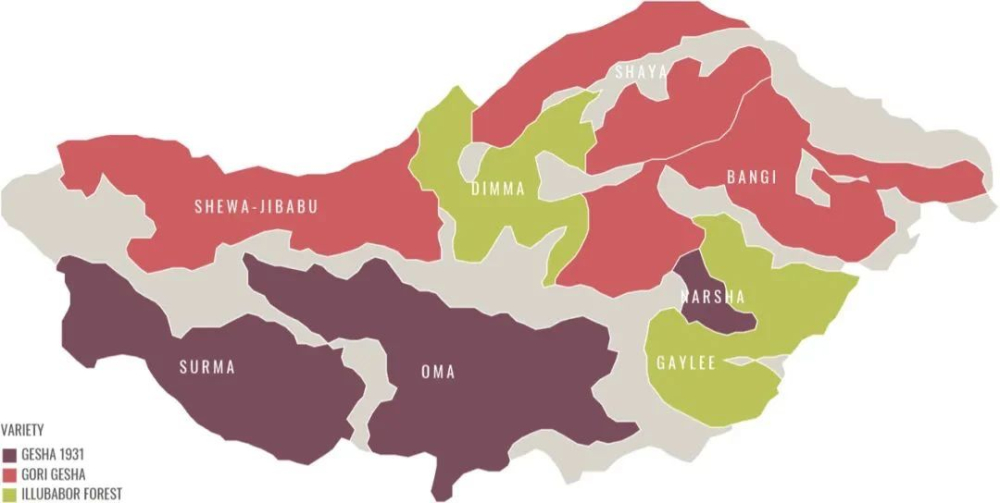
Gesha Village divides its planting areas into multiple plots based on microclimate differences, such as the higher-altitude OMA, SURMA, and SHEWA-JIBABU on the western side, as well as high-shade southern areas and high-sunlight northern zones. Each plot selects the most suitable variety based on altitude, soil, and shade conditions, resulting in the diverse flavor profiles of Gesha Village coffees.
The selection process for auction lots is particularly stringent. Since 2018, it has been completely overhauled. All auction lots are independently numbered and undergo nearly three months of repeated cuppings and at least two rounds of blind tastings in different orders. Ultimately, 31 lots are selected from 117. Bean size (screen size) is also introduced as an evaluation criterion — for example, Gesha 1931 must be above 17 mesh, other varieties at least 16 mesh, with specially imported sieves for manual selection. The 2018 auction lots included 26 naturals, 4 washed, and 1 honey-processed, with 7 Champion’s Reserve lots (each 90 kg), 24 Farm Reserve lots (each 120 kg).
The 2019 auction introduced “Champion’s Selection” (7 lots, cup score above 90), “Farm Selection” (13 lots, above 88), and “Innovation Selection” (6 lots, experimental special processing batches), showcasing Gesha Village’s ongoing efforts in flavor innovation and quality control.
Beyond auction and premium gold lots, Gesha Village’s gold series is also an accessible entry choice for many coffee lovers to experience high-quality Gesha. This line uses a medium-light roast, and cupping reveals fresh floral, lemon, honey, citrus, and apricot notes. Recommended pour over: 15g coffee, coffee-to-water ratio 1:15, water temperature 90°C, grind size 0.85mm (80% passing through a 20-mesh sieve), using a Hario V60 #01 filter cone, with three pours, total extraction time around 2 minutes. This brings out its balanced flavors of citrus, flowers, berries, and creamy texture.
The above content is compiled by CoffeeHunters, a coffee news website.


