








Introduction:Costa Rican coffee is renowned for its exceptional processing techniques and bright, clean flavors. In particular, the Musician Series from the Tarrazú region—such as Mozart and Bach—are top choices for many pour over enthusiasts. This article delves into the country’s coffee-growing environment, major varieties, and the characteristics of popular processing methods. It also provides precise brewing recommendations for the two raisin honey-processed beans, including water temperature, grind size, pulsed pouring techniques, and expected flavor profiles, helping you recreate professional-grade flavors more accurately.
Costa Rica is one of the representative specialty coffee-producing countries in Latin America, known for its diverse processing methods and bright, fruity flavor profiles. Whether it’s traditional washed, natural, or honey processing, or the more recent anaerobic fermentation and raisin honey processing, all are performed at a very high level. However, many coffee lovers find a difference between home-brewed Costa Rican coffee and café-quality brews. This is often not due to the beans themselves, but rather the brewing method needing adjustment.
This article will provide an in-depth introduction to Costa Rica’s geographical environment, key regional characteristics, and cultivated varieties. Using the “Mozart” and “Bach” raisin honey-processed beans from the Musician Series in the Tarrazú region as examples, it will detail their suitable pour over extraction parameters and steps, allowing you to easily brew a cup of Costa Rican pour over coffee with distinct layers and rich flavors.

The history of coffee cultivation in Costa Rica dates back to the early 18th century, making it one of the first countries in Central America to introduce coffee farming. Much of the country lies at high altitudes, especially the central plateau region, which ranges from approximately 1200 to 1600 meters above sea level. The consistently cool and stable climate, along with volcanic soil rich in minerals and excellent drainage, contributes to the complex flavors of the coffee cherries. The main harvest season is concentrated from November to March each year.
The country is primarily divided into eight major coffee-growing regions: West Valley, Central Valley, Tarrazú, Tres Ríos, Orosi, Brunca, Turrialba, and Tarrazú. Among these, the Tarrazú region is known for its high altitude (1200–1700 meters), fertile volcanic soil, and stable microclimate, making it a significant source of specialty coffee. In the 2014 Cup of Excellence competition, over 70% of the winning beans came from this region, highlighting the premium quality of its green beans.
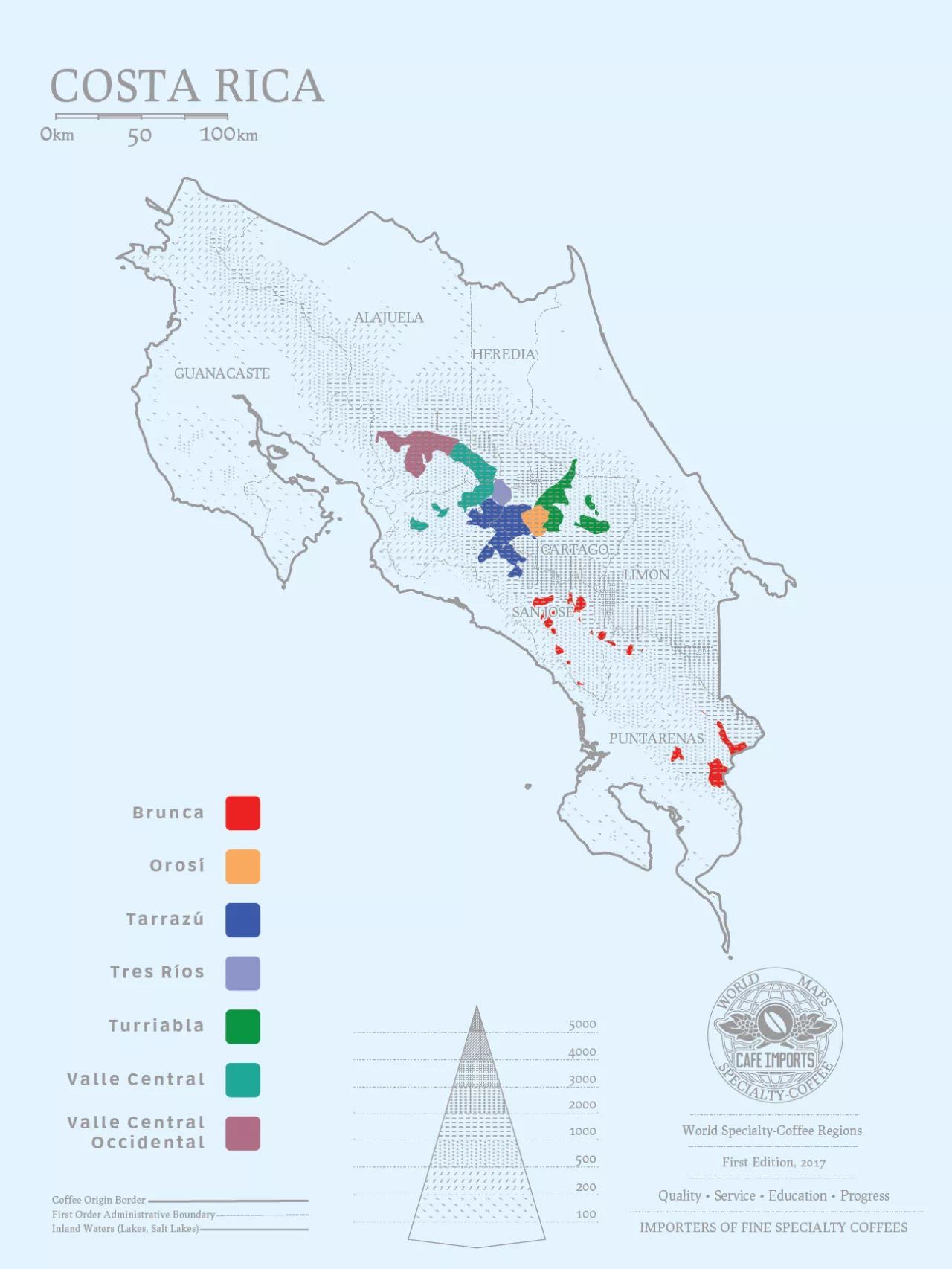
Tarrazú not only benefits from superior altitude conditions, but is also surrounded by three active volcanoes—Irazú, Barva, and Poás—which provide abundant natural nutrients. Most coffee farms here avoid the use of pesticides and chemical fertilizers, emphasizing sustainable and natural farming practices, which further enhance the purity and flavor details of the coffee. The resulting brews typically feature bright acidity, rich aromas, and a chocolatey, full-bodied base note.
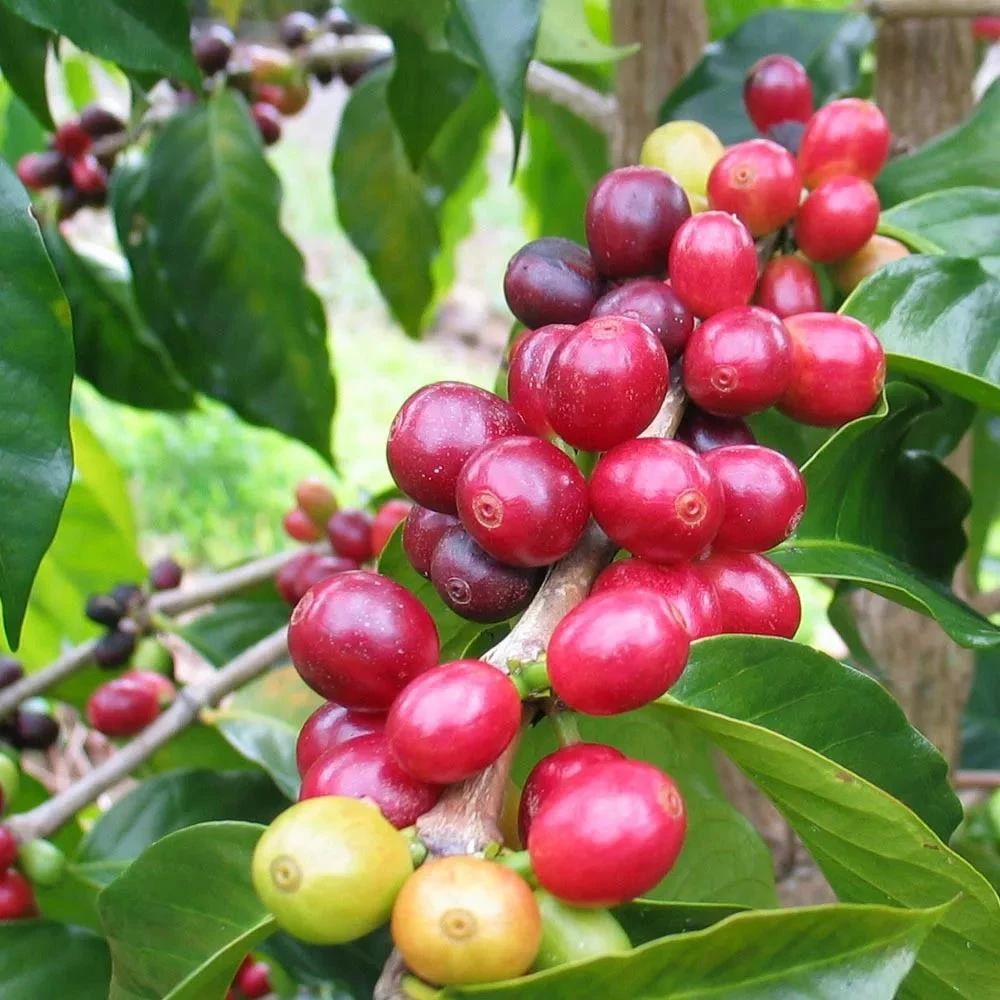
The coffee varieties grown in Costa Rica are similar to those in other Central and South American countries, with Bourbon, Caturra, and Catuaí being the most common. Among them, Bourbon, a mutation of Typica, is widely loved for its round fruit shape and prominent sweetness. Caturra is a natural mutation of Bourbon, with shorter plants and higher yields, but slightly lower disease resistance. Catuaí is a hybrid of Caturra and the Mundo Novo variety, with sturdy fruits and wind resistance, though its flavor complexity is generally not as rich as that of Caturra.
Additionally, Costa Rica cultivates more unique varieties such as Villalobos. Originally from Costa Rica and later introduced to Honduras, this variety is known for its green-tipped beans and intense floral-fruity aromas. It is well-suited for medium to dark roasts and offers complex notes of cherry, honey, and spices.
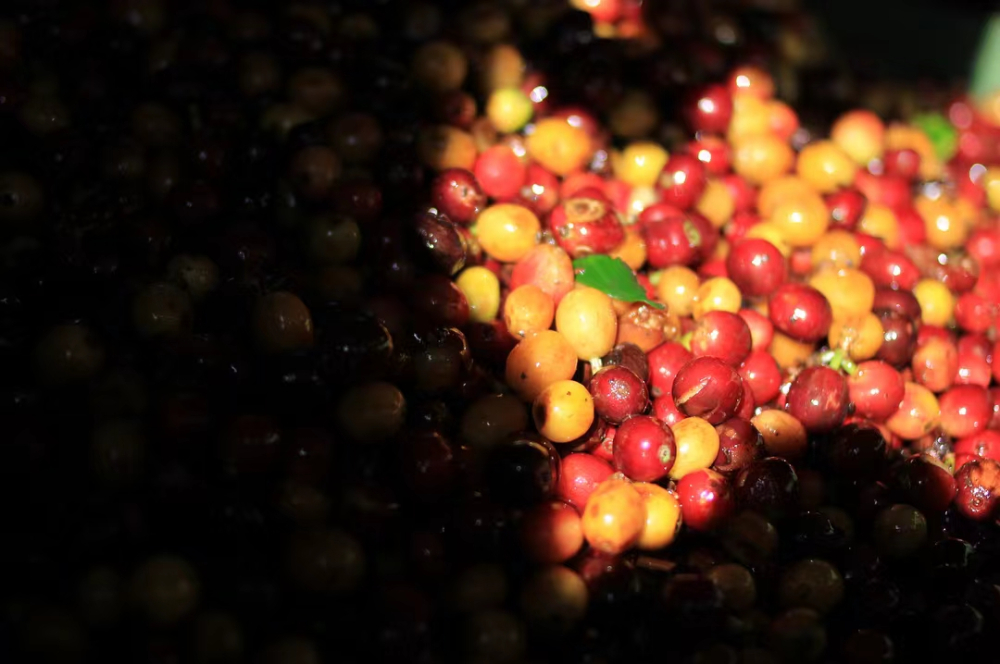
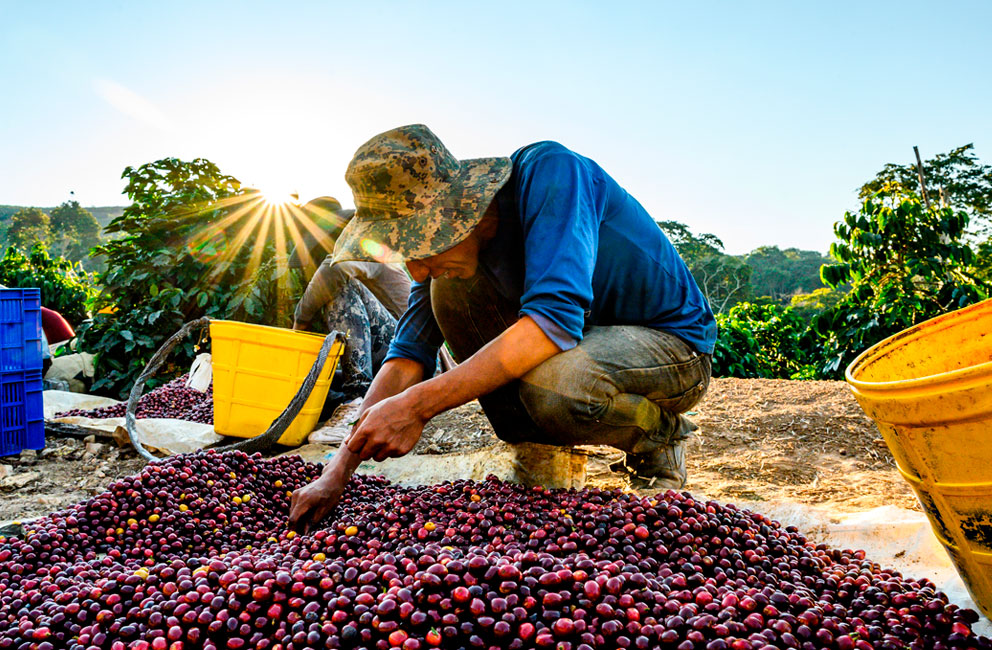
Costa Rica offers a wide range of coffee processing methods, among which honey processing is particularly well-known. This method involves removing the outer fruit skin of the coffee cherry but retaining some or all of the mucilage layer before sun-drying. Honey processing preserves the cleanliness of washed coffee while enhancing sweetness and caramelized flavors.
Based on the amount of mucilage retained during honey processing, it is generally categorized into yellow honey, red honey, and black honey. Yellow honey retains the least mucilage, offering high clarity but lower sweetness; red honey retains about 50% of the mucilage, striking a good balance between sweetness and cleanliness; black honey retains nearly all the mucilage, resulting in the highest sweetness but relatively lower clarity, with a richer and more complex overall flavor.
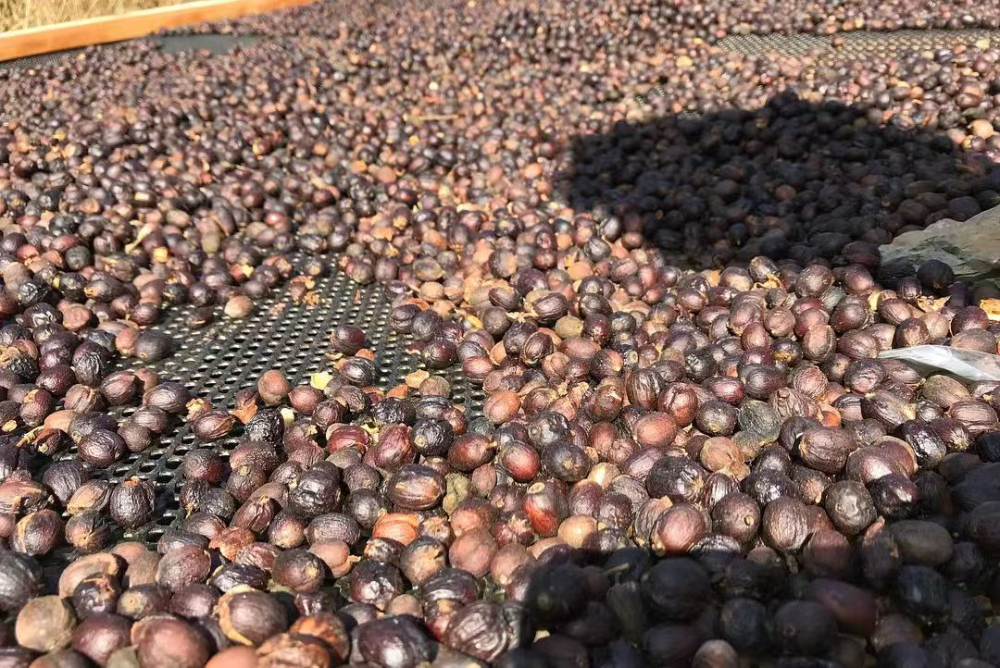
The Musician Series is a line of specialty beans launched by Costa Rica’s Café Granja La Esperanza, named after classical musicians, with each bean boasting a unique flavor personality. This article focuses on the “Mozart” and “Bach,” both of which are raisin honey-processed (Grape Natural / Honey Process), offering intense fruity aromas and fermentation characteristics.
“Bach” comes from the Tarrazú region, grown at an altitude of about 1950 meters, classified as SHB (Strictly Hard Bean), and of the H1 variety. Its raisin honey processing gives the coffee a rich sweet aroma and layered fermentation notes, with flavor notes leaning toward intense fruitiness and wine-like qualities. “Mozart” also hails from the same region, grown at a slightly lower altitude of about 1800 meters, also SHB grade and H1 variety, with the same raisin honey processing. Its flavor profile is more balanced and suitable for various brewing methods.
It is recommended to use a Hario V60 #01 dripper for pour over, with a dose of 15 grams, a 1:15 coffee-to-water ratio, and water temperature controlled at around 90°C. The grind size is suggested to be medium-fine, using 80% passing rate through a 20-mesh sieve as a reference. These parameters can fully highlight the sweet and fruity characteristics of raisin honey-processed beans.
The brewing steps recommend a pulsed pouring method: start with a 30-gram bloom to wet the coffee grounds and form a “hamburger” shape, for about 30 seconds; then continue pouring with a steady medium-fine stream in circles until reaching 125 grams at around 55 seconds. Pause to let the water level in the dripper drop to about two-thirds, then proceed with the final pour, aiming to complete the total extraction in approximately 1 minute and 55 seconds.
At high temperatures, “Bach” exhibits pronounced grape-like acidity and wine fermentation notes. As the temperature drops, it gradually reveals the juicy character of red berries and subtle rose aromas, with a long-lasting caramel sweetness in the aftertaste. “Mozart,” on the other hand, centers on berry and fermentation aromas, with distinct raisin and sweet orange flavors upon entry. As it cools, wine-like and osmanthus notes become more prominent, offering a richly layered and noticeably sweet overall flavor.
Both beans in the Musician Series are medium roasted, suitable for various brewing methods such as pour over, cold brew, moka pot, and even electric drip machines. They are excellent choices whether for everyday drinking or exploring the full potential of Costa Rican coffee.
The above content is compiled by CoffeeHunters, a coffee news website.


