







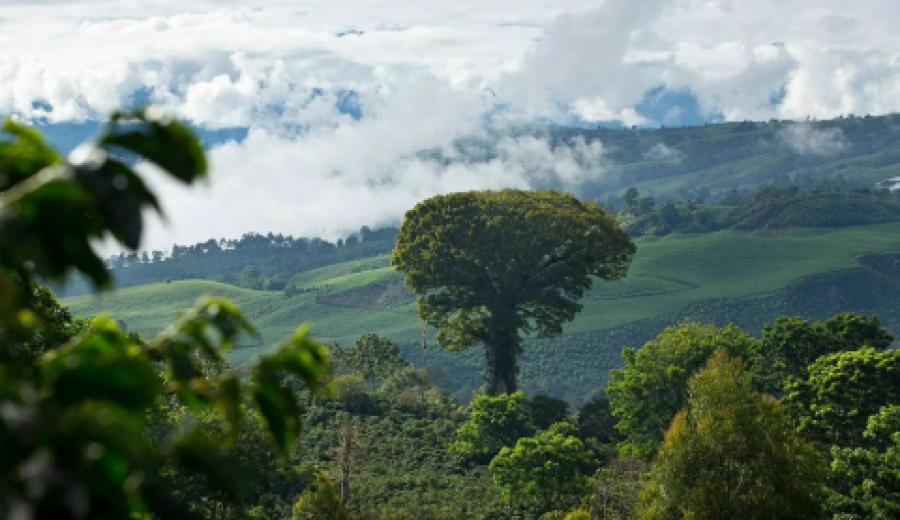
Introduction:Costa Rican coffee is renowned for its bright, clean acidity and diverse processing methods. Among them, the Las Lajas Estate located in the Central Valley stands out as a pioneer in honey and natural sun-dried processing techniques. This article will delve into the unique characteristics of the estate’s growing region, altitude conditions, and harvest season, while providing a detailed comparison of its yellow honey, red honey, black honey, and natural sun-dried processing methods. Practical brewing references are also included to help you fully appreciate the charm of this classic coffee from origin to cup.
Although Costa Rica has a limited land area, it has secured a prominent position in the global specialty coffee scene thanks to well-known regions such as the Central Valley, West Valley, and Tarrazú. To deeply explore Costa Rican coffee, start by understanding the altitude, harvest period, and unique flavor profiles of each region, then focus on the Las Lajas Estate, known for its innovative processing techniques. This historic estate is not only a forerunner in honey processing but also ensures that every batch of beans showcases exceptional terroir through scientific management and rigorous processing procedures.
The Central Valley of Costa Rica is home to the capital city, San José, and is the most densely populated and historically significant coffee-growing area in the country. It is often divided into two main sub-regions: Heredia and Alajuela. The region is profoundly influenced by the landscapes and soils of the three major volcanoes—Irazú, Barva, and Poás.Altitude ranges approximately between 900 and 1600 meters, with the main harvest season falling between November and March each year. The climate is highly suitable for cultivating coffee with bright fruity acidity and complex aromas.
The West Valley region has been home to coffee farmers since the 19th century, spanning cities such as San Ramón, Palmares, Naranjo, Grecia, Sarchi, and Atenas. Among these, Sarchi is particularly known for giving birth to the unique Villa Sarchi variety.This region sits at an altitude between 700 and 1600 meters. In high-altitude areas like Naranjo, it is easier to grow coffee beans with concentrated flavors and rich layers. The harvest season here extends from October to February of the following year.
When talking about Costa Rican coffee, one cannot overlook the Tarrazú region. Coffee from this area has long been celebrated for its consistently high quality and serves as an ideal entry point for many newcomers to specialty coffee. For example, a certain brand’s washed Tarrazú coffee, roasted to a medium-light level, offers bright notes of sweet orange, nuts, and chocolate—perfect for everyday drinking or pour over practice.Altitude ranges approximately from 1200 to 1900 meters, with the harvest season from November to March. It is also one of the highest-altitude coffee-growing regions in Costa Rica. Although some Tarrazú coffees are blends from multiple farms, their brand reputation and consistent performance make them a popular choice in the market.
Among the many coffee estates in Costa Rica, the Las Lajas Estate can be considered a key pioneer in advancing refined natural sun-dried and honey processing. Located in the Central Valley, near the Poás volcano,at an altitude of 1250 to 1500 meters, it produces around 55,200 kilograms of coffee annually and is operated by the third-generation owner, Francisca, along with her spouse Oscar. In response to the market demand for high-flavor beans, the owners invested heavily in upgrading processing equipment and introduced a BRIX sweetness meter to select the ripest red cherries for processing, ensuring each bean has optimal fermentation potential.
In terms of processing, the Las Lajas Estate places particular emphasis on the detailed classification of honey and sun-dried methods. Unlike typical approaches that merely control the amount of mucilage removed via a depulper, the estate boldly retains a high proportion of fruit flesh and achieves three classic processing styles—yellow honey, red honey, and black honey—by precisely managing drying time and turning frequency.
Among these,the yellow honey processinvolves placing the depulped beans on African beds immediately in the morning and turning them frequently. With a shorter drying time, the resulting flavor profile tends to be bright and refreshing;the red honey processdelays the first turn until after noon, allowing more interaction between the fruit flesh and seeds, which brings out a rounder sweetness and fruit aroma; whereasthe black honey processwaits until the afternoon to turn the beans, resulting in the longest exposure time and thus the highest sweetness and richest flavors, often featuring intense caramel and berry notes.
When it comes to natural sun-dried processing, the Las Lajas Estate also demonstrates exceptional attention to detail.Black Pearlinvolves continuously turning and drying red cherries placed on beds from the early morning until the moisture content drops to 11.5%, a process taking about two weeks, resulting in clean and layered tropical fruit flavors; whileBlack Soulalternates between using plastic covers for shading and turning during the drying process, taking about three weeks to develop a deeper, more complex flavor profile, often showcasing intense dark chocolate and dried fruit aromas.
It is worth mentioning that the Las Lajas Estate adheres to organic farming practices throughout cultivation and processing. This includes producing homemade organic compost and applying organic standards to soil management, shade tree planting, and washed processing workflows. The estate has obtained international organic certifications including Japan’s JAS, USDA, and NOP, reflecting its commitment to quality and sustainability.
In summary, whether you are a beginner to pour over coffee or a seasoned coffee enthusiast chasing ultimate flavors, gaining a deeper understanding of the Las Lajas Estate’s origin characteristics, processing methods, and flavor profiles can enhance your tasting experience and provide clearer guidance for future coffee bean selection.
The above content is compiled by CoffeeHunters, a coffee news website.


