








Introduction:Indonesian Mandheling coffee is renowned for its rich and bold flavor profile, but did you know that different processing methods can significantly influence the final taste? This article delves into the processing techniques, roasting and brewing recommendations for both Indonesian Golden Mandheling and Natural Mandheling, providing detailed flavor profiles and practical parameters to help you find the most suitable Mandheling beans based on your taste preferences.
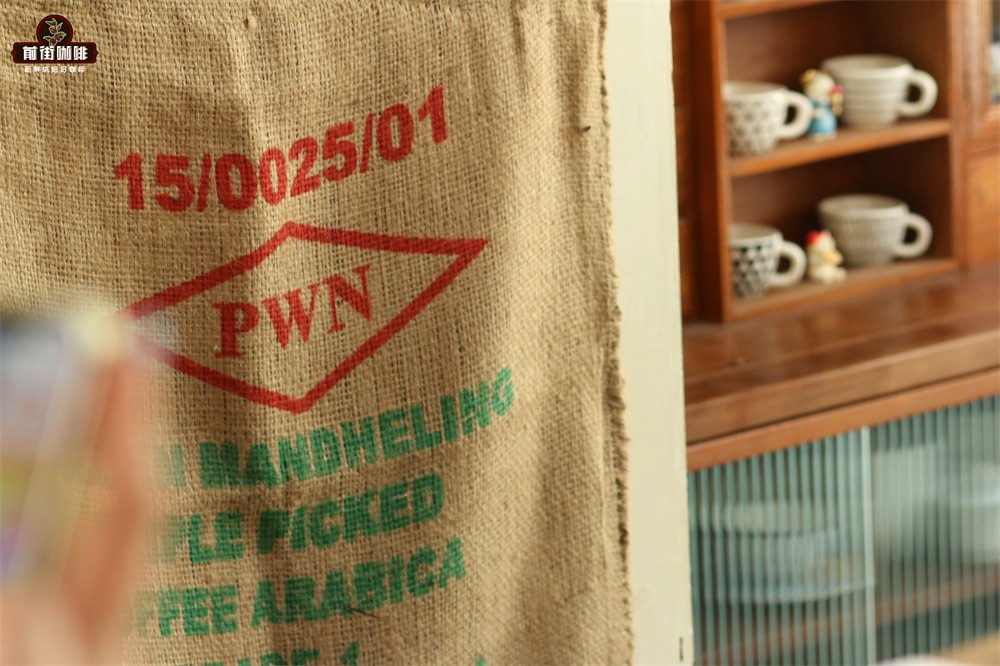
Mandheling coffee is a classic representative from Sumatra, Indonesia, well-known for its unique wet-hulled processing method, which delivers a bold, full-bodied cup with herbal and spicy notes. Among the various types of Mandheling, 'Golden Mandheling' is a trademark registered by Indonesia's PWN company. It undergoes four rigorous rounds of manual sorting, resulting in uniform bean appearance, low defect rates, cleaner and brighter flavors, and more pronounced sweetness. In addition, in recent years, rarer Natural processed Mandheling coffees have emerged—such as those from Wahana Estate—which are particularly precious due to local climatic limitations, showcasing layers of ripe fruit and subtle fermentation characteristics.
To truly appreciate the charm of Indonesian Mandheling, we must first explore its regional background. The history of coffee cultivation in Indonesia dates back to the Dutch colonial era, where the area’s unique geography and climate have given rise to coffee with strong regional character. Among them, Sumatran Mandheling is considered a classic, although the term 'Mandheling' actually originates from the name of an indigenous tribe and was later mistakenly adopted as a coffee name, a misnomer that has persisted to this day. Today, in addition to Golden Mandheling, the market also features other classifications such as Tiger Mandheling, Aged Mandheling, and Lintong Mandheling, each with its own distinct processing method and flavor direction.
Speaking of Golden Mandheling, one cannot overlook its 'sorting history.' Initially promoted primarily by the Japanese market, Japanese buyers had extremely high quality standards—not only demanding strict control over defect rates but also incorporating multiple rounds of manual selection to ensure consistency in bean appearance and ripeness. Although the name originated from the Japanese market, the 'Golden Mandheling' trademark was eventually successfully registered by Indonesia’s PWN company (Pwani Coffee Company), meaning that what was originally a product named by Japan ultimately belongs to an Indonesian domestic enterprise. Notably, Japanese brands later had to rebrand their offerings as 'Gold Top Mandheling (鼎上黄金曼特宁)' to continue promotion.
In terms of processing methods, Sumatra’s year-round rainy and humid climate, along with frequent typhoons, rarely allows for stable weather suitable for Natural processing. Coupled with the relatively high investment cost of washed processing equipment, the region developed its unique 'wet-hulled' method. This process involves removing the coffee cherry’s skin and pulp, allowing the beans to undergo brief fermentation and initial drying, then prematurely removing the mucilage-covered parchment layer (i.e., the inner husk), followed by continued drying to approximately 12% moisture content. This method accelerates the drying process but often leaves noticeable pressure marks or cracks on the bean surface—though this is normal and not a defect. This year, some Mandheling coffees processed using the Natural method have also appeared on the market, such as those from Wahana Estate, which, due to climatic constraints, present greater challenges but successfully showcase richer fruit tones and light fermentation characteristics.
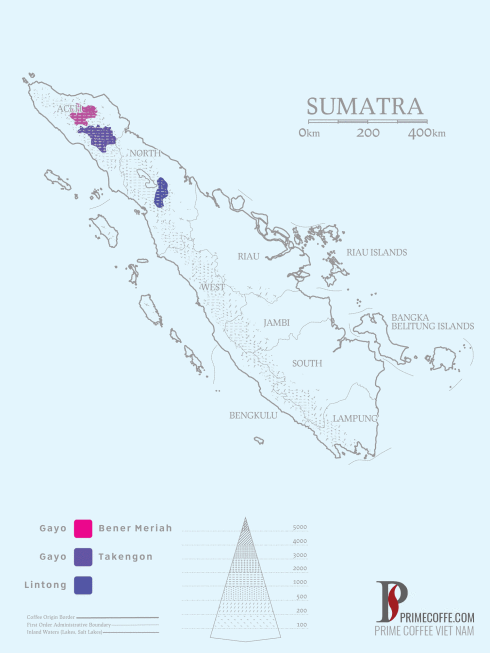
Taking the Golden Mandheling produced by PWN as an example, its growing region is located in Sumatra at an altitude of about 1100 to 1600 meters, with the main cultivated variety being Ateng. Processed using the wet-hulled method, it is recommended to pay special attention to temperature control during the drying phase of roasting. It is recommended to use a Yangjia 800N roaster, with a charge temperature set at 200°C. Immediately after dropping the beans, close the damper for a 30-second pre-infusion, then gradually adjust the damper size. Once the bean color turns light green or white, set the damper to 4, and open it fully after first crack. Specific parameters are as follows: yellowing point occurs at around 5 minutes 40 seconds at 148°C, first crack begins at approximately 9 minutes 54 seconds at 191.2°C, with roasting continuing for 3 minutes 30 seconds after first crack, and dropping the beans at 204.5°C.
For brewing recommendations, Golden Mandheling is well-suited for the Kono filter. Water temperature should be controlled at 86°C, with a dose of 15 grams and a 1:15 coffee-to-water ratio, using a grind size of around EK43s setting 11 (medium-coarse to medium). The Kono filter has fewer ribs, concentrated at the bottom, which allows the filter paper to fit more tightly, reducing airflow and extending extraction time—helping to enhance body. A staged extraction method is recommended: begin with a 30-second pre-infusion using 30 grams of water, then pour in small circles until reaching 125 grams for the first stage. When the water level is about to expose the coffee bed, continue pouring to 225 grams, then remove the filter. Total brew time is approximately 2 minutes. Its flavor profile typically exhibits rich layers, a full body and cleanliness, combining notes of nuts, chocolate, spices, and caramel, with a long finish and a hint of fruitiness.
Another noteworthy option is the Natural processed Mandheling from Wahana Estate in the Lake Toba region. Grown at an altitude of 1000 to 1700 meters on fertile volcanic soil, the estate primarily cultivates Bourbon and Typica varieties. This particular lot consists of 2020-harvested G1 grade green beans, processed using the Natural method. By skipping the fermentation step and directly sun-drying the whole cherry to 12% moisture content before removing the husk, this method preserves more fruit sugars, imparting the coffee with richer fruit tones and subtle fermentation notes.
Regarding roasting, it is recommended to use the same roaster model, with the same charge temperature of 200°C, though the overall roast curve can be slightly adjusted: yellowing point occurs at around 5 minutes 50 seconds at 154°C, first crack begins at 9 minutes 39 seconds at 183.6°C, and only 2 minutes 30 seconds of development after first crack are needed before dropping the beans at 195°C. This roast level helps highlight fruity and sweet notes while maintaining a gentle acidity.
For brewing, it is recommended to use a V60 filter, with water temperature increased to 90°C, a dose of 15 grams, and a 1:15 coffee-to-water ratio, adjusting the grind size to medium-fine (e.g., BG#6S). The same staged extraction method is used: begin with a 30-second pre-infusion, then pour in small circles until reaching 125 grams for the first stage, followed by pouring to 225 grams before removing the filter, with total brew time maintained at around 2 minutes. This Natural Mandheling offers a bright and clear flavor profile, with distinct tropical fruit notes, gentle and balanced acidity, prominent sweetness, a smooth mouthfeel, and a clean, refreshing finish—making it ideal for coffee lovers who enjoy fruity and refreshing profiles.
The above content is compiled by CoffeeHunters, a coffee news website.


