







Introduction:An in-depth analysis of how the geographical environments and climatic conditions of China’s three key small-bean coffee-growing regions—Pu’er, Baoshan, and Lincang in Yunnan—shape their unique flavor profiles, along with a comparison of how planting altitudes and varieties in each area influence cup characteristics. From high-altitude dry-hot river valleys to multi-tiered climate zones, learn how to select beans that suit your taste through flavor traits, while also mastering professional pour over parameters to enhance extraction performance.
Yunnan, with its high altitude and dry river valley terrain, has become one of the most suitable regions on the Chinese mainland for coffee cultivation. Especially within the three core producing areas of Pu’er, Baoshan, and Lincang, differences in topography, climate, and variety give rise to distinctly unique coffee profiles. Ranging from mild fruity acidity to rich caramel finishes, the microclimatic conditions of these regions directly affect the final flavor expression.
Premium specialty coffee around the world generally thrives within the “golden belt” between 28°N and 38°S latitude, requiring moderate sunlight, abundant rainfall, and distinct day-night temperature variations. Yunnan is situated at the northern edge of this zone, where the dry-hot river valley areas at elevations of 1200 to 1600 meters are particularly well-suited for cultivating high-quality small-bean coffee varieties. The temperature differences between day and night at this altitude slow down fruit ripening, helping flavor compounds accumulate gradually.
The Pu’er producing area spans nine districts and counties including Simao, Ning’er, and Mojiang, with planting elevations ranging from 700 to 1600 meters. The annual average temperature here remains between 17 and 20°C, and coffee beans from higher altitudes often exhibit a refreshing acidity reminiscent of plum-like fruits, accompanied by layered sweetness of nuts and caramel, with an aftertaste that shows a distinctly fermented-tea-like sweetness. On-site cupping data shows that such beans, when processed properly, can present a richly layered tropical fruit character.
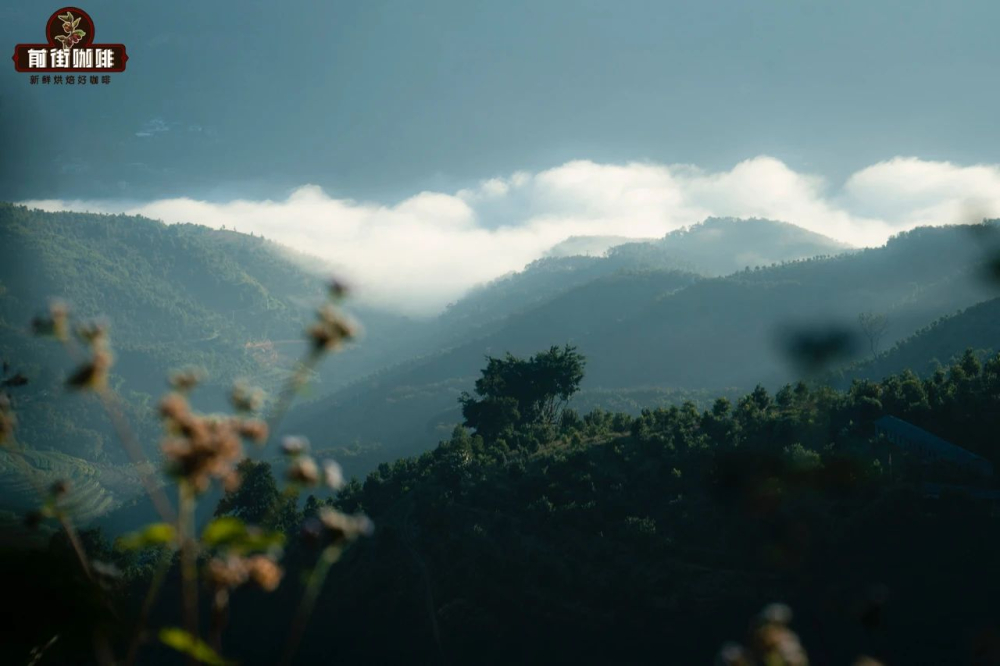
The Baoshan region covers five counties and districts including Longyang and Longling, and holds the geographical indication certification for “Baoshan Small-Bean Coffee.” This area features a low-latitude plateau mountainous monsoon climate, with sharply varied terrain creating a multi-tiered climate where “one mountain has four seasons”—the annual average temperature is only 14 to 17°C with notable daily temperature fluctuations, and annual rainfall ranges from 700 to 2100 millimeters. Coffee is mainly grown at elevations of 1000 to 1500 meters, where the soil offers good drainage, and the resulting beans typically have a solid body and a balanced acid-to-sweetness ratio.
Lincang City is located in the southwestern part of Yunnan, bordering Myanmar, with planting elevations distributed between 1000 and 1600 meters. As a subtropical low-latitude plateau mountainous monsoon climate zone, it is influenced by the warm, moist air currents from the Indian Ocean, resulting in a mild annual average temperature and prominent day-night temperature differences, with annual sunshine hours exceeding 2000. Notably, although the rainy season is concentrated, the dry season enjoys abundant sunlight, and the complex terrain contributes to diverse microclimates. Of particular interest, the area has established its own 1300-meter-altitude plantation, introducing the oldest Arabica variety, Typica—this ancient variety with pure lineage is known for its elegant and clean flavor profile and has long been regarded as a benchmark for specialty coffee.
In terms of variety selection, Typica, with its stable genetic heritage and outstanding flavor purity, has become an important direction for improving the quality of Yunnan coffee. By returning to classic varieties and optimizing cultivation management, producers are able to enhance the expression of regional characteristics in the beans. Currently, the high-quality Yunnan beans available on the market mostly come from the Lincang and Baoshan regions, with typical representatives including Typica processed with full red cherry sun-drying methods, as well as washed Catimor types. These beans generally feature a nutty base, caramel sweetness, and a moderate red berry tone.
For home brewing enthusiasts, it is recommended to prioritize Yunnan coffee beans that are freshly arrived within five days post-roasting. In terms of equipment, using a V60 dripper with a 1:15 coffee-to-water ratio (approximately 15 grams of coffee to 225 milliliters of water) can clearly highlight the flavor layers. Specific parameter settings are: medium grind size (close to 75% passing rate of a standard Chinese No. 20 sieve), with water temperature controlled between 88 and 89°C. During brewing, you can use the three-pour method—first pouring 30 grams of hot water for a 30-second bloom to awaken the coffee grounds; the second pour involves slowly circling water to reach 125 grams, then continuing to pour until reaching 225 grams after the liquid level drops by about half; the total extraction time is approximately 2 minutes and 10 seconds, which effectively balances bright acidity and body.
Observing the regional map reveals that the microclimate differences among Yunnan’s three core areas are directly reflected in the final cupping results: Pu’er’s bright high acidity, Baoshan’s balanced body, and Lincang’s rich layers each offer unique characteristics. Consumers can choose beans from corresponding regions based on personal taste preferences, while also ensuring storage conditions are kept away from light and moisture to maintain freshness.
The above content is compiled by CoffeeHunters, a coffee news website.


