







Introduction:The global coffee market is a vibrant tapestry, with everything from classic Typica and Bourbon to the rising star Geisha. Each variety boasts a unique flavor profile and ideal brewing method. This article takes you deep into the evolution of key varieties under the two major systems—Arabica and Robusta—analyzing their origin stories, physical characteristics, and cupping performance. It also includes pour over recommendations to help you choose the beans that best suit your taste preferences.
The world of coffee is like a vast garden. From mainstream Arabica and Robusta to sub-varieties like Typica, Bourbon, Caturra, and Maragogype, and on to the decade’s hottest Geisha, each variety is not just an extension of a genetic lineage but also carries the terroir and agronomic wisdom of its origin. Understanding their differences helps you make more informed choices when selecting beans and unlocks their optimal flavor potential during pour over or extraction.
Arabica and Robusta: The Fundamental Divide Between Two Major Cultivars
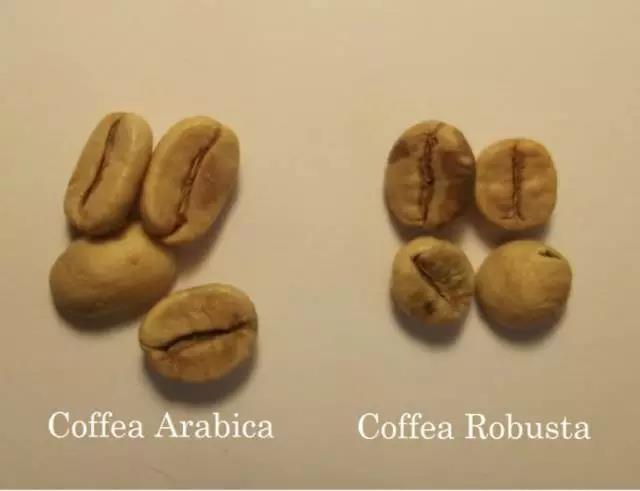
Within the genus Coffea, Arabica and Robusta are the two dominant cultivated species. Most high-quality single-origin beans and specialty coffees on the market come from Arabica, while Robusta is commonly found in commercial blends and instant coffee bases.Arabica, with its lower caffeine content (about 0.9%–1.2%) and higher fat and sugar ratios, typically delivers a smoother taste with pronounced acidity and fruity notes, making it well-suited for pour over or drip methods to showcase its layered complexity.In contrast, Robusta contains a much higher caffeine level (1.6%–2.4%), resulting in a stronger bitterness and richer body. It often has rubbery or woody aftertastes. While its single-origin flavor may be coarser, it provides a bold foundation and thick crema in blends.
Typica: The Ancestral Variety of Arabica
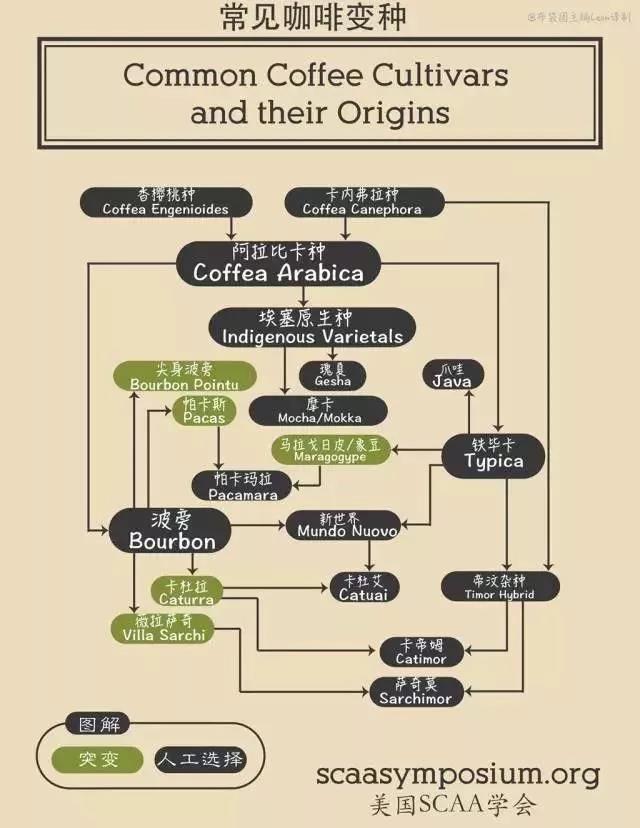
Typica is the root of all Arabica lineages, originating in Ethiopia. Its plants feature unique bronze-colored top leaves, and the green beans are slender, oval, or pointed in shape. Though this variety offers elegant flavors, delicate acidity, and fruity nuances, it is vulnerable to disease, low-yielding, and demanding in terms of growing conditions—making it a high-risk, high-reward choice.Representative producing regions include Jamaica Blue Mountain, Sumatra Mandheling, and Hawaii Kona. Among them, Blue Mountain coffee is revered as a dream bean by coffee enthusiasts worldwide, thanks to its strict altitude requirement (above 666 meters) and meticulous processing.
Bourbon: A Classic Mutation from Yemen to the Americas
Bourbon is a mutation of Typica that occurred during its time in Yemen. Its most notable trait is the transformation of the fruit shape from the slender, pointed form of Typica to a rounder one, which also altered its flavor profile.Bourbon typically produces red cherries, and those grown at high altitudes—commonly referred to as Red Bourbon—often exhibit bright acidity, wine-like aromas, and rich fruitiness.Beyond the classic Red Bourbon, there are also mutations like Yellow Bourbon and Pink Bourbon. Yellow Bourbon is known for its sweet, nutty tones and soft acidity, while the extremely rare Pink Bourbon, due to unstable anthocyanin genetics, has very low yields but often delivers a unique juiciness and citrus character.
Maragogype and Pacamara: Breakthroughs in Size and Flavor
Maragogype is a large-beaned mutation of Typica, with beans more than three times the size of regular Arabica. First discovered in Brazil in 1870, it may deliver ordinary flavors at low altitudes but can show gentle acidity and elegant sweetness when grown at higher elevations.Pacamara is a hybrid of Maragogype and another variety called Pacas. It boasts near-Maragogype-sized beans and outstanding cupping performance, having repeatedly stood out in international competitions in recent years for its balanced sweetness and acidity and rich aroma.
Geisha: The Representative of a Flavor Revolution
Geisha originated in Ethiopia’s Gesha Mountains and was later rediscovered in Panama, where it rose to fame after major cupping competitions starting in 2005.This variety is most renowned for its intense floral notes, tropical fruit sweetness (such as mango and passionfruit), and tea-like, refined acidity—performing especially well at high altitudes (typically above 1600 meters).The well-known Hacienda Esmeralda further categorizes its Geisha offerings into Red Label, Green Label, and Blue Label based on altitude and cupping scores, allowing consumers to choose according to budget and preference.
Caturra and Catuai: Balancing High Yield with Flavor
Caturra is a natural mutation of Bourbon, favored by farms across Central and South America for its shorter tree height and high productivity. It is suitable for dense planting and mechanical harvesting. Its flavor profile is similar to Bourbon’s but tends to show brighter acidity and aroma at higher altitudes.Catuai is a cross between Caturra and the Mundo Novo variety. It features sturdy fruit and wind resistance. Although its overall flavor is slightly inferior to Caturra’s, it maintains stable quality and is widely cultivated in Brazil and various Central American regions.
Hybrids and Mutations: The结晶 of Technology and Nature
Beyond traditional variety evolution, many modern varieties are developed through artificial hybridization. For example, Catimor is a cross between Caturra and Timor, offering strong disease resistance and yield potential, though its flavor is often considered more ordinary.Another example is Bourbon Pointu, known for its extremely low caffeine content (just half that of regular coffee) and delicate acidity. However, due to the plant’s fragility, it is rare and mostly found in laboratories or high-end specialty markets.
In summary, from Typica to Geisha, each coffee variety represents a distinct flavor profile and cultivation challenge. Whether you’re a pour over novice or a cupping veteran, understanding the background and traits of these varieties can help you select and brew the perfect cup more precisely.

The above content is compiled by CoffeeHunters, a coffee news website.


