







Introduction:These Dorothy coffee beans from the Anna Sora Estate in Ethiopia’s Guji region, processed using an enzymatic washed method, showcase unique notes of peach and oolong tea, redefining traditional Ethiopian coffee profiles. This article delves into the characteristics of the producing region, the processing method, and offers professional pour over recommendations and practical tips to help you fully highlight its floral-fruity profile and clean cup.
As the birthplace of coffee, Ethiopia is home to numerous regions with distinctive flavor profiles. Among them, the Guji region has rapidly risen to prominence since splitting from Sidamo in 2010. Renowned for champion lots such as Huila and Flower Power, it has become a focal point in the specialty coffee market. A certain well-known coffee brand recently launched ‘Dorothy,’ which comes from the Anna Sora Estate in Guji, processed via enzymatic washed method, presenting enchanting notes of white peach, jasmine, and oolong tea—a flavor-forward coffee worth exploring in depth.
When mentioning Sidamo, many people first think of the berry and creamy-toned Huila coffee—especially those from the Hambela region, whose fame has even attracted the attention of international chain brands. In contrast, Yirgacheffe is predominantly washed, showcasing bright citrus acidity and jasmine floral notes with a refreshing taste; Sidamo, on the other hand, often employs natural processing, resulting in a more intense sweet-and-sour profile, rich and reminiscent of berry juice, leaving a memorable impression.
In 2010, the Ethiopian government, aiming to cultivate a diverse range of specialty coffee regions, separated Guji from Sidamo and designated it as a key development area. In recent years, Guji has frequently won awards in both domestic and international coffee competitions—for example, in the 2017 TOH competition, Hambela’s Huila won the natural division with its strawberry-cream flavor profile; in 2020, Flower Power from the Uraga Zone claimed victory in the washed division. These achievements have gradually elevated Guji onto the international specialty coffee map.
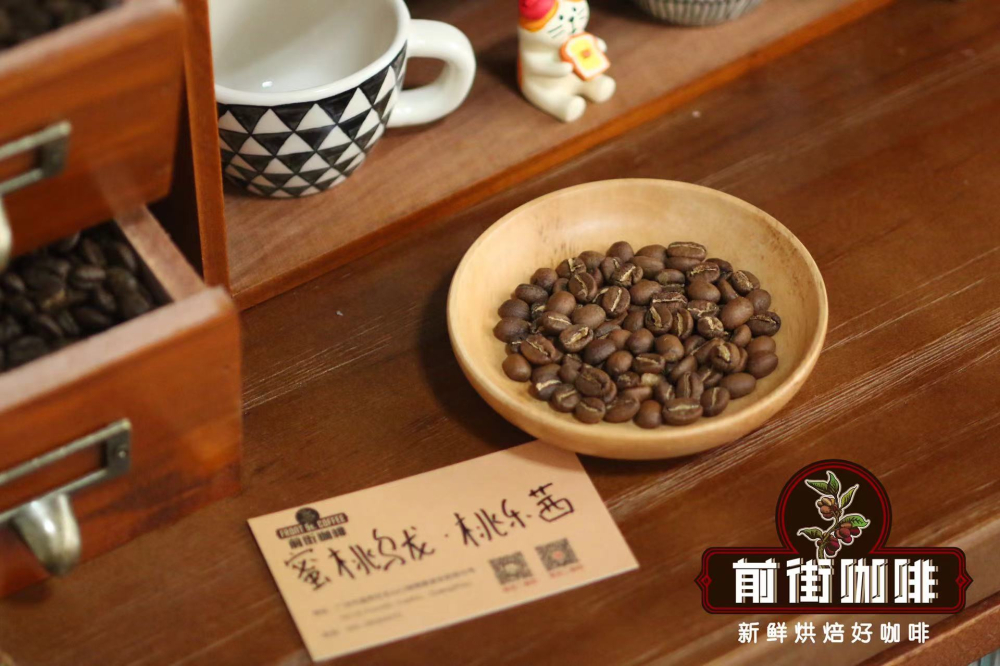
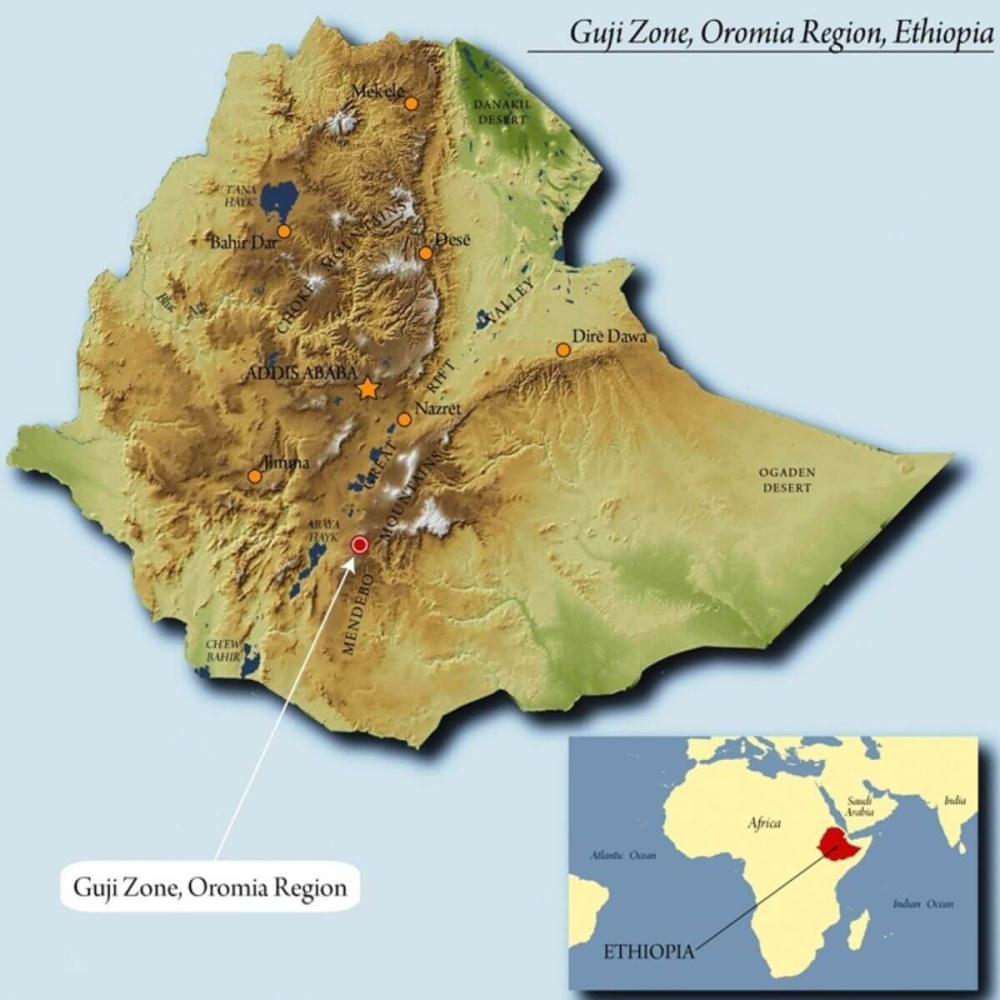 The ‘Dorothy’ recently introduced by a certain well-known coffee brand originates from the Anna Sora Estate in the Guji region, grown at elevations between 1,900 and 2,350 meters and classified as G1 grade. It uses local heirloom varieties, processed through enzymatic washed method, revealing an exceptional peach-oolong flavor profile. This coffee bean breaks away from many people’s impression of Ethiopian coffee as being dominated by berries and citrus, instead captivating both newcomers and coffee aficionados with its intense white peach aroma and oolong tea undertones.
The Anna Sora Estate was established in 2010 and officially renamed in 2013. Covering an area of approximately 250 hectares, about 150 hectares of which are dedicated to coffee cultivation. Although less renowned than other famous estates, the quality of coffee produced here has been recognized by the market. The estate’s name is derived from a nearby village, and with support from local government and environmental agencies, the planting area is located within forest belts, surrounded by acacia trees, Cordia africana, leguminous plants, and false banana trees, providing optimal shade for the coffee trees, slowing fruit ripening, while fallen leaves return nutrients to the soil as natural fertilizers.
The high altitude and significant diurnal temperature variation contribute to the balanced sweet-and-sour taste of this Dorothy. Notably, Anna Sora produced only natural process beans before 2018, and it wasn’t until the installation of a washing station that they began producing washed coffee. This washing station is located near the Turomo River, utilizing clear river water to process green beans—it is one of the few estate-based self-processing washed coffee cases in Ethiopia.
Currently, the estate is managed by second-generation owner Israel Degfa, who grew up immersed in knowledge of coffee cultivation and processing, inheriting family expertise. The standout peach flavor in Dorothy is largely due to its enzymatic washed process: after removing the skin, the sticky mucilage-covered coffee pulp is placed in a sealed tank where enzymes are added for 24 hours of fermentation, then transferred to a water tank for 48 hours of soaking, using water flow and friction to remove the mucilage, and finally evenly spread on raised drying beds to dry.
To fully express the fruity character and clean cup, the roasters of this coffee brand opt for a light roast and slow down the roasting pace to ensure even heat application across different sizes of the heirloom variety. This coffee is cupped 8 to 24 hours post-roast, exhibiting delicate jasmine floral notes, intense white peach aroma, along with honey sweetness and oolong tea undertones. The overall cup is round and full-bodied, reminiscent of sipping a high-quality peach oolong tea.
For brewing recommendations, it is advised to use a Hario V60 filter cone, with water temperature controlled at91°C, coffee dosage15 grams, brew ratio1:15, grind size approximately equivalent to a 20-mesh standard Chinese sieve passing rate80%(medium-fine grind). The specific steps are as follows: start by pouring30 gramsof hot water for a 30-secondbloom, then continue pouring with a thin stream in slow circles from the center to reach125 gramsfor the first extraction phase; once the water level drops to just about to expose the coffee bed, continue pouring in circles until the total volume reaches225 grams, and stop. The total brew time is approximately2 minutes. These parameters help balance sweetness and aroma, fully showcasing the unique flavor layers of Dorothy.
This coffee bean is not only suitable for pour over enthusiasts who enjoy fruity profiles, but also serves as an excellent entry point for exploring the Guji region and enzymatic washed processing. With the right brewing techniques, you’ll be able to experience another facet of Ethiopian coffee—the exquisite fusion of peach and oolong.
The above content is compiled by CoffeeHunters, a coffee news website.


