







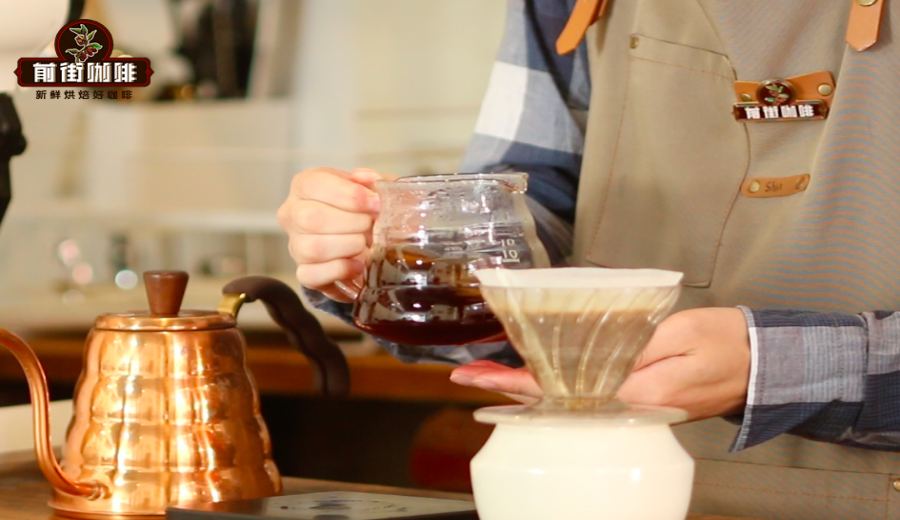
Introduction:Gain an in-depth understanding of the diverse profiles of Colombian coffee, spanning six renowned regions from Huila to Cauca, exploring distinctive varieties such as Caturra and Geisha, as well as processing methods including washed and double anaerobic enzymatic washed. This article provides professional roasting recommendations and practical pour over parameters, along with detailed flavor descriptions and brewing tips, helping you comprehensively master the essence of Colombian coffee from origin to cup.
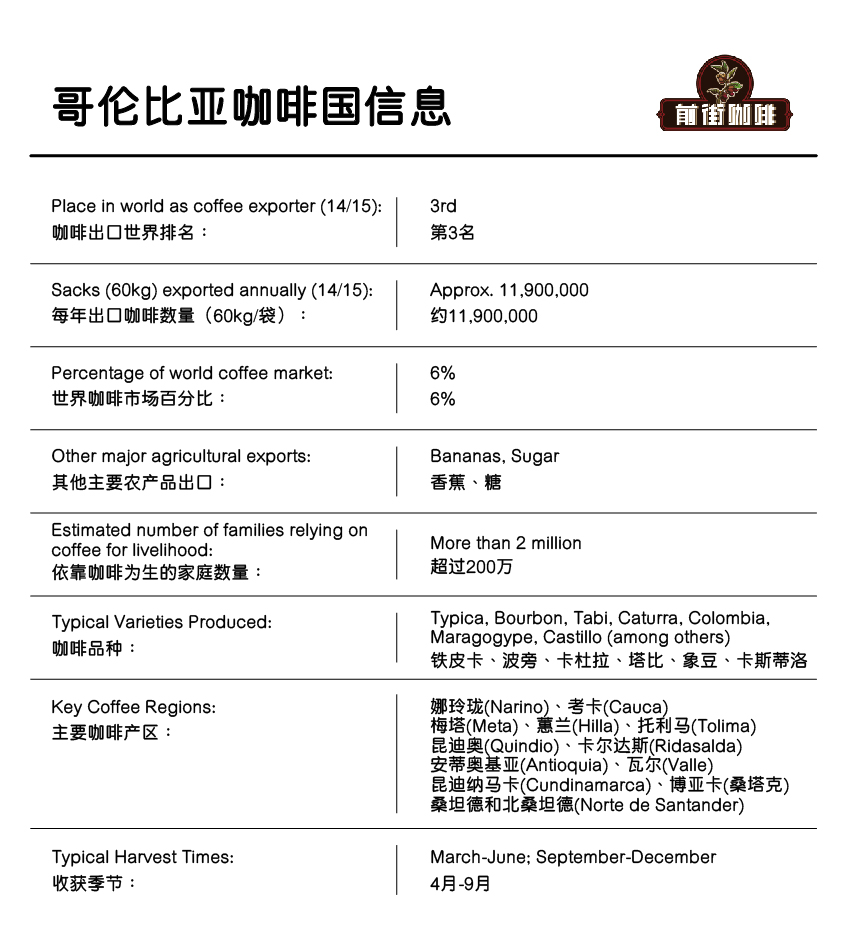
Colombia consistently ranks as the world’s second-largest coffee producer and is the leading exporter of washed Arabica beans. Nestled within the embrace of the Andes Mountains, this country, with its complex terrain and microclimates, cultivates coffee with richly layered flavors. This article will systematically analyze the characteristics of Colombia’s main coffee-growing regions — from the high-altitude Huila to the misty Nariño — introducing you to the unique personalities of coffees from each area.
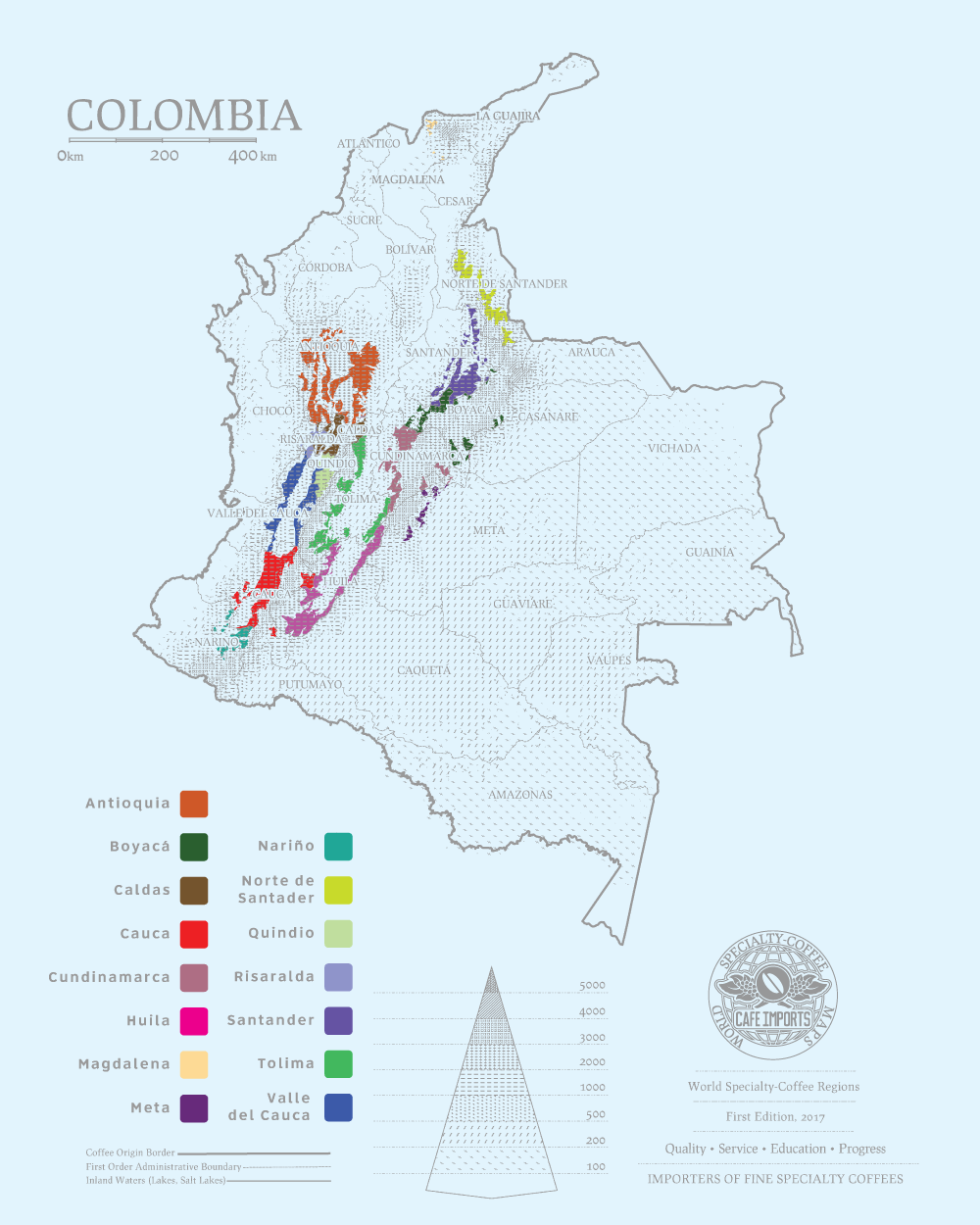
Regional Flavor Map
The Colombian coffee landscape can be divided into two main categories: commercial and specialty. The “MAM” triangle in the central and northern regions (Medellín, Armenia, and Manizales) is known for classic Central American flavors with pronounced fruit acidity; in contrast, the northeastern Santander province showcases low-elevation characteristics with bold, bitter richness akin to Indonesian Mandheling. Specialty coffee production is primarily concentrated in the southern volcanic belt at elevations above 1,500 meters, where regions like Cauca and Huila are celebrated for their caramel sweetness paired with delicate berry acidity.
In-depth Analysis of the Huila Region
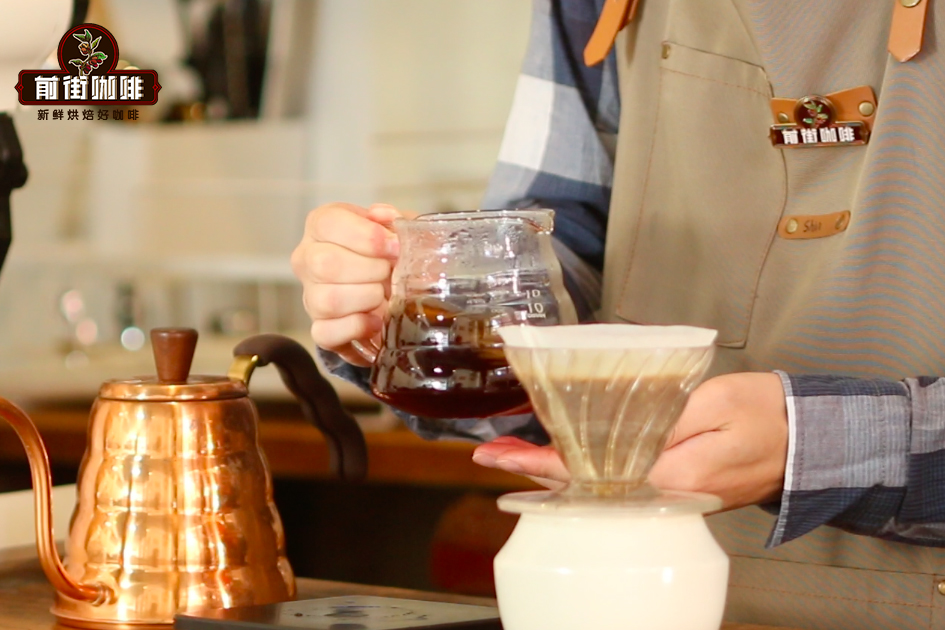
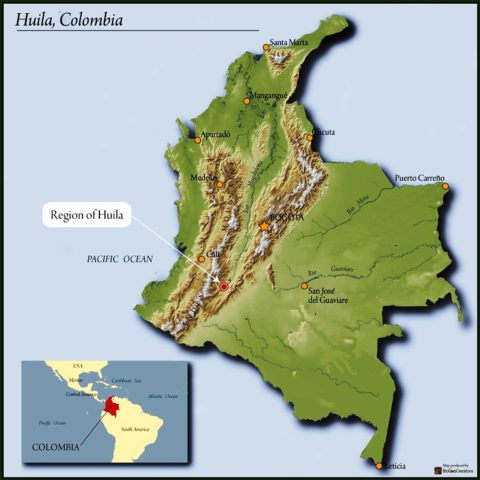
Located in the central mountain range of the southern territory, Huila Province boasts planting altitudes exceeding 1,500 meters and abundant moisture. Local smallholder farmers adopt a micro-lot production model, rigorously selecting high-quality beans through cupping. Take the Caturra variety, for example:Medium-Dark Roastcan bring out nutty and dark chocolate notes. It is recommended to start with a charge temperature of 185°C, and continue roasting through first crack up to 202°C. For pour over, the KONO filter cone is recommended.A water temperature of 86–87°C with a grind size passing 75% through a #20 sieveallows a stepped pouring technique to highlight its balance of sweetness and fruit acidity.
The Natural Advantages of Cauca Province
As a certified origin region for Colombian coffee, Cauca Province benefits from an average altitude of 1,758 meters and significant diurnal temperature variation (average 11°C / daytime 18°C), resulting in a unique expression of acidity and sweetness.The Pink Bourbon variety, when processed with the washed method, exhibits aromas of peach and plum. Roasters recommend usinga light roastto preserve its floral and fruity characteristics. For pour over, use a Hario V60,with a water temperature of 90°C and a 1:15 coffee-to-water ratio. A three-stage extraction can balance citrus acidity with a honey-like finish.
The High-Altitude Qualities of Nariño
Bordering the Pacific Ocean to the west, Nariño Province’s coffee farms are situated in the misty belt between 1,600 and 2,300 meters. The small yet dense beans grown in volcanic soilat altitudes of 1,600–2,300mimpart a rich caramel base. It is worth noting that only about 4% of the region’s annual production qualifies as premium-grade beans, so special attention should be paid to sourcing.
Variations in Processing Techniques
Colombia generally employs the washed process, with farmers using water-saving Ecomill equipment that removes mucilage while maintaining environmental sustainability. Anaerobic double enzymatic washed processing is more commonly seen in the Santander region, where controlled fermentation environments enhance flavor complexity — for instance, one coffee brand’s Rose Valley offering showcases floral and grape notes thanks to this method. Special varieties like Geisha in the Tolima region are often lightly roasted to emphasize the bright profiles of citrus and green tea.
Variety Diversity and Historical Evolution
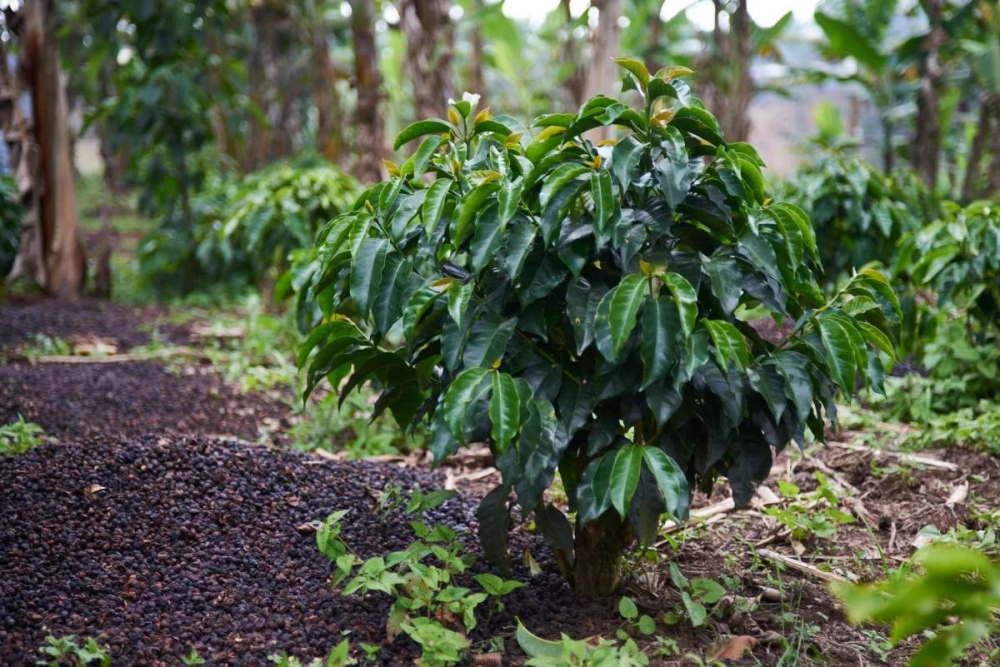
In addition to common varieties like Caturra and Bourbon, Colombia has cultivated disease-resistant strains such as the Colombia variety (released in 2002), Tabi (2002), and Castillo (2005). Notably, after the 1970s, Caturra gradually replaced the traditional Typica due to its higher yield and suitability for dense planting. Rare varieties like Laurina (slender Bourbon) and Mocca (Mocha) are more commonly found in specialty smallholder farms.
Practical Pour Over Parameter References
• Huila Washed Caturra:Use a Hario V60 filter cone, 86–87°C, 20号 sieve 75% grind, stepped pouring with a total of 225g water
• Cauca Pink Bourbon:Use a Hario V60, 90°C, 20号 sieve 80% grind, three-stage extraction for 2’00"
• Santander Anaerobic Processed:Use a V60 filter cone, 90–92°C, Chinese standard 20号 sieve 80% passing rate
The success of Colombian coffee stems not only from its exceptional natural conditions but also from the meticulous cultivation by approximately 600,000 small family farms. These family-run operations, through hand-picking and the use of natural fertilizers, ensure the stability of coffee bean quality. From volcanic soils to high-altitude misty environments, each region tells its own unique terroir story, waiting to be explored by coffee enthusiasts.

The above content is compiled by CoffeeHunters, a coffee news website.


