








Introduction:Kenyan coffee is renowned for its distinctive fruity acidity, delicate sweetness, and berry-like aroma, making it one of the most favored origins among specialty coffee enthusiasts worldwide. This article delves into Kenya’s growing environment, key coffee varieties, and the classic K72 washed processing method to explore the origins of its bright acidity and fruity flavor profile. It also provides practical pour over parameters to help you master the essence of this African gem.
With its intense fruit acidity, full body, and flavors reminiscent of black plums and blackcurrants, Kenyan coffee holds a prominent place in the global specialty coffee market. A high-quality cup of Kenyan coffee often greets the palate with rich aromas of black plum and cherry tomatoes, followed by a distinct sweetness in the mid-palate, and a finish that lingers with berry notes and brown sugar sweetness, complemented by a subtle tea-like undertone. These characteristics have earned it the reputation of being a “benchmark for acidity” among many coffee lovers.
Although neighboring Ethiopia—the birthplace of coffee—Kenya’s coffee industry started relatively late, only gradually moving toward commercialization in the early 20th century. However, thanks to its exceptional geographical conditions, carefully cultivated varieties, and the unique K72 washed processing technique, Kenya rose to become one of the world’s leading specialty coffee origins within just a few decades.

Located in East Africa, Kenya is bisected by the equator and traversed north to south by the East African Rift Valley. The country shares borders with Somalia, Tanzania, Uganda, Ethiopia, and Sudan, and has a southeastern coastline along the Indian Ocean. The terrain is predominantly highland, with an average elevation of about 1,500 meters. This altitude helps coffee cherries ripen slowly, accumulating richer flavor compounds. Additionally, Kenya experiences two main rainy seasons each year, resulting in two coffee harvest periods, primarily in volcanic regions at elevations between 1,600 and 2,100 meters, such as areas around the capital Nairobi and the Kenyan highlands.
Kenya’s coffee cultivation history dates back to the late 19th century, when French missionaries first introduced the Bourbon variety from Île Bourbon (now Réunion Island). Historical records indicate that John Patterson brought coffee plants to Kenya on behalf of the Scottish Mission in 1893, with planting beginning in the Kiambu-Kikuyu region in 1896. By 1912, there were already hundreds of acres of coffee farms, mainly cultivating Bourbon and Kent varieties. After gaining independence in 1963, local farmers—building on years of accumulated cultivation expertise—continued to enhance coffee quality. To this day, over half of Kenya’s coffee is still produced by smallholder farmers.
Kenya has invested heavily in coffee variety breeding, and its most iconic SL28 and SL34 were developed by Scott Laboratories. In the 1930s, Kenya’s coffee trees were severely affected by coffee berry disease. Commissioned by the government, Scott Laboratories focused on developing disease-resistant new varieties. Among their many research projects, No. 28 (SL28) and No. 34 (SL34) not only demonstrated excellent disease resistance but also delivered outstanding flavor performance, leading to their promotion among farmers and becoming flagship varieties of Kenyan coffee.
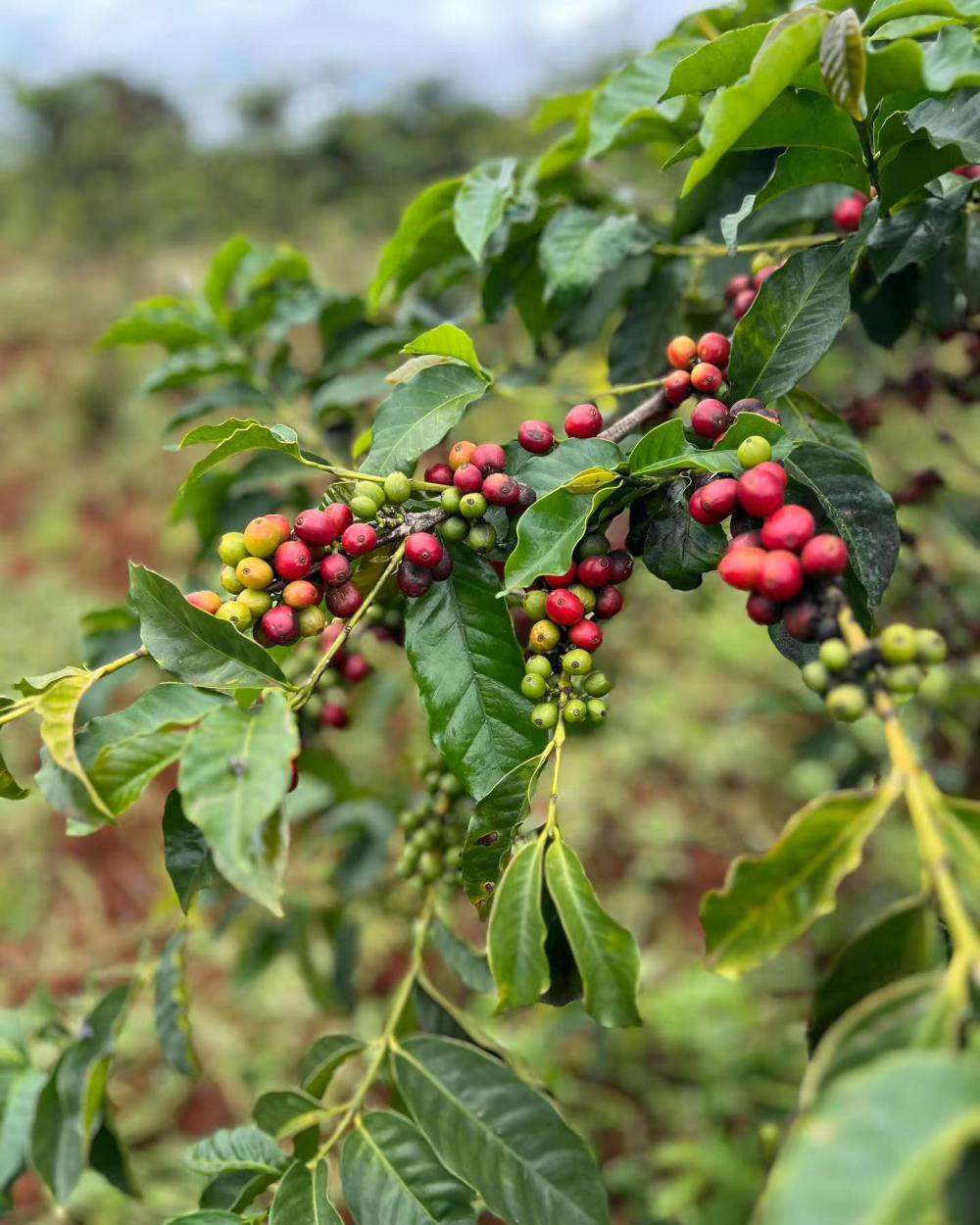
SL28 is highly drought-resistant, and its cup profile often showcases a bright, wine-like acidity, with a rich mouthfeel, abundant fruitiness, and a full body. In contrast, SL34 combines lineage from French Mission, Bourbon, and some Typica, featuring a copper-toned bean and a broad bean-like shape. It offers exceptional sweetness and a highly layered flavor profile, often exhibiting pronounced citrus and black plum notes, with a balanced and complex overall expression.
Kenya’s coffee-growing regions are primarily concentrated in high-altitude areas, including six major zones: Thika, Kirinyaga, Mt. Kenya West, Nyeri, Kiambu, and Muranga. About 60% of production comes from central regions such as Thika, Nyeri, Kirinyaga, Muranga, and Kiambu. These areas feature fertile volcanic soils, moderate sunlight and rainfall, and elevations generally ranging between 1,400 and 2,000 meters, with temperatures maintained between 15–24°C. The volcanic red soil offers excellent drainage and is rich in minerals, helping coffee cherries accumulate bright and layered fruity acidity.
The standout highlight of Kenyan coffee’s flavor lies in its vivid and complex berry and fruit notes, paired with solid acidity and a juicy sweetness, creating an unforgettable drinking experience. This unique flavor profile is not only due to the region’s distinctive soil and climate but is also closely tied to Kenya’s signature K72 washed processing method.
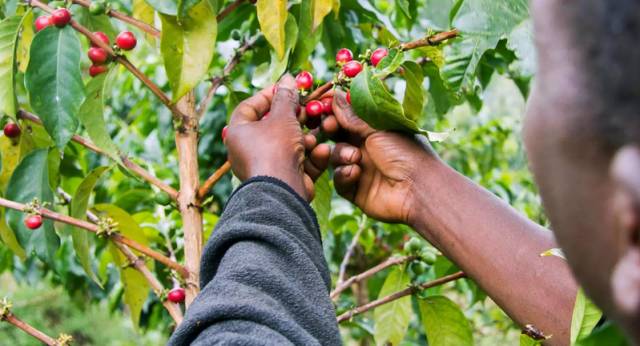
Washed processing typically results in brighter acidity in coffee beans because its wet fermentation is a semi-aerobic process, which breaks down sugars in the beans and generates more organic acids. While standard washed processing fermentation times are usually kept under 36 hours, Kenya employs a unique “K72 washed processing method” with a fermentation time of 72 hours—far exceeding the norms of other regions.
The key to the K72 method lies in conducting fermentation in three phases, each lasting 24 hours. After each phase, fresh clean water is used to replace the old, and soaking fermentation is restarted to ensure a stable and thorough fermentation process. This approach not only extends fermentation time but also enhances the richness and layering of acidity, ultimately delivering a coffee with a more vivid and long-lasting fruity acidity.
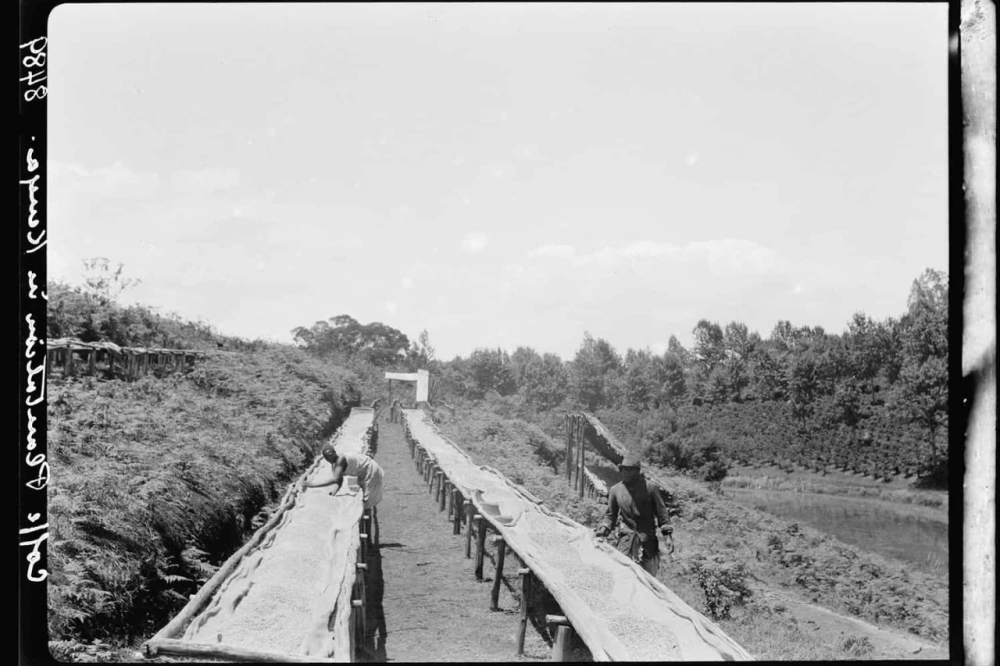
Additionally, Kenya places great emphasis on the drying process of coffee beans. Farmers avoid spreading beans haphazardly on the ground to prevent absorption of dust or impurities from the surface, which could affect flavor purity. Instead, they use specially designed “Kenyan raised beds”—elevated steel drying trays with evenly spaced holes. This setup ensures proper ventilation and even heat distribution during drying, preventing moisture retention and mold growth while effectively blocking ground odors, resulting in a cleaner and brighter final cup.
To experience the unique flavors of Kenyan coffee at home, it’s recommended to choose AA-grade beans processed via the K72 washed method, sourced from SL28 and SL34 varieties, and roasted to a medium-light level, which best highlights their floral-fruity aromas and balanced acidity-sweetness. Below are practical pour over parameters suitable for various brewing methods, such as pour over, cold brew, ice drip, French press, siphon, and smart dripper.
Recommended pour over parameters:
Coffee-to-water ratio: 1:15
Coffee dose: 15 grams
Total water volume: 225 milliliters
Brewing temperature: 90°C~91°C
Grind size: Fine sugar consistency (approximately equivalent to EK43s setting 10, 80% passing through a standard #20 mesh sieve)
Suggested brewing steps using a three-stage extraction: First, place the ground coffee into the filter paper and pour 30 grams of water for a 30-second bloom, using a thin stream and steadily circling from the center outward. Then, add 95 grams of water for the second stage, and once the flow slows, proceed to pour the third stage of 100 grams of water until the coffee has fully drained, with the entire process taking about 2 minutes, allowing a ±10-second margin.
The above content is compiled by CoffeeHunters, a coffee news website.


