







Introduction:Blue Mountain coffee is hailed as the pinnacle of specialty coffee, yet the prevalence of imitations on the market makes it difficult to discern the genuine article. This article takes a shop’s self-roasted Blue Mountain No. 1 as an example, delving into its true origin, grading system, and the reasons behind its pricing, while also sharing in detail how to extract its optimal flavor through pour over brewing—offering you an authentic look at this world-renowned coffee bean.
Blue Mountain coffee holds an irreplaceable position in the coffee world. Many coffee enthusiasts have longed for it, yet doubts arise due to the abundance of counterfeit products on the market. What exactly is real Blue Mountain? Is it suitable for brewing pure black coffee? A certain shop uses its self-roasted Blue Mountain No. 1 as a starting point to guide you through the complete journey of this rare coffee—from origin to cup.
Can genuine Blue Mountain coffee be purchased domestically?
Searching “Blue Mountain coffee” on search engines often yields numerous articles teaching how to distinguish real from fake, which clearly illustrates the chaotic state of the market. Due to the immense fame of Blue Mountain, many merchants pass off low-grade commercial beans as so-called “Blue Mountain flavor” or “Blue Mountain blends,” which in reality have no connection to the genuine product. However, it is indeed possible to purchase authentic Blue Mountain coffee produced in Jamaica within the country—provided you can verify its source and related certifications.
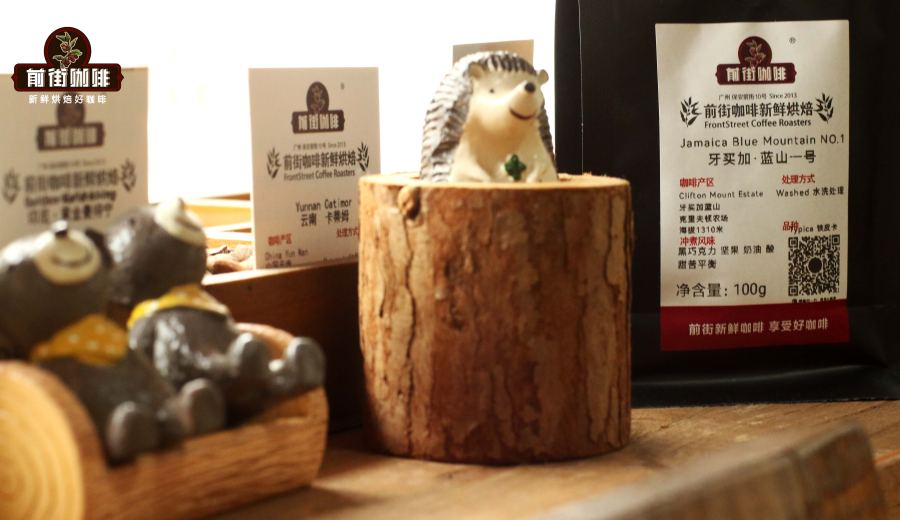
As early as 2011, a Chinese importer directly purchased Blue Mountain coffee from Jamaica, with quantities reaching 70 kg per bag for a total of 1,000 bags, amounting to a staggering USD 2 million. Nowadays, the Jamaican government has gradually turned its attention to the Chinese market, and a list of authorized exporters can be found on the CIB official website. The Blue Mountain No. 1 green beans used by a certain shop come from the Clifton Estate in Jamaica, with each batch accompanied by quality certificates issued by the Jamaica Coffee Industry Board, authorization letters from the producers, and certificates of origin.
Why is Blue Mountain No. 1 so expensive?
Dubbed the “Hermès of the coffee world,” Blue Mountain coffee boasts an unforgettable flavor profile: rich and lingering notes of chocolate and roasted hazelnuts, along with a perfect balance of acidity, sweetness, bitterness, body, and aroma—it’s the dream bean for many coffee connoisseurs. Such flavor performance is inseparable from Jamaica’s unique growing environment and strict grading system.
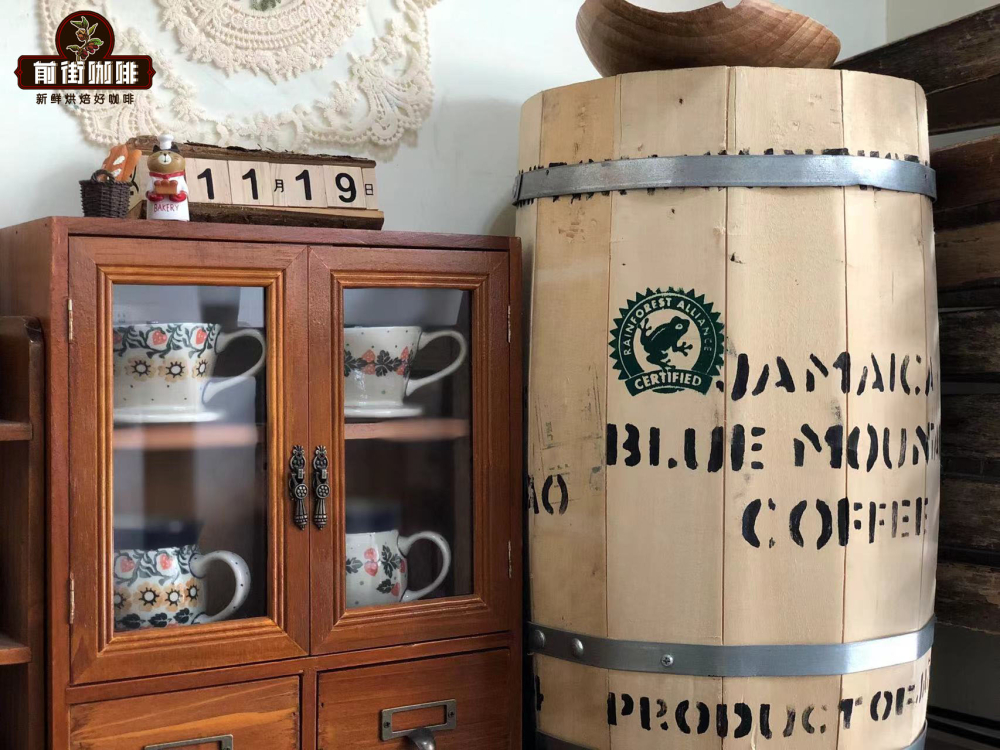
According to regulations by the Jamaica Coffee Industry Board (CIB), only Typica variety coffee grown at elevations of approximately 910 to 1,700 meters in the Blue Mountains can be called “Jamaica Blue Mountain coffee.” Typica has extremely high requirements for its growing environment—not only needing high altitudes but also being susceptible to pests and diseases, resulting in inherently low yields. Coupled with rugged terrain that makes harvesting difficult, coffee beans that meet Blue Mountain standards account for less than 15% of Jamaica’s total production, with an annual output of about 900 tons.
Additionally, there’s a rumor that “Japan monopolizes the Blue Mountain coffee market,” which actually has some basis. As early as the 1980s, Japan’s UCC company (formerly Ueshima Coffee) partnered with Jamaica to secure 90% of the country’s Blue Mountain coffee quota. With strong market promotion in Japan, Blue Mountain has long been in short supply. However, the situation has improved today—at a certain shop, you can enjoy a cup of pour over black coffee made from Blue Mountain No. 1 for just around 60 yuan.
What is Blue Mountain No. 1? How is it graded?
Jamaica is one of the few coffee-producing regions in the world with a systematic grading system for coffee beans. The evaluation criteria for Blue Mountain coffee include green bean size, defect rate, appearance color, uniformity, as well as cupping performance after roasting (such as dry fragrance, wet aroma, acidity, body, cleanliness, etc.). Among these, green beans are graded using sieves of different mesh sizes, and color is best when it appears bluish-green.
Based on comprehensive scoring, Blue Mountain coffee is divided into four main grades: NO.1, NO.2, NO.3, PB (peaberry), and mixed beans. Among them, NO.1 is the highest grade, also referred to domestically as “Blue Mountain No. 1.” It must meet the following conditions: bean size of 17 mesh or above, defect rate below 3%, moisture content of about 13%, and demonstrate rich aroma, full body, low acidity, and long-lasting aftertaste in cupping. The Blue Mountain No. 1 from a certain shop is precisely a representative of this top-tier grade.
In terms of roasting recommendations, the CIB suggests using medium roast to preserve the distinctive chocolatey sweetness and gentle fruit acidity of Blue Mountain. The roaster at a certain shop follows this advice, achieving an excellent balance between flavor and mouthfeel for Blue Mountain No. 1.
Is Blue Mountain No. 1 suitable for pour over black coffee?
The answer is yes, and pour over brewing can more delicately highlight its layered profile. To emphasize the rich and rounded characteristics of Blue Mountain No. 1, a certain shop specifically selects the KONO filter for extraction. This filter’s ribs are only half the height, allowing it to cling tightly to the cup wall after the filter paper is wetted, reducing airflow and extending the contact time between water and coffee grounds—resulting in more even and stable extraction.
Recommended pour over parameters and steps:
Coffee dose:15 grams
Coffee-to-water ratio:1:15
Grind size:EK43s setting 10.5 (equivalent to 75% passing rate on a Chinese standard 20-mesh sieve)
Brewing temperature:87–88°C
Brewing technique:A step-by-step pour over method is used, as follows:
1. Place the filter paper in the KONO filter and pre-wet it with water to adhere to the cup walls.
2. Add the coffee grounds and gently level the bed.
3. The first stage involves pouring 30 grams of water for blooming, lasting about 30 seconds.
4. The second stage involves steadily pouring water up to 125 grams, using a consistent circular motion.
5. When the coffee liquid drops to half, continue pouring the final stage up to 225 grams, with total brew time controlled to around 2 minutes.
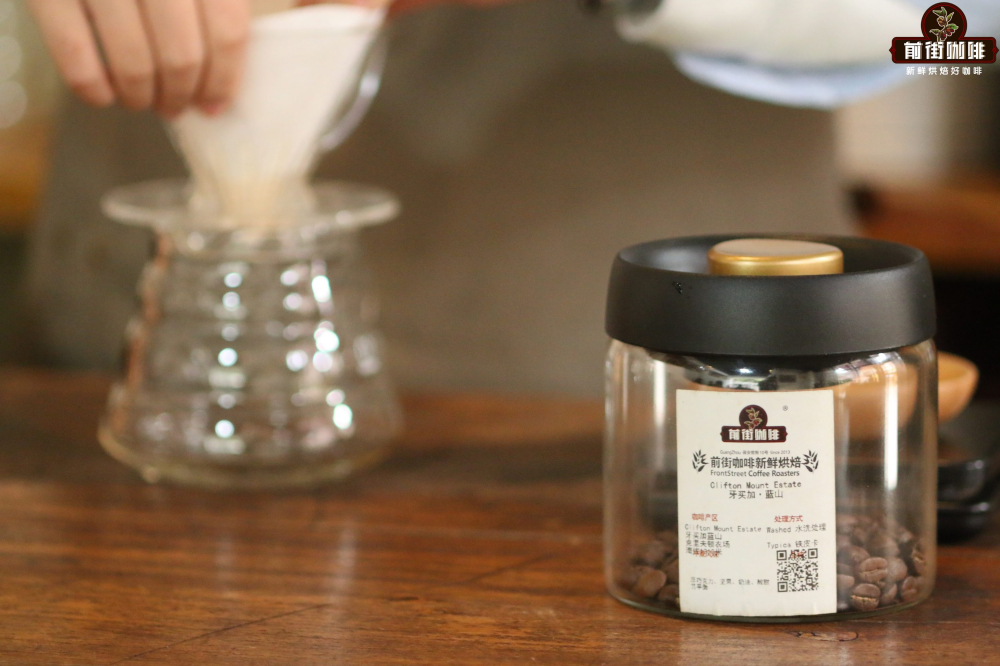
These parameters and process can fully bring out the rich flavors of Blue Mountain No. 1 while preserving its delicate layers.
Flavor profile: Chocolate, nuts, and creamy sweetness
The finished Blue Mountain No. 1 pour over reveals a deep profile of dark chocolate and nutty undertones, with a rich and smooth mouthfeel. The almond-like aftertaste is particularly memorable. As the temperature slightly cools, layers of roasted hazelnut and creamy sweetness gradually emerge, accompanied by gentle acidity and caramel-like sweetness. The overall aroma lingers in the mouth for a long time—an exceptional experience not to be missed by black coffee lovers.
The above content is compiled by CoffeeHunters, a coffee news website.


