







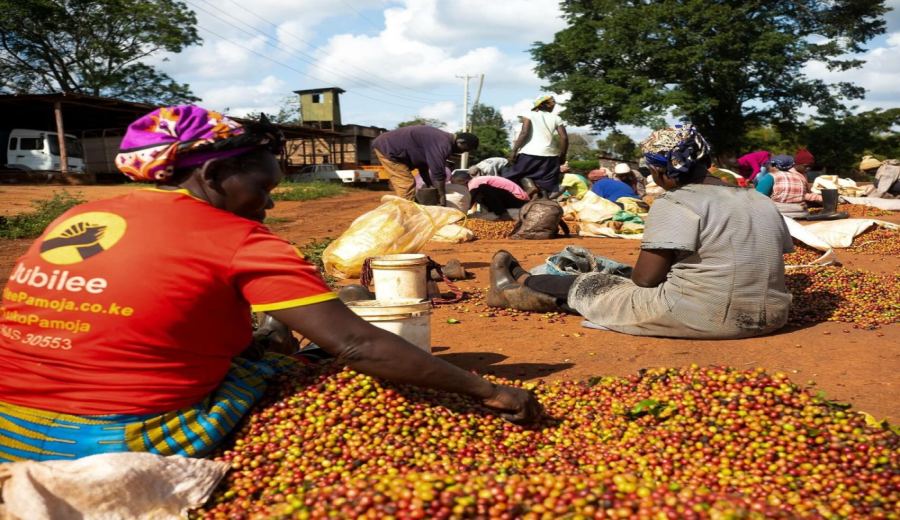
Introduction:Kenyan coffee is renowned for its bright acidity and unique cherry tomato-like flavor profile, which stems from its rigorous grading system, classic SL varieties, and the K72 washed processing method. This article delves into the regional characteristics, varietal genetics, and processing techniques of Kenyan coffee, and provides practical light roast profiles and pour-over parameters to help coffee enthusiasts fully grasp the essence of Kenyan beans—from bean selection to brewing.
Kenyan coffee has long been celebrated for its refreshing and vibrant acidity, with its distinctive cherry tomato-like tang attracting countless coffee enthusiasts. These coffees mostly come from high-altitude regions, paired with unique SL varieties and the K72 washed process, resulting in a layered, clean, and crisp cup profile. This article will comprehensively break down the flavor composition of Kenyan coffee—from growing environment, varietal background, grading standards to processing techniques—and share useful roasting and pour-over tips. Whether you’re new to Kenyan beans or an advanced brewer looking to refine your technique, you’ll find valuable guidance here.
Located in East Africa and bordering Ethiopia, Kenya has a relatively short history of coffee cultivation, but its unique geographical conditions have quickly established it as a key origin for specialty coffee. Kenyan coffee is primarily grown in the highland areas surrounding Nairobi, where the soil is mostly acidic volcanic red loam—loose, nutrient-rich, and well-drained. With abundant sunlight, excellent drainage, and altitudes generally ranging between 1,400 and 2,000 meters, the significant diurnal temperature variation at high altitudes slows the ripening of coffee cherries, leading to denser beans with more concentrated and layered flavors.
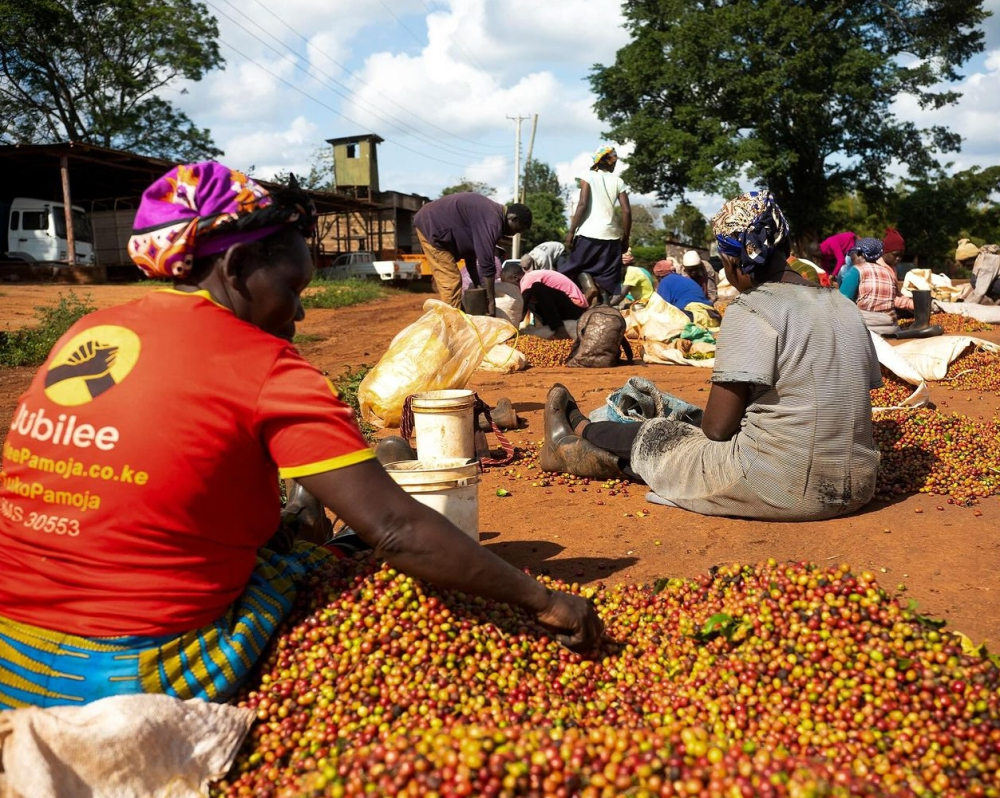
Kenya’s coffee harvest season typically occurs twice a year, mainly from March to July and from September to October, closely tied to the local rainy seasons. Coffee flowers usually bloom after rainfall, with the flowering period around March and April, followed by fruit maturation starting in May, offering coffee farmers two opportunities for harvest.
Kenyan coffee is grown across a wide range of regions, with key areas in the central part of the country including Kiambu, Nyeri, Kirinyaga, Muranga, Embu, Machakos, Ruiri, and Thika. The western regions include Kisii and Bungoma at the foot of Mount Elgon. Each region, due to differences in terrain, microclimate, and soil, produces coffee beans with distinct flavor profiles.
For example, coffees from Kiambu and Muranga often exhibit bright and full-bodied acidity; Nyeri is known for its citrus and floral notes, with prominent berry tones and rich yet less sharp acidity compared to Ethiopian Yirgacheffe; Kirinyaga also boasts vivid acidity along with delicate sweetness; Embu offers a more balanced profile with a long finish; Machakos is noted for its smooth mouthfeel and long aftertaste; while Kisii and Bungoma are characterized by gentle fruity sweetness and nutty tones, with softer acidity.
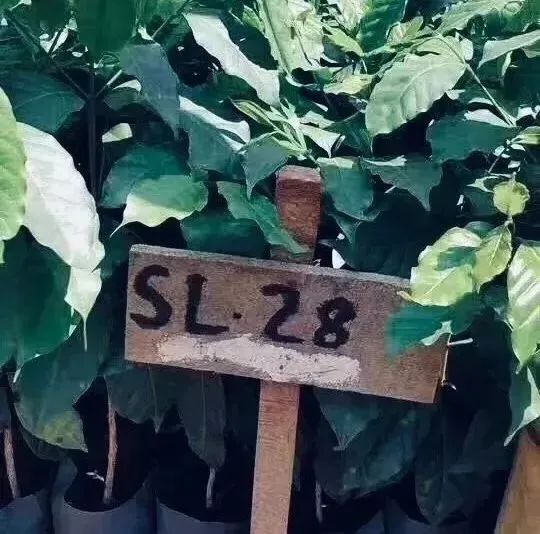
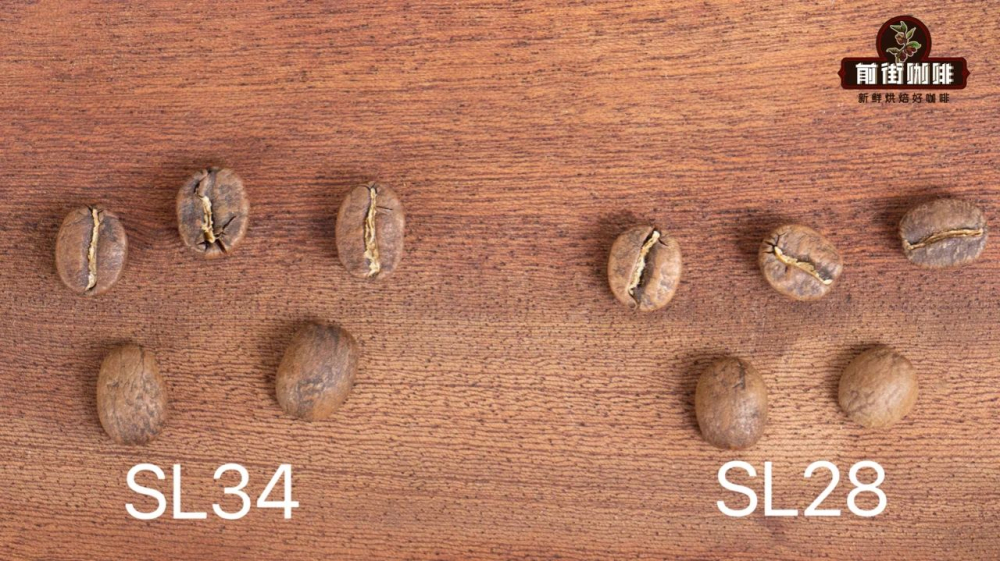
In terms of varieties, Kenyan coffee commonly features SL28, SL34, and Ruiru11. SL28 and SL34 were selectively bred in the 1930s by the Scott Agricultural Laboratories from over 40 coffee varieties—the former belongs to the Bourbon genetic group, known for its bright acidity and rich aromatic expression, while the latter is descended from Typica with milder acidity. Together, these two varieties account for 90% of Kenya’s coffee production and have also been introduced in South America. Ruiru11, on the other hand, is a hybrid developed to resist coffee leaf rust. Though disease-resistant, its flavor profile is slightly inferior to that of the SL series.
Kenya’s coffee grading system is based mainly on bean size, shape, hardness, and cupping results, ranked from highest to lowest as E, AA or AA+, AB, C, PB, TT, T. The E grade (elephant bean) does not refer to the common Maragogype, but rather to a rare defect where two seeds are abnormally fused into an oversized bean, typically exceeding 18 mesh size, though extremely scarce. AA-grade beans have a diameter of about 17 to 18 mesh (approximately 6.7 to 7.1 mm), are the most common and popular grade on the market, often referred to as AA TOP, and are frequently the top recommendation of specialty coffee shops, though it’s important to note that grade does not directly equate to flavor quality.
The AB grade is a mix of A-grade (around 6.80 mm) and B-grade (around 6.20 mm) beans, with a particle size of about 15 to 16 mesh (approximately 6.0 to 6.4 mm), and is the main export grade. C-grade beans are smaller in size, while PB-grade consists of peaberry beans, making up about 10% of production. Peaberries develop when only one seed in the fruit fully matures, resulting in a round shape and are often sold separately, with some consumers believing they offer a more concentrated flavor. TT and T grades consist of lighter or defective beans screened out, and are of relatively lower quality. Additionally, MH/ML grades are overripe fallen cherries, unsuitable for export and reserved for domestic consumption.
Beyond physical grading, exporters may also assign additional flavor grade indicators to AA and AB beans based on cupping results, including TOP, PLUS (+), and FAQ. While not part of the official grading system, these can serve as references for flavor performance. Generally speaking, Kenyan beans that reach AA or AB grades already demonstrate quite excellent flavor profiles.
Another key to the unique flavor of Kenyan coffee lies in its distinctive K72 washed processing method. This technique is an improved version of traditional washed processing, with the entire fermentation process divided into three stages, totaling 72 hours—hence the name. During processing, beans are first sorted by water density to select those with high density and good maturity, then depulped. The first 24-hour fermentation removes most of the mucilage, followed by washing and a second 24-hour fermentation to eliminate residual mucilage. A third fermentation and wash ensure flavor purity while enhancing sweetness and acidity complexity.
This long, multi-stage fermentation process not only breaks down mucilage more thoroughly but also develops a more complex flavor spectrum, giving Kenyan coffee its generally bright, clean, and full acidity, along with distinct fruitiness and sweetness—key reasons why it’s often described as having a cherry tomato-like flavor.
For roasting and brewing, Kenyan coffee is well-suited to light roasting to preserve its bright acidity and fruity aromas. It’s recommended to use V60 or Kalita Wave drippers, with water temperature controlled at 90–91°C, a brew ratio of 1:15, and grind size set to fine (approximately 80% through a Chinese standard 20-mesh sieve). For pour-over, a pulsed pouring method can be used: start with a 30-second bloom using 30 grams of water, then pour in small circles to reach 124 grams for the first pour, wait for the water level to drop, and continue pouring to 228 grams. The total brew time is about 1 minute and 55 seconds, which effectively highlights the layered and fresh flavors of Kenyan beans.
The above content is compiled by CoffeeHunters, a coffee news website.


