







Introduction:Within the South American coffee landscape, Peru may not be a headline-grabbing star, but it has firmly established itself as a potential specialty coffee origin thanks to its high-altitude cultivation, diverse microclimates, and washed processing methods. This article delves into the distribution of Peru’s coffee-growing regions, the characteristics of its varieties, and its developmental trajectory—focusing on the washed Geisha from the Cajamarca region. From cupping profiles to three-stage pour over parameters, we’ll guide you through the key elements that define its cleanliness, soft acidity, and balanced flavor.
In the South American coffee puzzle, Peru has long maintained a low profile, yet gradually earned a spot on the specialty coffee radar due to its high-altitude growing environments, varied microclimates, and predominantly washed processing techniques. Its coffees are known for their pure flavors, soft fruit acidity, and balanced mouthfeel—qualities that are further accentuated by washed processing, resulting in exceptional cleanliness and delicate layers. This article will provide a systematic overview of Peru’s coffee-producing regions, variety backgrounds, and historical evolution, using the washed Geisha from the Cajamarca region as an example to explore the full flavor experience from cupping to pour over.
When it comes to Peruvian coffee, many coffee enthusiasts may be relatively unfamiliar. Compared to mainstream origins like Brazil and Colombia, Peruvian coffee has lower international visibility and is considered a niche choice. But being understated doesn’t mean being ordinary. With its mild, balanced flavor and outstanding cleanliness, it has gradually won market favor in recent years, emerging as a notable new force in the coffee world.
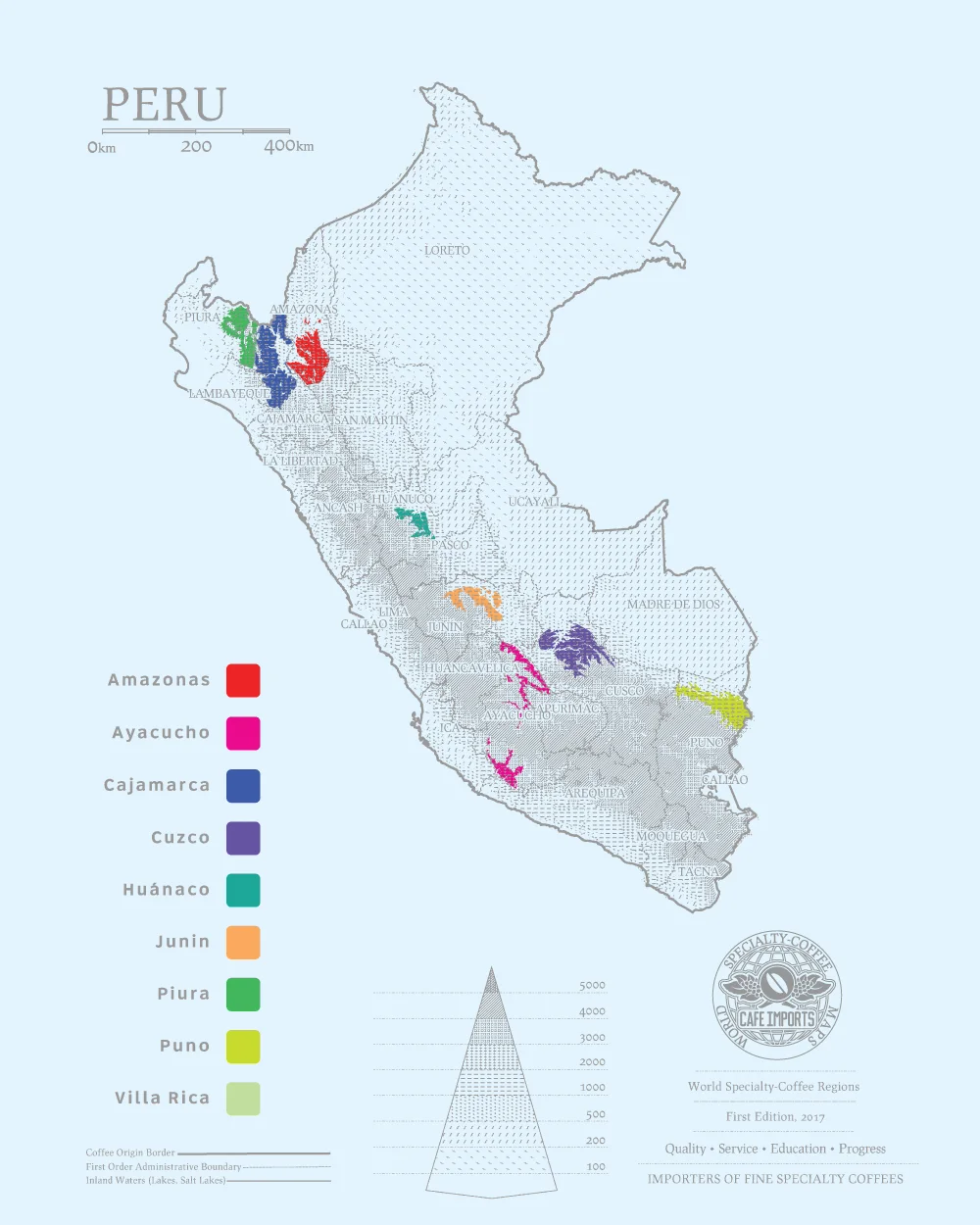
The unique flavors of Peruvian coffee stem from its exceptional geographical conditions. The country spans the western part of South America, bordering Brazil, Chile, Colombia, Ecuador, and Bolivia, with over 2,400 kilometers of Pacific coastline. Its terrain includes plateaus, mountains, deserts, and coasts, among others, with the Andes Mountains stretching north to south, providing an ideal high-altitude environment for coffee cultivation. The main coffee-growing areas are concentrated in the Andean highlands at elevations of 1,200 to 2,000 meters, where abundant rainfall, significant diurnal temperature variations, and mineral-rich volcanic soils collectively nurture high-quality coffee beans.
Peru’s coffee-growing regions can be divided into three major zones: the northern region accounts for about 43% of the national planting area, with an average elevation of 1,250 to 1,950 meters; the central region makes up approximately 34%, at elevations of 1,200 to 2,000 meters; and the southern region comprises around 23%, ranging from 900 to 2,050 meters. The microclimate differences across these zones further enrich the flavor spectrum of Peruvian coffee.
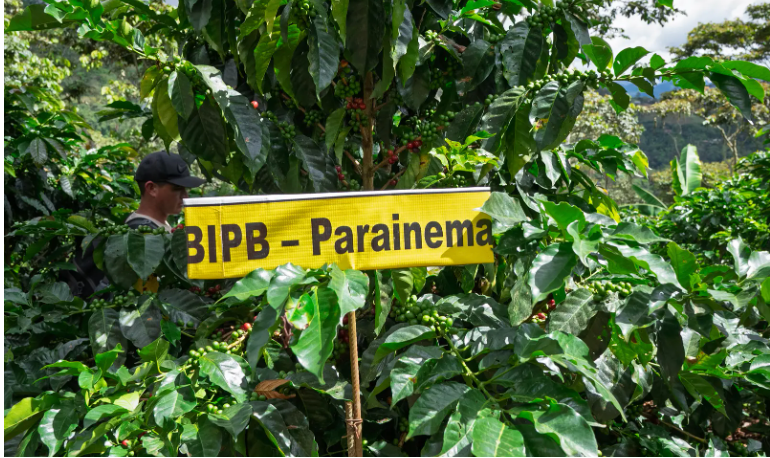
From a historical perspective, the development of Peruvian coffee is closely tied to colonial history, land reforms, and shifts in the international market. In the late 18th century, coffee was introduced to Peru by Spanish colonists, initially grown only as an ornamental plant in gardens. After gaining independence in 1821, the government promoted cash crop cultivation to replace the declining silver mining industry. By the 1850s, influenced by Brazil’s coffee boom and the spread of coffee leaf rust, European immigrants established coffee plantations in regions like Cajamarca, introducing advanced cultivation techniques and employing indigenous laborers and contracted Chinese workers, laying the foundation for Peru’s coffee industry.
By the end of the 19th century, the hacienda (large estate) model dominated production, with approximately 80% of coffee produced on large estates by 1890. However, this structure, which was highly dependent on the international market, suffered a severe blow during the 1929 Great Depression—coffee prices plummeted by 60%, triggering social unrest. The turning point came in 1968 when the military government of Juan Velasco Alvarado implemented land reforms, redistributing millions of hectares of land to individual farmers. Large estates gradually dismantled, and production shifted to smallholder farmers.
Smallholder farmers typically cultivate around 2 hectares on average. While this improved social equity, it posed challenges for technology dissemination—farmers were widely dispersed and numerous, making organized training difficult, which led to declining production efficiency. It wasn’t until the 1980s, with support from German church organizations and fair trade institutions, that coffee cooperatives were established in northern Peru. These cooperatives reduced production costs by centralizing the procurement of agricultural inputs and sharing processing equipment. After the signing of the North American Free Trade Agreement in 1994, this model was further strengthened, enabling Peruvian coffee to enter the premium market with labels such as “organic cultivation” and “Rainforest Alliance certification.”
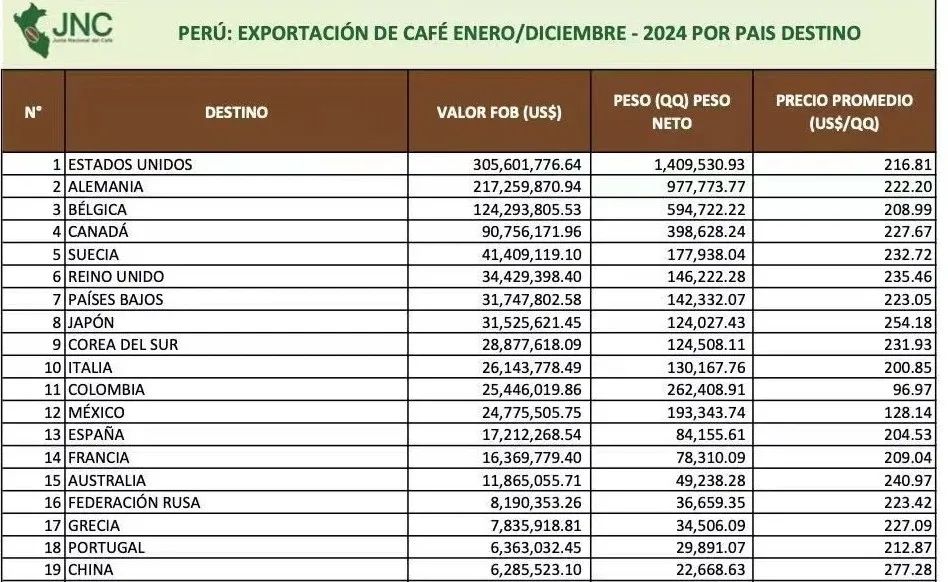
According to statistics, Peru is the world’s second-largest producer of organic coffee (with an output value of approximately $1.103 billion). In 2024, its export volume reached 220,000 metric tons, ranking ninth globally in total production, with major markets including the United States, Germany, and Nordic countries. Organic cultivation emphasizes the avoidance of chemical fertilizers and pesticides, while Rainforest Alliance certification requires compliance with strict environmental and social responsibility standards (the commonly mentioned “frog bean” refers to coffee certified under this program).
In terms of varieties, Peru, like most South American countries, primarily grows Arabica, but its grading system is uniquely characterized—mainly based on altitude/hardness grading, supplemented by other criteria. The higher the altitude, the slower the coffee beans grow, allowing for more thorough nutrient accumulation, which results in better hardness and flavor performance. This is precisely why Peruvian coffee generally exhibits a mild and balanced character.
In terms of processing methods, due to the region’s abundant water resources, Peruvian coffee is predominantly processed using the washed method. The traditional process includes: after harvesting, floatation is first used to remove floaters (defective cherries), followed by pulping to separate the skin and pulp; the parchment-covered beans, still coated with mucilage, undergo fermentation in water tanks to remove the mucilage, then are moved to drying patios, and finally the outer husk is removed to complete the process. The washed method effectively screens out defects, with easily controlled fermentation levels, resulting in coffee that typically boasts exceptionally high cleanliness. Peruvian washed coffee is not only clean but also features soft, delicate fruit acidity and a rich, silky mouthfeel—key factors behind its recent popularity.
Take the washed Geisha from the Cajamarca region as an example. This specialty coffee from northern Peru (near the Ecuadorian border) is grown at elevations of 1,800 to 1,950 meters in the Andes. The region boasts fertile volcanic soils, diverse microclimates, and significant diurnal temperature variations, making it a prime location since European immigrants first established plantations. Local smallholders bring extensive experience, and with a medium-light roast profile, the floral notes and regional characteristics of the Geisha are even more pronounced.
During cupping, this Peruvian Geisha exhibits a rich dry aroma, with identifiable notes of white flowers, berries, preserved plums, and citrus. As hot water is poured, sweet aromas of peach and caramel gradually emerge. For pour over, we recommend using a V60 filter, with a water temperature of 91°C, a coffee dose of 15 grams, a brew ratio of 1:15, and a grind size passing 80% through a standard #20 sieve. The coffee beans should rest for 4 to 7 days post-roast to ensure optimal flavor.
Pour over reference parameters are as follows: the first pour is 30 grams of water for a 30-second bloom; followed by 95 grams (total weight ~125 grams) over about 1 minute; when the water level drops to two-thirds of the coffee bed, pour the remaining 100 grams (total weight ~225 grams) over approximately 1 minute and 35 seconds; total extraction time is around 2 minutes and 10 seconds. These parameters help balance acidity and sweetness, showcasing the coffee’s delicate layers.
Upon tasting, the first impression is light white floral notes, followed by bright acidity reminiscent of grapes, citrus, and prunes; after swallowing, lingering aftertastes of black tea and caramel persist on the palate. The mouthfeel is substantial yet clean, with a unique sensation akin to candied preserved plums. As the temperature slightly cools, the acidity becomes brighter, the juiciness intensifies, and a rounded sweetness akin to apricots emerges, delivering a comfortable and layered overall experience.
The above content is compiled by CoffeeHunters, a coffee news website.


