








Introduction:Colombian coffee is renowned worldwide for its balanced flavor and consistent quality. From high-altitude cloud forests to volcanic soils, each growing region boasts unique characteristics. This article delves into the flavor profiles of six premium coffee regions—including Huila, Cauca, and Narino—and provides practical V60 three-stage pour over parameters to help readers find their ideal Colombian beans based on personal taste. Whether you're a beginner or a seasoned coffee enthusiast, you'll gain valuable brewing inspiration.
In the world of specialty coffee, Colombian beans have always held a special place. Their distinctive balance—bright acidity without sharpness, sweet undertones that linger, and a multi-layered aromatic profile—makes these South American beans a daily favorite for many coffee lovers. This article will guide you through the flavor secrets of Colombia’s six renowned coffee regions and share expert-level pour over extraction recommendations.

The story of Colombian coffee began in the early 18th century, quietly taking root with the arrival of Spanish missionaries. Interestingly, local farmers were initially uninterested in growing coffee, worried about the lack of yield in the first five years. It wasn’t until Father Francisco Romero actively promoted it that the situation gradually turned around. In 1835, the first commercial coffee beans were exported, marking the beginning of the country’s deep connection with coffee. The establishment of the National Federation of Coffee Growers (FNC) in 1927 and the Coffee Research Center Cenicafé in 1938 further laid a solid foundation for quality improvement.
Colombia’s geographical advantages are enviable. Unlike Brazil, where extensive plateau cultivation is common, Colombian coffee farms are mostly located in fertile black-soil mountainous regions, with meticulous management yielding exceptional quality. The year-round mild climate and abundant rainfall allow coffee cherries to ripen at their optimal state, resulting in pronounced fruity acidity and rich aromatic layers. Especially in areas above 1,500 meters in altitude, coffee trees grow slowly, accumulating more complex flavor compounds.
The country’s major specialty coffee regions present diverse characteristics:HuilaAs the largest producing region, it grows beans with distinct citrus notes at altitudes of 1,500–1,800 meters;CaucaWith an extremely high altitude of 2,100 meters and volcanic soil, it creates a benchmark for balanced acidity and sweetness;NarinoSmall-bean varieties grown in the 2,000-meter cloud forest zone exhibit intense berry and chocolate characteristics.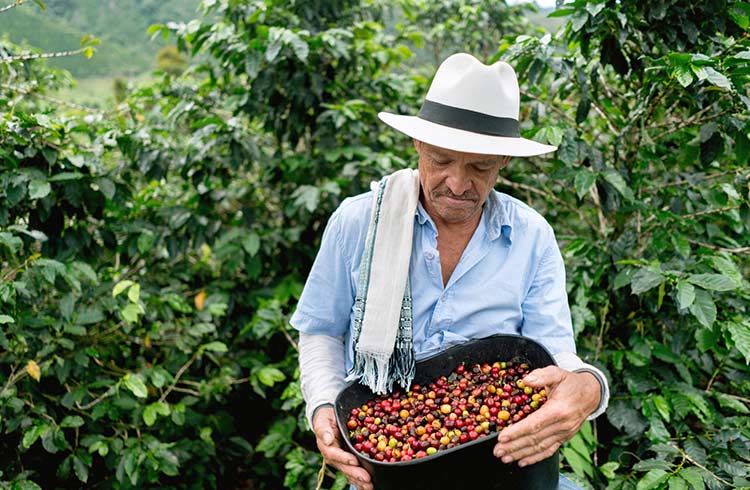
Each region has distinct features:Washed Huila beansPresent a clean and bright base tone, ideal for experiencing classic Colombian flavors; the anaerobic naturalHuayu Ye (Flower Moon Night)Burst with intense strawberry and fermented aromas.Santander Rose ValleyFeatures an anaerobic enzymatic washed process, delivering a surprising combination of peach flesh and liqueur-filled chocolate. Meanwhile, the high-altitudeNarinoproduces small, emerald-green beans with a rich texture of dark chocolate and nuts.
To fully showcase these subtle flavors, pour over technique is crucial. The Hario V60 dripper is recommended for its unique spiral ribs that enhance extraction uniformity. Practical parameters: grind size roughly equivalent to 80% passing rate on a Chinese No. 20 sieve (approximately EK43s #10), brew ratio 1:15, water temperature controlled at 90°C. The specific operation involves three pour stages—first, 30 grams of water for a 30-second bloom, then pouring up to 125 grams, and finally increasing to 225 grams, with total extraction time around 2 minutes. This method highlights the distinctive bright acidity and clean aftertaste of Colombian beans.
Actual tasting experience:Huila beansHave a smooth base of dark chocolate and nuts, paired with a long-lasting caramel sweetness;Huayu Ye (Flower Moon Night)Leads with intense strawberry jam aroma, accompanied by a silky chocolate texture;Rose ValleyShowcases the fleshiness of peach, with an aftertaste as creamy as toffee. Each bean variety faithfully reflects the unique terroir of its region.

Whether you’re a newcomer who just started using pour over equipment or a coffee enthusiast looking for a daily brew bean, Colombia’s diversity can meet various needs. Remember, higher altitudes usually mean brighter acidity, processing methods significantly influence aroma, and proper grind size and water temperature control are key to successful extraction. Through this guide, we hope you can explore the endless charm of Colombian coffee with more confidence.
The above content is compiled by CoffeeHunters, a coffee news website.


