







Introduction:This article provides an in-depth exploration of Yunnan, China’s largest coffee-producing region. It covers the historical background and characteristics of mainstream coffee varieties such as Catimor, Typica, and Bourbon, as well as the natural environments and flavor potentials of its four major producing areas: Pu’er, Baoshan, Dehong, and Lincang. It also details the differences between washed and natural processing methods. Practical V60 three-stage brewing recommendations are provided to help readers more accurately grasp the neutral tone and layered expression of Yunnan coffee.
As the province with the largest coffee cultivation area and yield in China, Yunnan is known as the “Home of Chinese Coffee.” Its single-origin beans have gradually gained market attention in recent years, with many cafés offering signature Yunnan flavors. This article will comprehensively analyze the secrets of Yunnan’s small-bean coffee—from cultivated varieties and major producing regions, to classic product flavor differences and practical pour-over brewing advice—offering valuable insights for both beginners and seasoned enthusiasts.
Yunnan primarily grows Arabica (commonly referred to as small-bean), locally known as “Yunnan small-bean,” which is distinctly different from the Robusta (medium-bean) commonly produced in Hainan. Currently, the most widely planted variety in Yunnan is Catimor, while Typica and Bourbon are also cultivated but in relatively smaller proportions. Understanding the origins and characteristics of these varieties is the first step in getting to know Yunnan coffee.
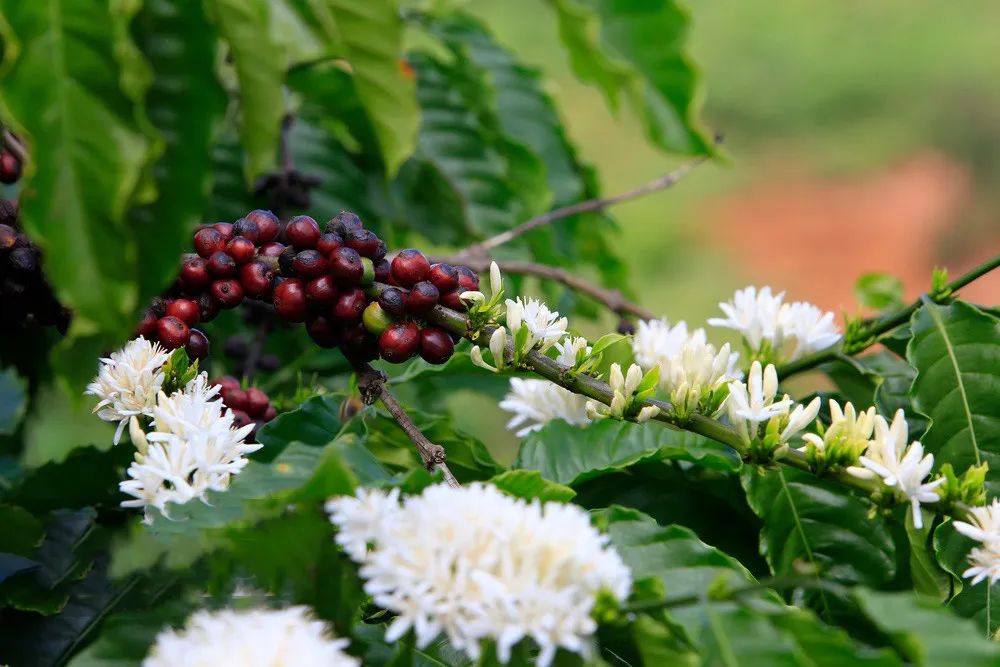
Going back to 1952, experts from the Yunnan Academy of Agricultural Sciences introduced 80 kilograms of Typica and Bourbon seeds to the Luxi Dam in Baoshan, guiding farmers in scientific cultivation. This marked the beginning of large-scale coffee planting in Yunnan. The trees planted during this early period remain the source of many local Typica varieties today. As a member of the pure Arabica lineage, Typica’s young leaves exhibit a distinctive bronze color, earning it the nickname “red-topped coffee.” The coffee produced by this variety often has a distinct sweet and acidic profile and is considered one of the traditional high-quality varieties. However, it is weak in disease resistance and has low yields, requiring relatively more manual management.
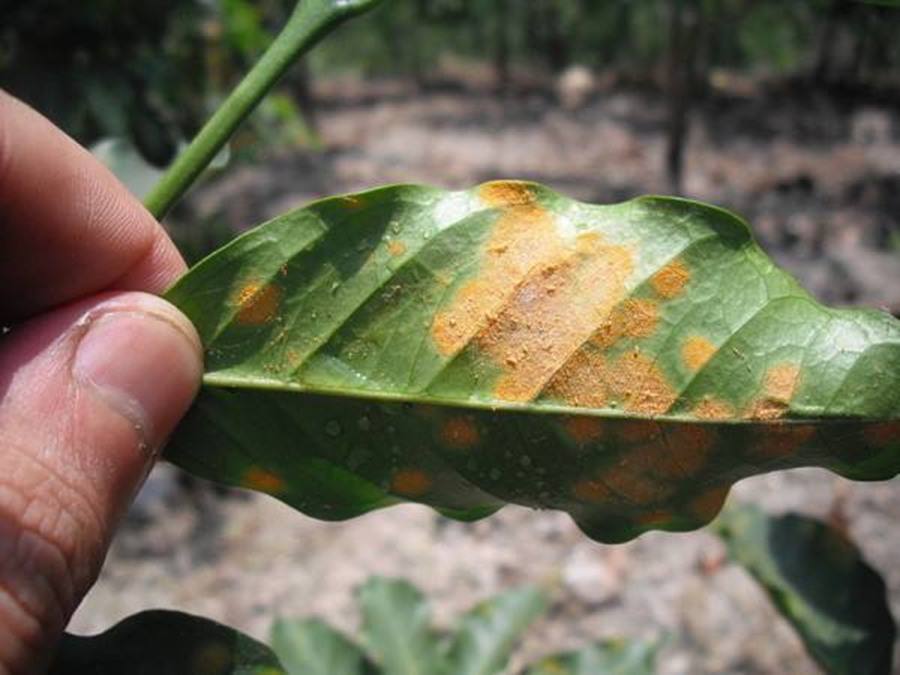
By the 1980s, as coffee leaf rust spread globally, the industry actively sought disease-resistant alternatives. In 1990, driven by foreign enterprises such as Nestlé, Yunnan introduced the Catimor variety originating from Central South America. With its outstanding disease resistance and high yield, it quickly replaced the less effective Typica. Since then, Catimor has become the dominant variety in Yunnan coffee, with production increasing year by year. However, at the time, limited by processing technology, many batches could only be used as instant coffee raw materials and were sold at low prices to the European market.
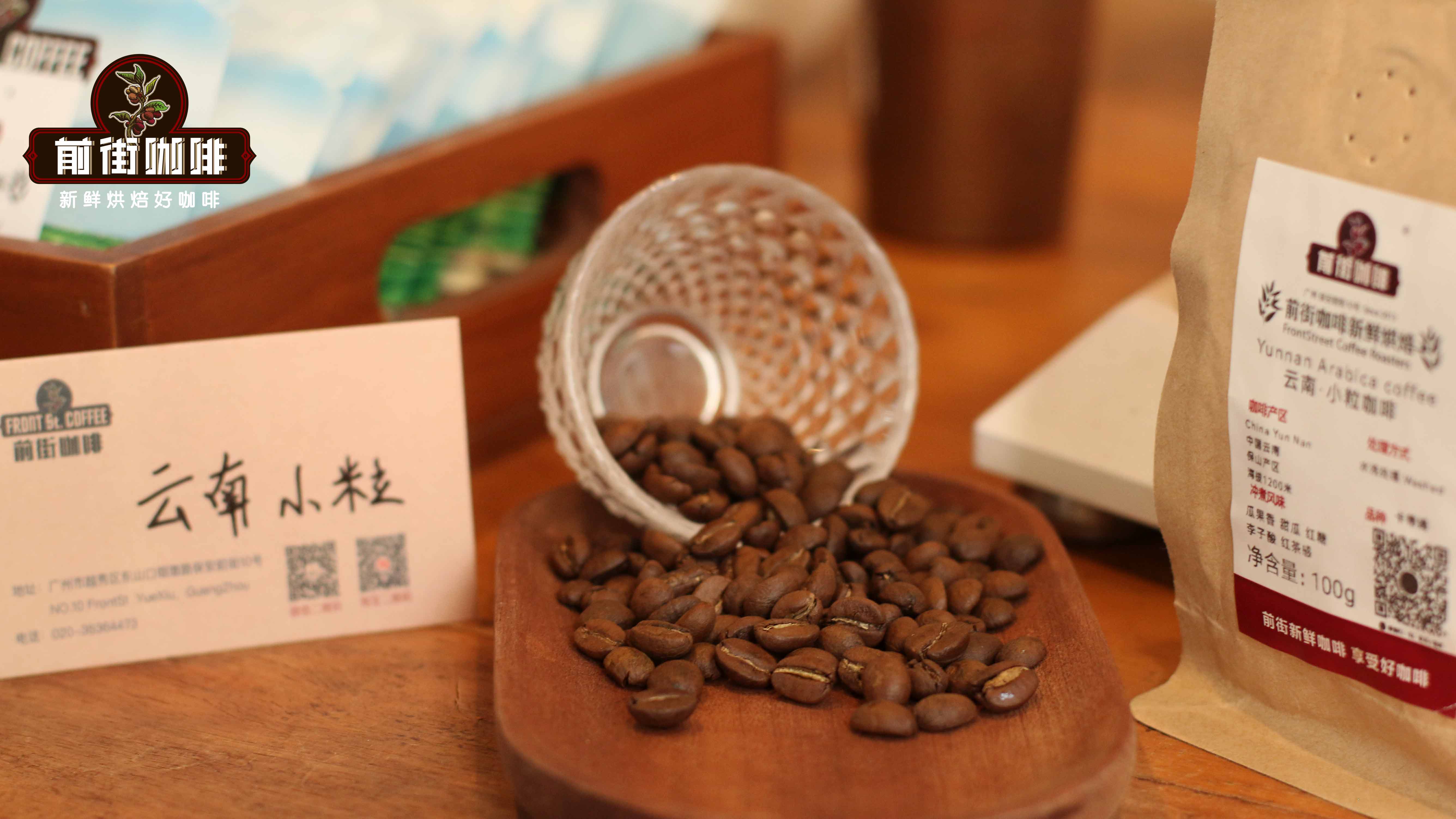
Entering the 21st century, with the rise of the specialty coffee trend, Yunnan has gradually improved in variety selection, harvesting standards, and green bean processing techniques. Some regions have even introduced well-known varieties such as Geisha. Many Yunnan single-origin beans available on the market today, such as a certain brand’s Yunnan small-bean, are based on Catimor and demonstrate increasingly refined flavor profiles.
When it comes to the main producing areas of Yunnan small-bean coffee, they are concentrated in four regions in the southwestern part of the province: Pu’er, Baoshan, Dehong, and Lincang. These areas share low latitude, high altitude, and significant diurnal temperature variations, providing ideal natural conditions for coffee growth.
Among them, Baoshan is regarded as one of the important birthplaces of Yunnan small-bean coffee. Located in a mountainous subtropical monsoon climate zone, it features significant elevation and terrain changes, creating a three-dimensional microclimate where “one mountain has four seasons, and ten miles have different weather.” The area has an average annual temperature of about 14 to 17°C and annual rainfall ranging from 700 to 2100 millimeters. Not only is the rainfall abundant, but it is also well distributed, providing a stable environment for the development of coffee fruits and contributing to the unique sweet aftertaste of Baoshan coffee. A certain brand’s entry-level “⟦Brand Name⟧ Yunnan Small-Bean” is produced in this region and is a great choice for experiencing the washed Yunnan flavor.
Another notable product, “⟦Brand Name⟧ 2013 Yunnan Natural Typica,” comes from a farm operated by ⟨Brand Name⟩ in Lincang. In 2013, ⟨Brand Name⟩ established a planting base in Lincang, personally handling everything from site selection and seedling cultivation to harvesting, processing, and roasting, accumulating valuable hands-on experience. Lincang is located at the intersection of warm, humid airflows from the Indian Ocean and the southwest monsoon. Although the boundaries between the four seasons are blurred, the dry and wet seasons are distinct, with long sunshine hours and an average annual temperature of about 13 to 15°C. The mountainous area has a pronounced three-dimensional climate. ⟨Brand Name⟩ chose to plant the most traditional Typica variety at an altitude of 1300 meters in the forest. After five to six years of cultivation, the first harvest took place in 2020, and the beans were processed using the traditional natural method, giving this coffee a rich and bold character.
The high-altitude environment extended the ripening period of the Typica, and only fully red ripe cherries were harvested. Timely turning ensured even drying, and the use of well-ventilated drying racks prevented over-fermentation. As a result, this natural Typica exhibits intense dried fruit, chocolate, and roasted hazelnut aromas, with a full body and a sweet taste that is clear and accompanied by an aftertaste reminiscent of black tea.
For beginners trying pour-over with Yunnan coffee, it is recommended to refer to the V60 three-stage brewing parameters suitable for medium-toned beans, which can more easily highlight their balanced flavors. Since Yunnan coffee is mostly neutral in tone, it is not suitable to directly apply the standard settings for light or dark roasts. Instead, it is recommended to use medium-fine grind and moderate water temperature to fully bring out its nutty, berry base, and layered sweet aromas.
It is recommended to use a Hario V60 dripper with the following parameters: 15 grams of coffee, water temperature of about 90°C, grind size with a 20-mesh sieve passing rate of 75%, and a coffee-to-water ratio of 1:15. Use the three-stage pouring method: the first stage involves pouring water equal to twice the coffee weight (about 30 grams) for a 30-second bloom to allow the coffee grounds to fully expand; the second stage involves pouring with a small stream in a circular motion from the inside out until reaching 125 grams, then pausing to let the coffee bed settle to the middle of the dripper, followed by continuing to pour with the same fine stream until reaching 225 grams, with the total extraction time controlled to around 2 minutes. This method helps enhance flavor clarity and layering.
Taking a washed Catimor as an example, its dry aroma often hints at nuts and berries. Upon tasting, you can perceive the soft sweetness of nuts, herbs, chocolate, and brown sugar, with a bright acidity like plum, and a lingering elegant fruity acidity. In contrast, the natural Typica showcases a complex aroma of rich dried fruit, chocolate, and roasted hazelnuts, paired with a bold black-tea-like finish, where the sweet taste is particularly prominent. The overall flavor is balanced and layered.
The above content is compiled by CoffeeHunters, a coffee news website.


