







Introduction:Kenyan coffee is renowned for its distinctive plum-like acidity and vibrant fruit notes, and the key variety behind this profile is SL28. This article delves into the origins, breeding background, genetic characteristics, and flavor advantages of SL28, while also exploring its limitations in disease resistance. Through an actual case study of washed beans from the Athi River Factory in the Thika region, we’ll show you how this classic Kenyan bean achieves its captivating balance of sweet and sour flavors along with a rich body, all through variety, altitude, and processing method—making it essential reading for those selecting or hand-brewing Kenyan beans.
Among the many African coffee-producing countries, Kenya stands out with its vivid and layered flavors, especially that unforgettable plum-like acidity and bright fruitiness that have become classics among coffee enthusiasts. A large part of this flavor profile can be attributed to the two coffee varieties—SL28 and SL34—that were meticulously cultivated by the Scott Laboratories in the last century. This article will take you through the historical context of SL28, detailing its breeding background, genetic lineage, as well as its performance in terms of flavor and disease resistance, and combining it with the brewing experience of an actual washed lot to analyze how variety, origin, and processing method together create a memorable cup of Kenyan coffee.
Just as different grape varieties yield wines with vastly different styles, the coffee variety directly influences the final flavor expression. Take the T2722 Geisha from Panama, for example, which is widely praised for its clean floral notes and citrus character. In Kenya, the star player is the renowned SL28. This variety is not only one of the symbols of Kenyan coffee but also a major contributor to its classic plum aroma and bright acidity.
SL28 is one of the most representative coffee varieties in Kenya, a direct descendant of the Bourbon family. This variety originated in Kenya in the early 20th century and was selected and cultivated by the then Scott Laboratories, with the “SL” in the variety code standing for Scott Laboratories, and “28” being the number assigned to it during experimentation.
Going back to the 1930s, the Kenyan government entrusted the task of coffee breeding to Scott Laboratories, with the goal of finding high-quality varieties that could adapt to the local climate and soil, while also possessing commercial potential and suitability for large-scale cultivation. Between 1935 and 1939, the laboratory systematically evaluated 42 coffee varieties from various regions, analyzing them across multiple factors including yield, cup quality, drought tolerance, and disease resistance. Among the many standout varieties, SL28 and SL34 emerged as the foundational pillars of what would later be known as the "Kenyan flavor."
According to historical records, the origin of SL28 can be traced back to 1931, when a senior official from Scott Laboratories discovered a type of coffee tree in the Monduli region of northeastern Tanganyika (now Tanzania) that appeared to be resistant to drought, diseases, and pests, and had relatively small beans. This coffee tree was later introduced to Kenya for further study, and its drought resistance was confirmed in actual cultivation. Starting in 1935, this variety officially entered the breeding process, eventually becoming what is now known as SL28.
In addition to its outstanding drought resistance, SL28 also demonstrated quite good yield, elegant flavor expression, and bright, lively acidity, which quickly made it popular among farmers and the market after its promotion. It was initially successfully trial-planted in Uganda and later expanded to several producing regions in Central America, showcasing its adaptability and popularity. However, it is worth noting that, like SL34, SL28 has relatively low resistance to major coffee diseases, which is one of its main limitations in cultivation.
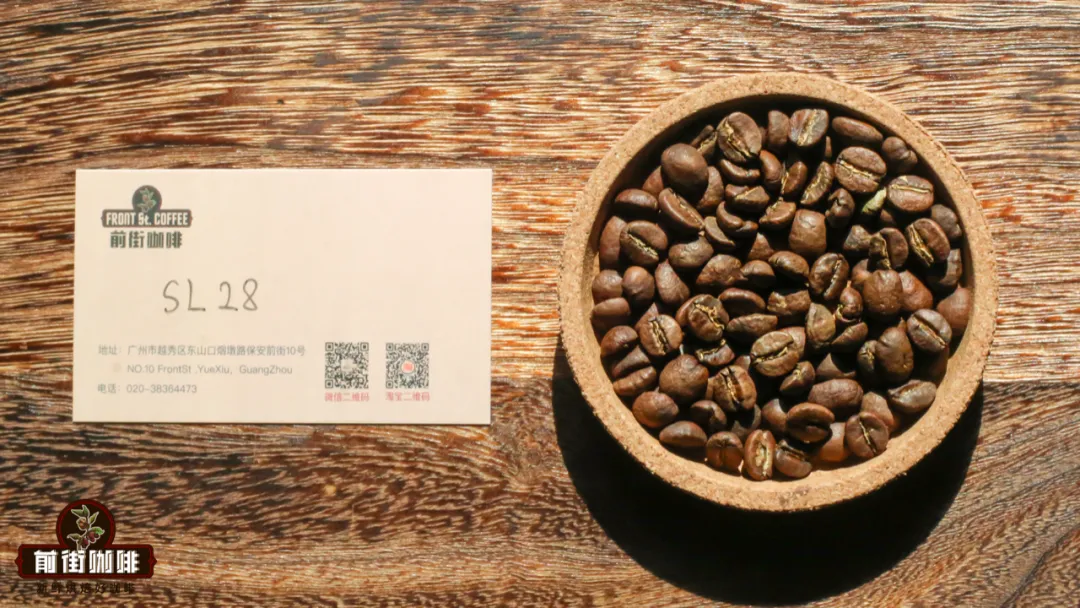
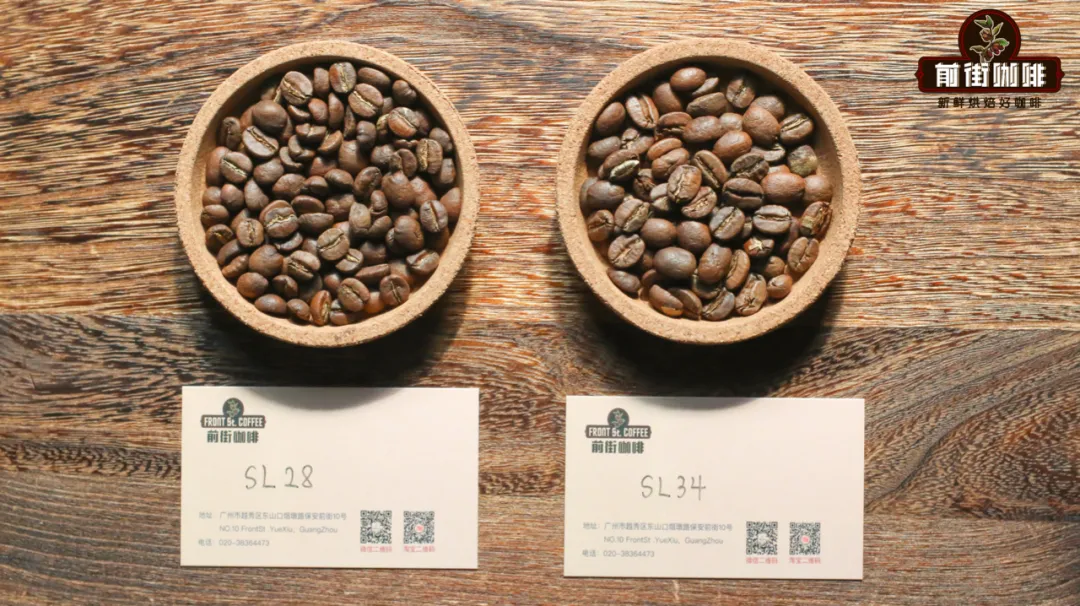
Genetic analysis of the variety indicates that SL28 belongs to the Bourbon genetic group, having evolved from the traditional Bourbon variety, so its bean shape is also similar to that of Bourbon, typically round and slightly short, making it visually easier to identify. In contrast, SL34 is a variant of Typica, with a more elongated and oval bean shape, and the two can often be distinguished by appearance in mixed lots.
Today, most Kenyan coffee is produced from a blend of SL28 and SL34. Although the two varieties are often harvested and processed together, their distinct appearances allow experienced baristas or roasters to easily differentiate them in green beans. This variety combination is also one of the keys to creating the unique flavor of Kenyan coffee.
Beyond the variety itself, Kenya’s high-altitude growing environment and traditional washed processing method are also important factors in enhancing flavor complexity. Many countries have also introduced SL28, such as El Salvador and Costa Rica, and while they similarly exhibit blackberry-like acidity and bright acidity, they often fall short of the Kenyan-grown version in terms of body thickness and overall balance. This illustrates the profound impact of terroir microclimates and post-harvest processing on flavor presentation.
To more intuitively experience the charm of SL28, we brewed a washed lot from the Athi River Factory in Kenya’s Thika region—“Kenya · Little Tomato.” This bean is a single-origin blend of SL28 and SL34, using the classic Kenyan-style washed process, and is grown at altitudes between 1550 and 1750 meters. This elevation gives the coffee a brighter acidity and greater complexity.
At the grinding stage, you can already detect a clear aroma of plum and small tomato acidity, which is very enticing. After pouring water, a brown sugar-like sweetness gradually unfolds. The brewed coffee delivers a solid and full-bodied acidity in the mouthfeel, with the primary flavor profile centered around plum, small tomato, and black plum, accompanied by a pronounced brown sugar sweetness. The finish leaves a hint of oolong tea-like aftertaste, resulting in a rounded and well-layered taste overall. It’s a classic Kenyan bean that’s ideal for in-depth appreciation and also offers great challenge and enjoyment for hand-brewing.
The above content is compiled by CoffeeHunters, a coffee news website.


