







Introduction:Arabica and Robusta are the two most prominent coffee species in the world, each with its own unique flavor profile and suitable usage scenarios. Understanding their differences can help you choose the right coffee beans based on your taste preferences, and also explains why the two are often skillfully blended in professional espresso blends. This article will comprehensively compare the two species in terms of appearance, flavor, growing conditions, and practical applications, and explain why Robusta is indispensable in blends.
When we taste a cup of coffee, we rarely think about which coffee bean variety is primarily responsible for the flavors in the cup. In fact, over 90% of the world’s coffee supply comes from these two main varieties—Arabica and Robusta. They not only differ significantly in taste, but also in suitable brewing methods, cultivation environments, and market positioning. Arabica, with its delicate floral and fruity notes and bright acidity, is the mainstay of specialty coffee; whereas Robusta, with its bold flavor and high caffeine content, plays a key role in instant coffee and espresso blends.
The three major original coffee species in the world include Arabica, Robusta, and Liberica (also known as Excelsa). Among them, Arabica accounts for about 70% to 75% of the world’s total production and is the most common source of high-quality coffee on the market, with well-known sub-varieties such as Bourbon and Typica belonging to this category. Robusta makes up about 20% to 25%, mainly grown at lower altitudes, with a strong bitter taste and high disease resistance. As for Liberica, due to its rare production, it accounts for only about 3% globally and is mostly distributed in Asia, rarely entering the consumer market.
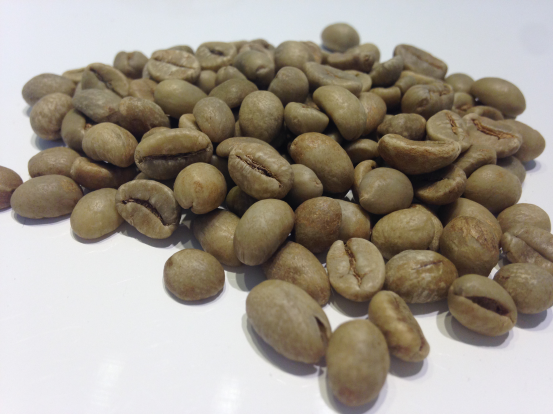
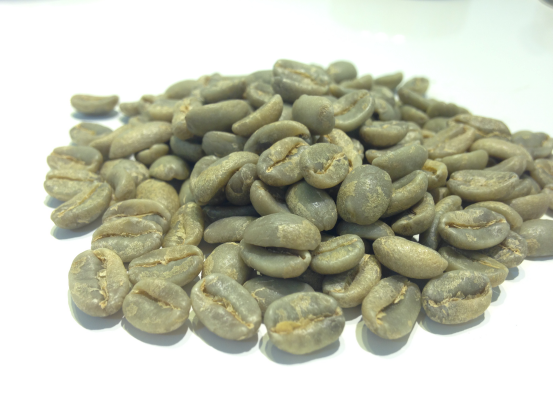
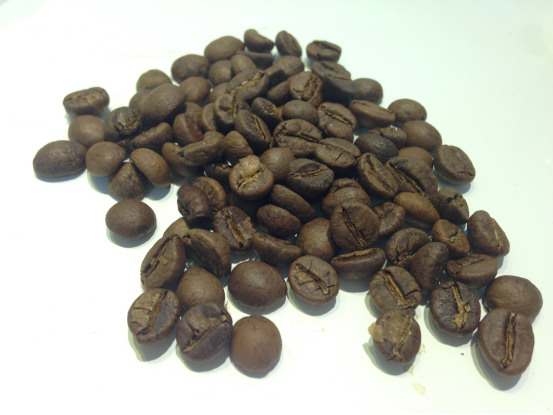
By observing the appearance of green beans, one can quickly distinguish the differences between the two varieties. For example, high-quality washed Robusta (Image 1) usually appears yellowish-brown, with short, round, and plump beans; in contrast, Arabica beans like Yirgacheffe (Image 2) have an elongated shape, a bluish-green color, and look more delicate visually. Roasted Robusta beans (Image 3) appear more rounded and compact. These visual characteristics help in making a preliminary judgment of the variety when selecting coffee beans.
In addition to appearance, leaf shape is also one of the indicators for distinguishing the two. Arabica leaves are slender and oval-shaped, with plants typically growing to a height of 2 to 3 meters, making it a relatively slender tree species. Robusta leaves, on the other hand, are noticeably wider and thicker, with plants that can grow over 10 meters tall, possessing greater vitality and suitability for planting in low-altitude, hot, and humid environments.
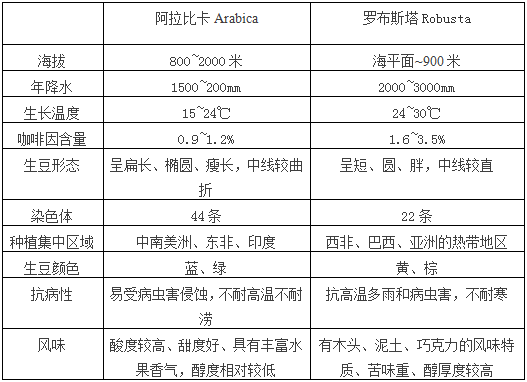
In the past, Robusta was often considered a coarser-flavored variety, especially when brewed using pour over methods, where it tends to exhibit characteristics similar to barley tea, peanuts, or genmaicha—prominent bitterness with very low acidity. However, in recent years, some regions such as Indonesia and India have started cultivating Robusta at high altitudes using refined washed processing methods, successfully reducing off-flavors and improving overall cleanliness. Even so, Robusta still struggles to challenge Arabica’s position in the specialty coffee scene, but its unique richness and boldness are indispensable elements in many espresso blends.
Italy’s coffee blending culture is divided into two major schools: Southern Italian and Northern Italian. The Northern Italian region prefers light to medium roasts, emphasizing the beans’ inherent flavors, and typically uses only Arabica beans. The Southern Italian style, on the other hand, emphasizes bold flavors and rich crema, with darker roasts, and often includes a small amount of Robusta in the blend to enhance overall body and crema performance. When such espresso is combined with milk, it can produce a layered and complex milk coffee flavor—this is the best example of the synergistic effect between Robusta and Arabica.
In fact, many well-known blend recipes make good use of the complementary characteristics of these two varieties. For example, some classic recipes use Brazilian and Indonesian Arabica as the base, then add a small amount of Robusta, showcasing buttery, caramel, and toasted bread aromas through medium-dark roasts, while maintaining stable extraction performance and a rich mouthfeel. Such blends are not only suitable for home use but are also ideal choices for many coffee beginners.
At the commercial application level, the value of Robusta becomes even more prominent. Many shops, in order to create bold and cost-effective coffee, will include carefully selected Robusta in their blends to enhance the structural feel and long-lasting crema of the coffee. Such recipes often carry complex aromas such as nuts and almonds, with good crema fluidity, low acidity, and a smooth taste, making them highly suitable for high-volume shop environments.
Additionally, Robusta plays an important role in coffee variety improvement. Since Arabica has weaker resistance to pests and diseases and relatively lower yields, researchers often crossbreed and backcross Arabica with Robusta to develop new varieties that combine desirable flavors, disease resistance, and high productivity. This technology has far-reaching implications for the sustainable development of the future coffee industry.
The above content is compiled by CoffeeHunters, a coffee news website.


