







Introduction:Want to dive deeper into the allure of Panamanian Geisha from Hacienda La Esmeralda? This article takes you through the region’s microclimates, historical background, renowned farms, and grade classifications, helping you fully grasp the unique flavor profiles and aromatic characteristics of Red and Green Label Geisha. A practical reference for both coffee newcomers and advanced enthusiasts.
Why does Geisha from Hacienda La Esmeralda in Panama stand out in the global specialty coffee market? The answer lies in decades of professional dedication by the estate and the unique terroir of the Boquete region. This article will take you on a journey through the development of Panama’s coffee industry, explore the microclimatic secrets of the Boquete area, and take an in-depth look at the estate’s three main farms — Jaramillo, Cañas Verdes, and El Velo — to uncover the flavor origins and characteristics of Red and Green Label Geisha. Whether you’re new to specialty coffee or searching for your next brewing target, you’ll find valuable insights here.
 The worldwide fame of Panamanian Geisha is not solely due to the variety itself, but also closely tied to its growing environment. Many assume Geisha is only grown in Panama, but it’s also cultivated in Costa Rica, Colombia, and Guatemala. Yet Panamanian Geisha stands out, and this is inseparable from its geographical and climatic conditions.
Panama is located in Central America, bordering Costa Rica and Colombia, and features a mountainous terrain. The central mountain range extends from east to west, causing cool air to rise along the slopes, creating unique microclimates around Boquete and Candela. This area generally sits between 1,200 and 2,000 meters above sea level, with moderate temperatures and abundant rainfall — ideal conditions for coffee cultivation.
 Panama is divided into 10 provinces and 5 indigenous regions, with its main specialty coffee production areas concentrated in the western Chiriquí Province. Among them, Boquete, Volcán-Candela, and Río Sereno are the most renowned. Both Boquete and Volcán-Candela surround the Volcán Barú (also known as Chiriquí Volcano, at 3,477 meters), while Río Sereno is close to the Costa Rican border.
Panama’s coffee-growing history dates back to the late 18th century. Records indicate that around the 1780s, a British retired naval officer introduced Typica and Bourbon varieties to the Boquete Valley. Initially planted at lower altitudes, they were later relocated to higher elevations in Boquete and Volcán due to pest and disease issues, laying the foundation for future specialty coffee.
In 1989, the collapse of the International Coffee Agreement led to a sharp drop in international coffee bean prices, prompting Panama to shift focus toward the specialty coffee market. In 1996, seven local coffee estates jointly established the Specialty Coffee Association of Panama (SCAP), hosting the first Best of Panama (BOP) competition and green coffee auction. This move successfully propelled Panamanian coffee onto the global stage. The Geisha variety, in particular, made a stunning debut at the competition, solidifying Panama’s position in the global specialty coffee landscape.
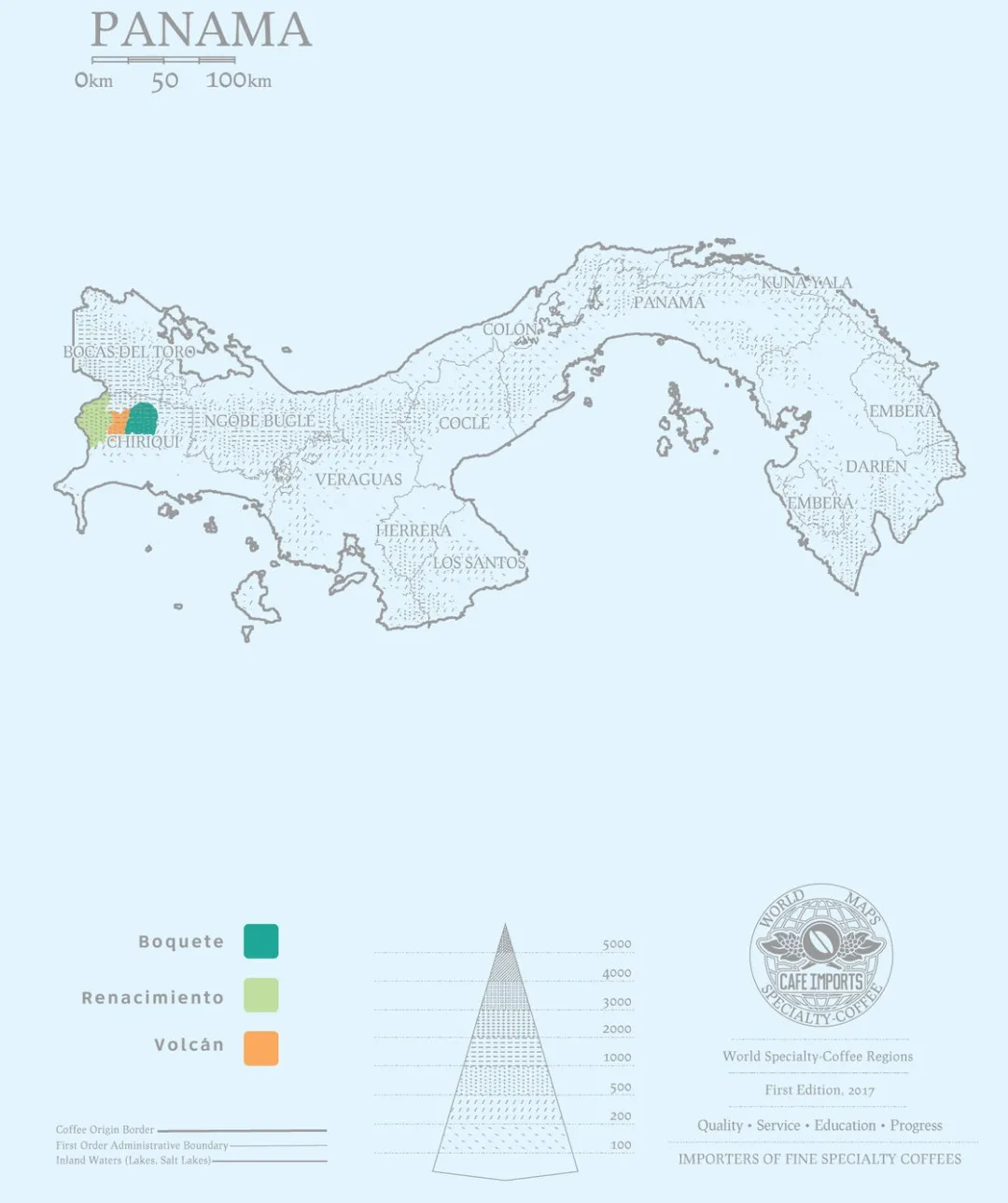 The Boquete region is the heartland of Panamanian Geisha, located in the northern part of Chiriquí Province and home to the active Volcán Barú. The area is influenced by moist air currents from both the Caribbean Sea and the Pacific Ocean, resulting in significant day-night temperature variations, frequent mountain fog, and fertile volcanic soils — all ideal for coffee growth. The high altitude slows down the ripening process of coffee cherries, aiding in the accumulation of flavor compounds and producing unique fruity notes and bright acidity.
When discussing Panamanian Geisha, one cannot overlook Hacienda La Esmeralda. In 2004, the estate won the Best of Panama competition with its Geisha, repeatedly breaking auction records and becoming a focal point for specialty coffee enthusiasts worldwide. Not only did La Esmeralda propel Geisha into the limelight, but it was also the first estate to establish a strict grading system for Geisha, with each batch garnering significant market attention.
Hacienda La Esmeralda was originally the Pamira Farm, purchased by American banker Rudolph Peterson in 1964. It initially focused on dairy production until 1987, when Caturra and Catuaí varieties were introduced, and the farm was officially renamed. A wet processing mill was established in 1994, and in 1997, the third-generation owner Daniel took over. He introduced cupping techniques, and in 2004, the estate rose to fame with its Geisha.
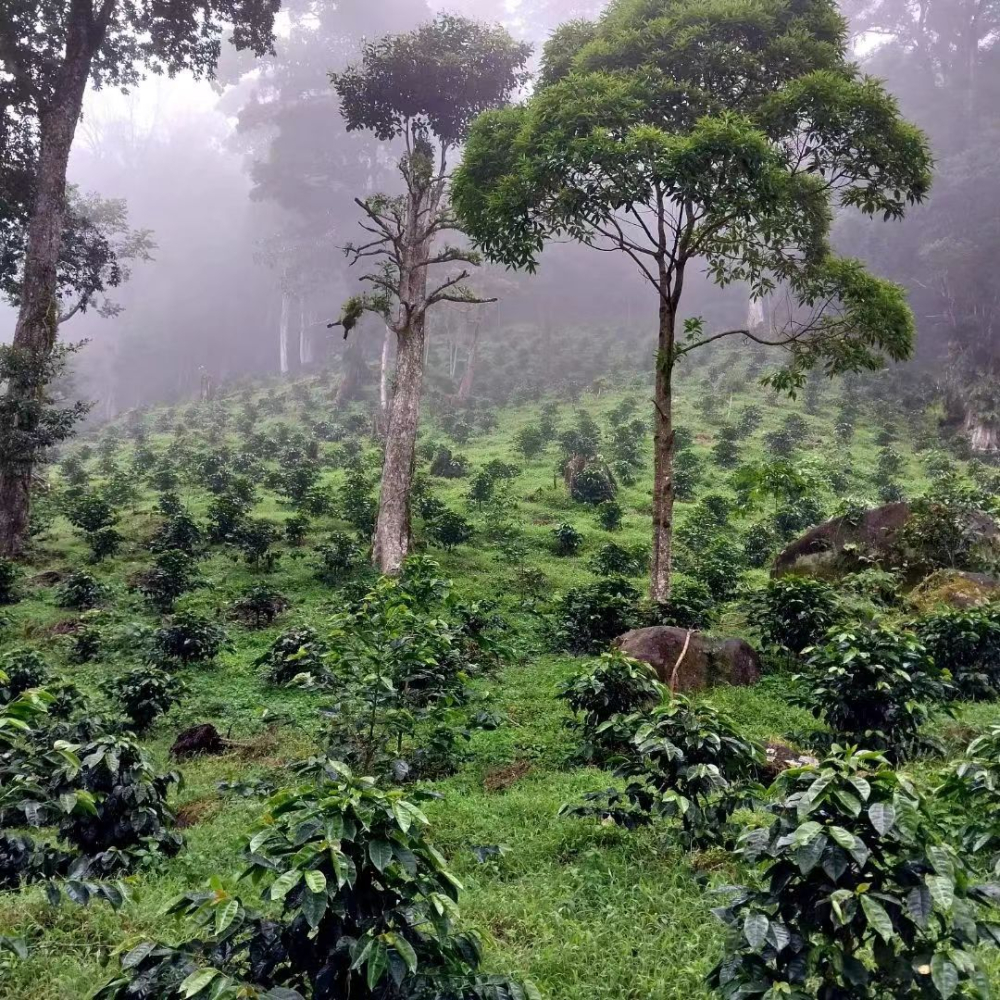 Currently, Hacienda La Esmeralda has four farms dedicated to coffee cultivation, among which Jaramillo, Cañas Verdes, and El Velo grow Geisha. Each farm is further divided into multiple small plots, each with its own unique microclimate and flavor expression.
Hacienda La Esmeralda classifies its Geisha into three main brands: Esmeralda Auction (auction lots), Esmeralda Special (Red Label), and Private Collection (Green Label). Additionally, Caturra and Catuaí are grouped under the Diamond Mountain brand. Among these, Jaramillo is known for its high altitude and cool climate, receiving up to 4,000 mm of rainfall annually, with notable day-night temperature differences. The Red Label Geisha is divided into six plots, including Mario, Noria, Reina, Bosque, Buenos Aires, and Caballeriza.
Cañas Verdes means “green fields,” located on the eastern side of Volcán Barú at elevations between 1,500 and 2,050 meters. Its complex and varied terrain, combined with significant day-night temperature variations and volcanic soils, contributes to the rich aromatic layers of Geisha. The area has 11 Geisha-growing plots, such as Lino, Coronado, Fundador, León, Montaña, Trapiche, Jacinta, Cabaña, Tumaco, Nido, and Colga.
 El Velo (The Veil) is the youngest farm acquired by Hacienda La Esmeralda in 2012 and also the highest-altitude planting area, with an average elevation exceeding 1,800 meters — making it an ideal environment for Geisha. In addition to Geisha, the farm has experimented with over 400 varieties from CATIE, including Laurina, Pacamara, Mocha, and SL28, for future varietal development. The Geisha planting area at El Velo spans 37.9 hectares and is divided into seven plots: Guabo, Portón, Durazno, Mural, Figueroa, Buena Vista, and Águila.
Hacienda La Esmeralda’s Geisha is divided into two major grades based on strict criteria: Red Label and Green Label. The Red Label (Esmeralda Special) consists of non-auction high-quality Geisha, all grown at altitudes above 1,600 meters, with cupping scores of 91 or higher. Each lot provides detailed origin information, including plot, altitude, processing method, and harvest date. For example, Red Label Geisha from the Sugar Cane plot, after 25 days of slow sun-drying, showcases intense aromas of jasmine, cranberry, passionfruit, citrus, and cinnamon.
The Green Label (Private Collection) features a blend of non-auctioned yet high-quality Geisha, mainly sourced from plots between 1,600 and 1,800 meters. Its flavors are characterized by classic notes of orange, lemon, berries, grapefruit, and tea-like qualities, making it an excellent choice for Geisha lovers seeking high quality within a budget. Both grades have their unique strengths and are exceptional ways to experience Panamanian Geisha.
The above content is compiled by CoffeeHunters, a coffee news website.


