







Introduction:Colombian coffee is renowned as the "green gold" for its diverse growing regions and rich flavor profiles, making it an essential choice for specialty coffee enthusiasts. This article delves into the geographic characteristics and official grading system of Colombia’s major coffee-growing regions, and provides a detailed introduction to the unique flavors and ideal roast levels of representative beans such as Huila, Maragogype, and Geisha. Additionally, practical V60 pour over parameters and techniques are offered to help you fully grasp the charm of Colombian coffee—from bean selection to brewing.
Colombian coffee has long been hailed as the "green gold," beloved globally for its rich body and deep notes of dark chocolate. With the rise of the specialty coffee trend, this South American country has revealed an even more diverse and nuanced flavor spectrum. From the northern region of La Guajira to the central Antioquia, and down to the southern Huila and Cauca, the 20 coffee-growing provinces—shaped by varying terrains and altitudes—nurture distinct coffee flavor profiles.
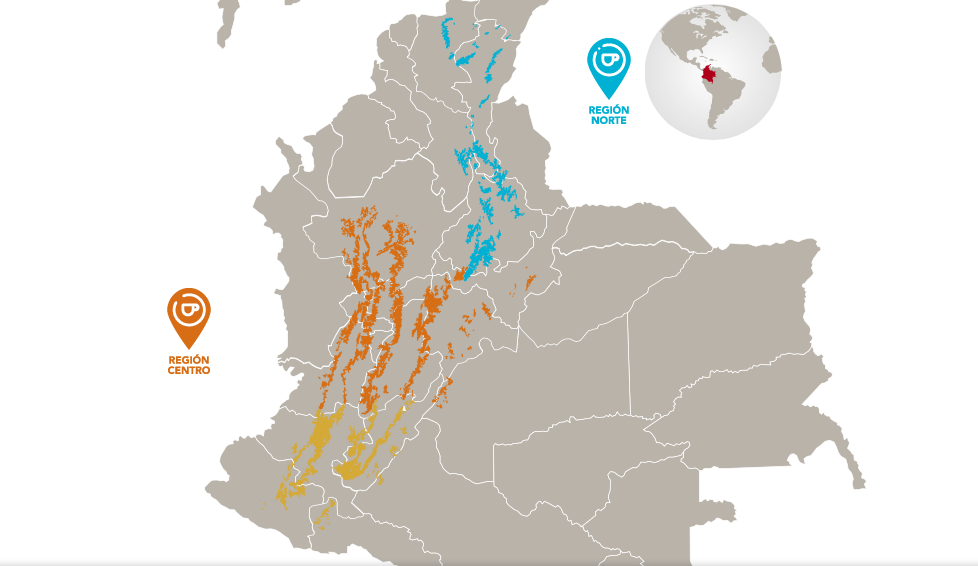
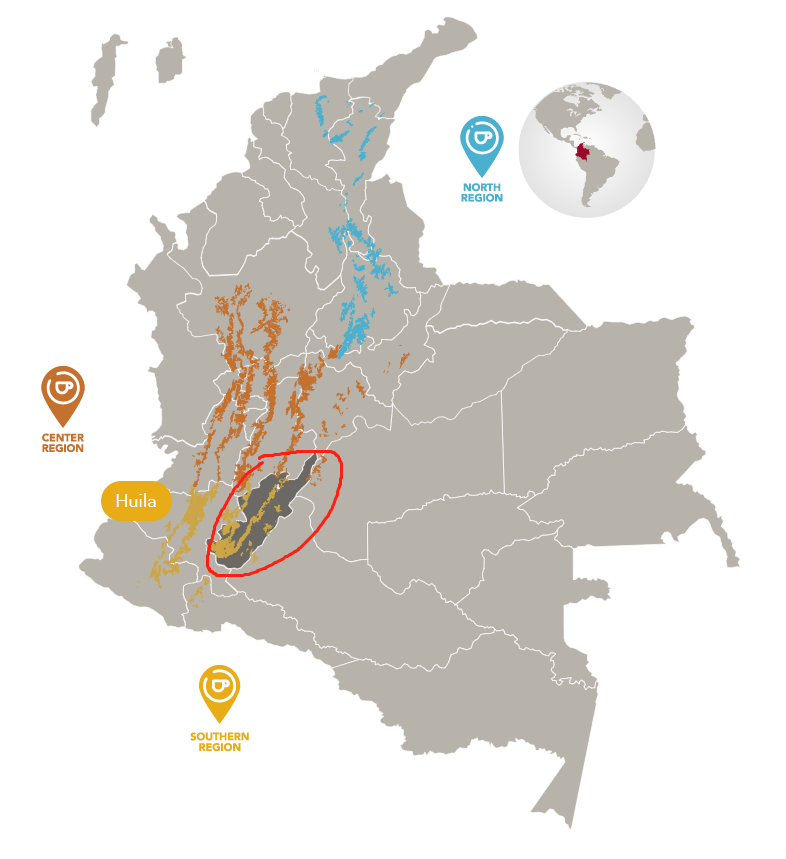
Located in the northwest of South America, Colombia’s terrain can be divided into western mountain ranges, eastern plains, and the Amazon region. Out of the country’s 32 departments, 20 cultivate coffee, primarily concentrated along both sides of the Andes Mountains. Geographically, these are broadly grouped into three main producing regions: northern, central, and southern. The northern regions, such as La Guajira and Cesar, enjoy warm climates and abundant sunshine, often employing shade-grown cultivation methods. The resulting coffee tends to have gentle acidity, balanced aroma, and body. The central region is the largest and most traditional coffee-producing area, encompassing departments like Antioquia, Valle del Cauca, and Quindío, with high production volumes. Southern regions such as Huila, Nariño, and Cauca, being closer to the equator and at higher elevations, typically produce coffee with bright acidity and delicate floral and fruity notes, highly regarded in the specialty coffee market.
Among the many regions, Huila’s coffee is often chosen as a representative entry-level bean due to its consistent quality and classic flavor. These beans are mostly processed using the washed method, which, by removing the mucilage layer, better highlights regional characteristics. For roasting, a medium-dark profile can enhance the aromas of dark chocolate and caramel while bringing out gentle citrus acidity and sweetness—a classic flavor combination favored by many coffee lovers.
As the specialty coffee movement evolves, more consumers are seeking layered and complex coffee experiences. Lighter roasts have gained popularity for accentuating the intrinsic fruit acidity and floral notes of the beans, delivering a fruit platter-like sensory experience. To meet such preferences, Colombian varieties like Geisha and Maragogype become excellent choices. When roasted to a medium level, these beans exhibit bright fruitiness such as passionfruit, grape, and apricot, while retaining moderate fermentation character and sweetness—ideal for those who enjoy a fresh and vibrant cup.
When discussing Colombia’s coffee grading system, it’s important to note that its evaluation criteria differ from other regions. Colombia primarily grades beans by size, with the highest grade, "Supremo," referring to beans where over 80% are 17 mesh (approximately 8 mm) or larger. However, this grading is not directly related to flavor performance. Therefore, if you’re looking to select coffee with outstanding flavor and distinctive regional traits, it’s advisable to choose products clearly labeled with origin names such as "Huila" or "Cauca," rather than relying solely on grades like "Supremo" or "Excelso."
In terms of roasting, the ideal roast level for Colombian coffee beans varies depending on the region and processing method. Taking common varieties like Huila, Maragogype, and Geisha as examples, a certain brand previously recommended medium-dark roasting to enhance dark chocolate and caramel notes, but today the trend leans toward medium roasting to preserve the vibrant acidity and delicate sweetness. In particular, extending the yellowing phase just before first crack helps develop a rounder sweetness and greater complexity. Additionally, to ensure freshness, it’s recommended that consumers brew the coffee soon after purchase, ideally choosing beans roasted within five days prior to shipping.
For brewing, using a V60 dripper is an ideal way to enjoy Colombian coffee. The V60’s 60-degree conical design, combined with large holes and spiral ribs, effectively improves extraction efficiency and flow control. It is recommended to set the water temperature at 90–91°C, with grind size close to that of fine sugar or passing through a Chinese No. 20 sieve at 80%. Use a 1:15 coffee-to-water ratio, with about 15 grams of coffee.
For actual brewing, you can use the three-pour method: start with a 30-gram bloom pour for 30 seconds to activate the coffee’s aroma; then pour 95 grams of water (reaching approximately 125 grams total) over about one minute; when the water level drops to two-thirds of the coffee bed, pour the remaining 100 grams (totaling around 225 grams), finishing the drip at exactly 2 minutes to enjoy a well-balanced, layered Colombian pour over coffee.
The above content is compiled by CoffeeHunters, a coffee news website.


