







Introduction:Coffee beans from the Kochere region of Yirgacheffe exhibit distinctly different flavor profiles due to variations in processing methods. This article delves into how sun-dried and washed processes influence the aroma, acidity, and body of Kochere coffee, and introduces the rigorous selection criteria and incentive mechanisms of the Red Cherry Project. From green bean appearance and roast curves to brewing performance, it provides a comprehensive guide to the key differences and tasting points of G1-grade specialty coffee.
As Ethiopia’s most iconic specialty coffee region, Yirgacheffe’s sub-region Kochere produces distinctly flavored beans due to differing processing methods. Taking a certain coffee brand’s sun-dried Red Cherry and washed Kochere beans as examples, this article analyzes how these two processing techniques shape the unique characteristics of coffee — from regional background, processing principles, cupping results to practical brewing comparisons — and reveals the selection standards of the Red Cherry Project and the driving force behind high-quality coffee.
[Kochere Region: The Hidden Champion of Yirgacheffe]
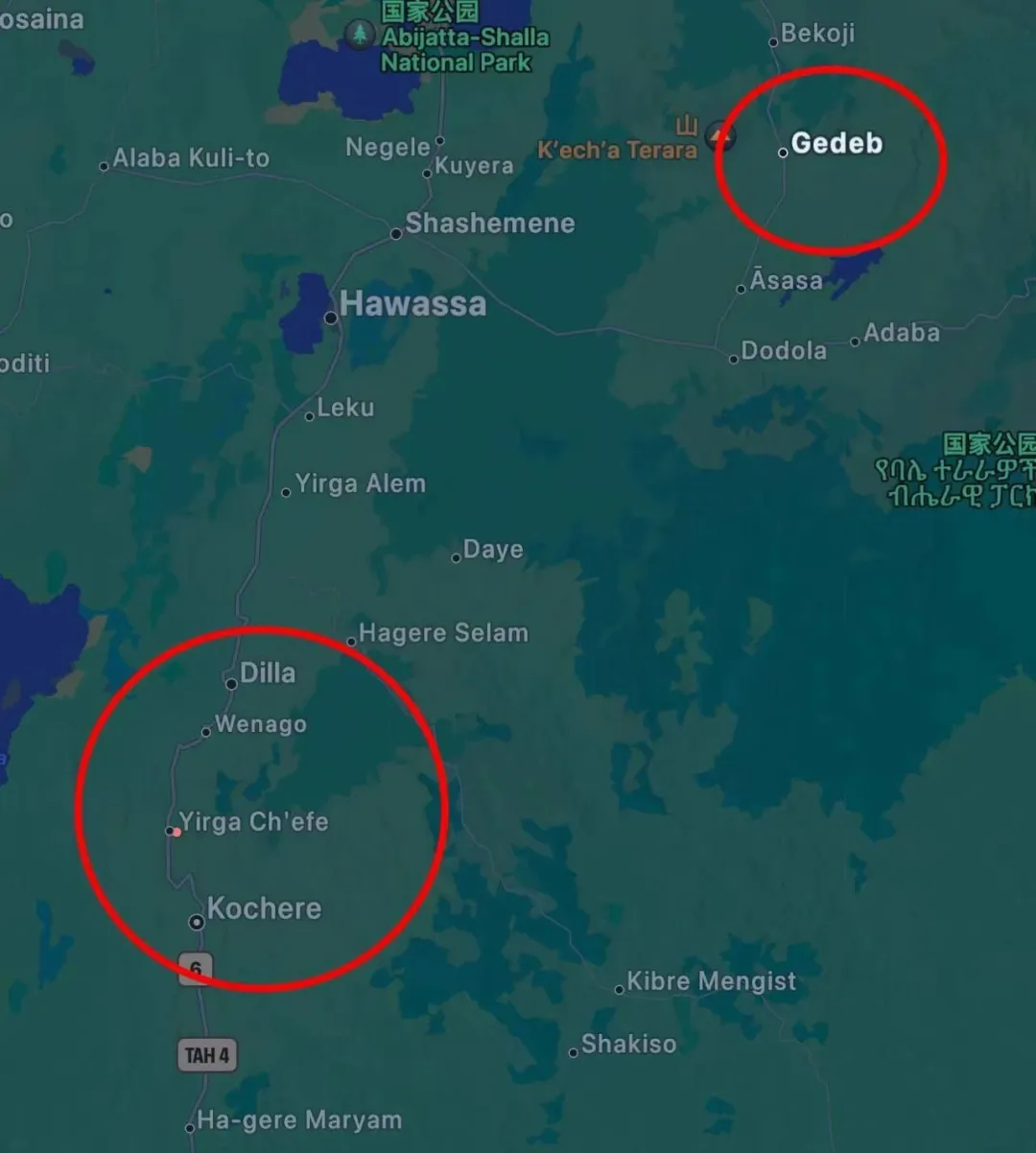
Located about 25 kilometers southeast of Yirgacheffe, Kochere is one of the region’s three well-known micro-regions, with a population of around 100,000 and coffee as its primary economic source. The area boasts advanced processing facilities and is renowned for strictly adhering to G1-grade standards. Coffee review website Coffee Review once awarded Kochere washed beans a high score of 94. Most coffee here is grown by smallholders on their own farms using traditional, pesticide-free farming methods, combined with meticulous post-harvest processing, resulting in a quality that is naturally close to organic.
Coffee production in Kochere mainly involves smallholder farmers delivering red cherries to cooperatives for centralized washing, with some undergoing sun-drying. The region’s altitude ranges between 1,650 and 1,800 meters, providing a high-altitude growing environment conducive to the accumulation of coffee flavor compounds. Adjacent to other well-known micro-regions like Wenago and Gelena, coffee from this area is often named after the processing factory or village to enhance traceability and market value.
[Red Cherry Project: A Premium Coffee Initiative with High Standards and Rewards]
Launched in 2007 by Dutch green coffee trader Trabocca, the Red Cherry Project aims to uncover high-quality coffee from Ethiopian smallholders. The project requires farmers to harvest only 100% fully ripe red cherries, which are then hand-sorted by female workers to ensure purity. Participating farms must produce small batches of 1,500 to 3,000 kilograms. After passing double cuppings in Ethiopia and the Netherlands, the beans are sold via international auctions, often fetching prices 4 to 20 times the market average.
Trabocca provides equipment support to partner farms, including sun-drying racks, shade nets, and generators, along with financial loans and technical guidance to ensure high standards at every stage from planting to processing. The project does not pursue profit — all surpluses are returned to farmers and is run by a core team of just four people, with the parent company covering only administrative costs. Through high-price purchases and technical investment, the Red Cherry Project has significantly improved the production standards and incomes of participating farms.
[Processing Differences: How Sun-Dried and Washed Methods Alter Flavor]
A certain coffee brand’s Kochere washed beans exhibit a clean citrus acidity and jasmine floral notes, with a crisp taste featuring honey and citrus tones; the sun-dried Red Cherry, on the other hand, releases intense berry, strawberry, and fermented wine aromas, with a notable body and an aftertaste of black tea and caramel. This difference stems from the fundamental nature of the processing methods: the washed method removes pulp and mucilage, highlighting the beans’ intrinsic qualities, while the sun-dried method uses full fruit fermentation to extract richer sweetness and complex layers.
In terms of green bean appearance, sun-dried beans appear yellow-green due to retained silver skin, while washed beans look bright greenish due to the removal of silver skin. After roasting, the silver skin of sun-dried beans is more thoroughly shed, whereas washed beans may retain more. Roast curve adjustments should align with processing traits: sun-dried beans benefit from slightly shorter development times to preserve fruity notes, while washed beans can extend development to enhance acidity clarity.
[Practical Brewing: Flavor Performance from Cupping to Smart Dripper]
Cupping results show that the sun-dried Red Cherry offers fermentation notes, citrus, berries, and floral aromas, with prominent sweetness; the washed Kochere emphasizes lemon acidity, green tea-like notes, and citrus, with a crisper mouthfeel. When brewed using a smart dripper (15g coffee/1:15 coffee-to-water ratio/90°C), the sun-dried beans present sweet orange, licorice, and creamy aftertastes, with high sweetness and a black tea-like finish; the washed beans display a balanced profile of lemon, mandarin, and cane sugar, with a honey and oolong tea-like aftertaste.
Brewing tips: For sun-dried beans, extend the blooming time to enhance fruity notes; for washed beans, increase pouring speed to accentuate acidity. Regardless of processing method, stable water temperature and even agitation are key. A fine to medium-fine grind is recommended to fully extract flavor compounds.

[Conclusion: The Quality Chain from Green Bean to Cup]
Kochere’s G1-grade coffee establishes a premium foundation through strict defect sorting (less than 3% defect rate) and high-altitude cultivation. The sun-dried and washed methods respectively amplify sweetness and acidity, while the Red Cherry Project ensures every bean represents the region’s highest standard through rigorous criteria and economic incentives. From the differences in silver skin retention and luster of green beans to the sweetness and acidity expressed in the cup, consumers can experience the profound charm of Ethiopian specialty coffee through multi-sensory exploration.
The above content is compiled by CoffeeHunters, a coffee news website.


