







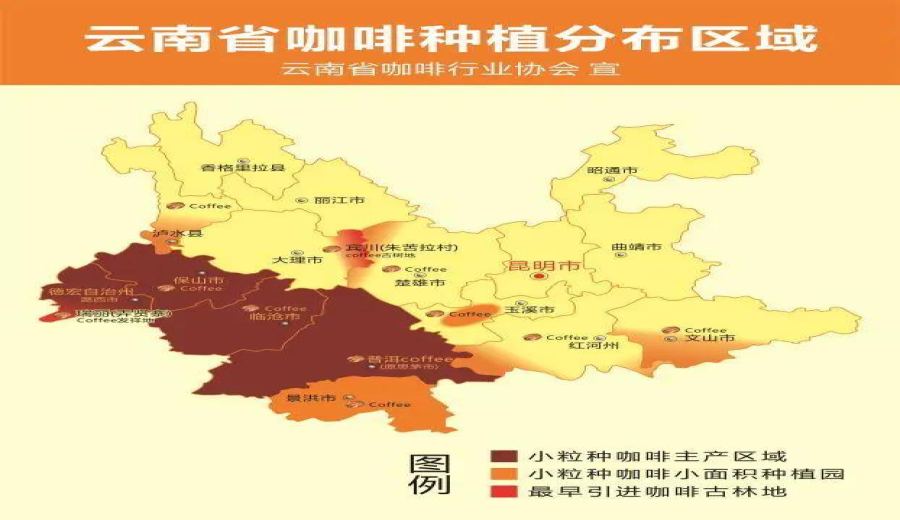
Introduction:Yunnan is China’s largest coffee-producing region. Since French missionaries first introduced coffee plants over a century ago, it has emerged as a significant new force in the global specialty coffee scene. This article delves into the historical origins, flavor profiles, and processing methods of Yunnan’s two major coffee varieties—Typica and Catimor—as well as analyzing how the geographic environments of key production areas such as Dehong, Baoshan, Lincang, and Pu’er influence coffee characteristics. It also provides practical brewing recommendations for both washed and natural processed beans to help you fully appreciate the potential of Yunnan coffee.
As a cornerstone of China’s coffee industry, Yunnan not only boasts a long planting history but has also gradually made its mark in the global specialty coffee market thanks to its exceptional geographic conditions. From the early introductions by French missionaries to today’s large-scale cultivation of the Catimor variety, the evolution of Yunnan coffee is rich with stories and has shaped a distinctive flavor profile.
Dating back to 1904, French missionary Téophile Desflèches planted the first coffee tree in Zhukula Village, Binchuan County, Dali—marking the beginning of coffee cultivation in Yunnan. By the 1930s, overseas Chinese leader Liang Jinshan had introduced coffee to regions like Puliang and Luoming, laying the groundwork for future development. In 1952, under the guidance of experts from the Baoshan Tropical Economy Research Institute, large-scale cultivation began in the Luguang area, primarily using the Typica variety. Though elegant in flavor, Typica was vulnerable to disease and offered limited yields. After 1992, with the entry of multinational companies like Nestlé, the disease-resistant and commercially viable Catimor variety rapidly gained prominence, becoming Yunnan’s dominant planted variety and leading to its coffee being largely used for instant coffee production. Today, Yunnan accounts for approximately 80% of both coffee planting area and production nationwide, firmly holding the top position in China.
Yunnan’s geographic environment is highly suitable for growing Arabica coffee, especially in the southwestern and western regions between 15°N and the Tropic of Cancer. These areas include Pu’er, Xishuangbanna, Wenshan, Baoshan, Dehong, and Lincang. Most of these regions sit at elevations between 1,000 and 2,000 meters, feature prominent mountainous terrain, and enjoy significant diurnal temperature variations, along with ample sunlight and rainfall—creating ideal growing conditions for coffee.
Among them, Dehong is known as the “Home of Chinese Coffee,” with most planting areas situated at elevations above 1,000 meters, and some high-quality plots even exceeding 1,600 meters. Organic farming practices are common here, contributing to the production of high-quality coffee beans. Baoshan, which began introducing coffee in the mid-1950s, has long been famous for its small-bean coffee from the Luguang Basin, particularly favored by markets in Europe, America, Hong Kong, and Macau. In 2010, it received certification as a China National Geographical Indication product. The region has an average annual temperature of 21.5°C, with extreme highs reaching 40.4°C and very little frost throughout the year—conditions that are highly conducive to growing small-bean coffee. The resulting coffee is bold yet not bitter, with pronounced aroma and unique fruity notes.
Lincang, due to its unique geographical location and climate, has established premium coffee seedling bases in areas like Gengma and Zhenkang, driving the expansion of local coffee cultivation. Pu’er, meanwhile, has over 150 years of coffee cultivation history and has actively developed its coffee industry since the early 1990s as part of efforts to boost farmers’ incomes.
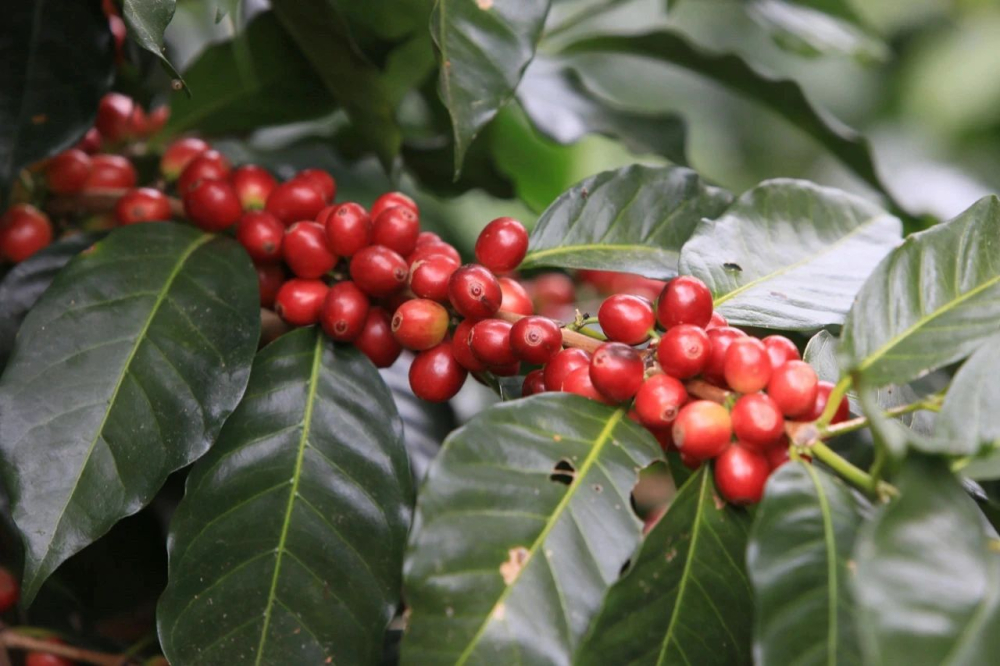
Currently, the main coffee varieties planted in Yunnan include Catimor, Typica, Bourbon, Caturra, and Catuai—but Catimor remains the most commonly seen on the market. Typica, the oldest original Arabica variety, though elegant in flavor, has gradually been replaced by more disease-resistant varieties due to its weak plant constitution and susceptibility to leaf rust, resulting in relatively low yields. However, some producers in Baoshan continue to cultivate Typica with meticulous management, showcasing its clean and balanced flavor characteristics.
Catimor is a hybrid of Arabica Typica and Robusta, inheriting around 25% of Robusta’s genes. This gives it strong disease resistance and high yield potential, while still retaining some of Typica’s original flavor traits. It has a rich crema and is well-suited for commercial production. Thanks to these advantages, Catimor has become the mainstream variety in Yunnan’s coffee industry today.
In terms of processing methods, products on the market include both washed Typica and Catimor, both roasted to a medium degree to highlight the generally balanced flavor profile of Yunnan-grown coffee. The flavor profile centers around nuts and brown sugar. Washed Typica offers clear flavors with notes of citrus, nuts, plums, and black tea, making it suitable for those who enjoy layered fruit acidity. Catimor, on the other hand, presents herbal, nutty aromas and caramel tones, with a smoother mouthfeel.
Additionally, some producers offer naturally processed Catimor beans, using a red cherry sun-drying method to enhance sweetness and dried fruit aromas. The flavor profile becomes more intense, featuring caramel, cocoa, dark chocolate, and woody notes—ideal for brewers who prefer a richer sweet profile.
For washed Typica (e.g., a certain brand’s 2013 Typica coffee beans), it is recommended to start roasting at 200°C to enhance the dehydration phase before shifting to medium heat to stabilize the Maillard reaction. Drop the beans about three minutes after the first crack to achieve a medium roast degree, balancing acidity, sweetness, and body. For pour over brewing, use a V60 filter cone, with water temperature controlled at 90–92°C, a coffee-to-water ratio of 1:15, and a medium-fine grind (similar to the coarseness of granulated sugar, with a VARIO 5O sieve passing rate of about 57%). Use a pulsed pouring method: begin with a 30-second bloom using 30 grams of water, then pour up to 124 grams in the first pour, and finally add water up to 227 grams. Total brew time should be around two minutes. These parameters highlight Typica’s clarity and floral-fruit aromas, with a tea-like finish—perfect for coffee enthusiasts seeking refined flavors.
The above content is compiled by CoffeeHunters, a coffee news website.


