







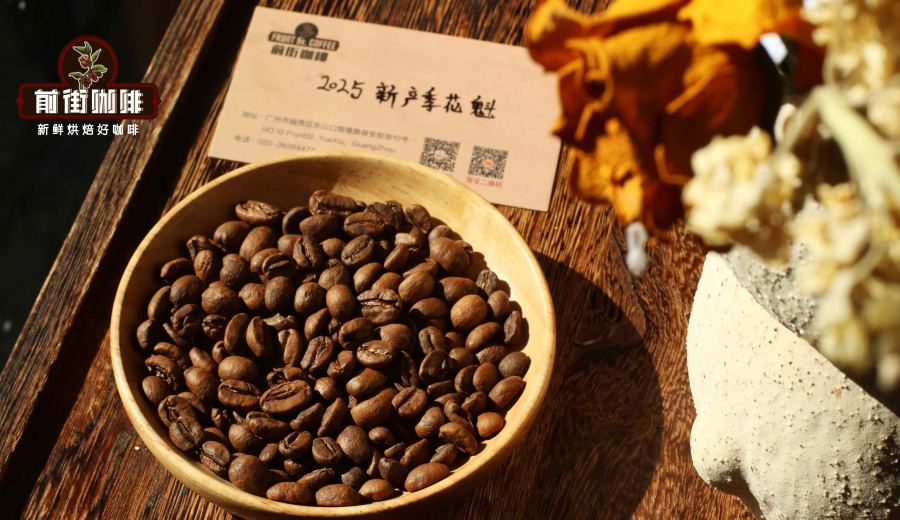
Introduction:As a classic specialty coffee region in Ethiopia, Sidama is renowned for its distinctive floral and fruity aromas. However, many people mistakenly believe that the popular "Hua Kui" beans originate here, when in fact they come from Guji Hambella. This article delves into the geography and ethnic background of the Sidama region, highlights important sub-regions within Zone A such as Bensa and Santavene, and provides a detailed guide to pour-over techniques for natural processed beans — from filter choice and water temperature control to three-stage pouring — helping you master the key to brewing coffee with vibrant fruitiness and juicy body while debunking common misconceptions.
Sidama is one of Ethiopia’s most representative specialty coffee regions, captivating coffee enthusiasts with its enchanting floral and fruity profiles. Yet, what many don’t realize is that the widely mentioned “Hua Kui” coffee beans on the market actually come from Guji Hambella, not the Sidama region itself. This article will take you through the region’s history, ethnic culture, and distribution of core sub-regions, while focusing on recommended premium Sidama lots such as Hua Kui, Santavene, and Aro. We’ll also fully dissect the pour-over method for Sidama natural beans, including filter selection, water temperature settings, grind size recommendations, and three-stage pouring techniques, to help you brew a cup with vivid flavors and an explosion of fruity aromas. At the same time, we’ll clarify common misunderstandings.
The flavor profile of Sidama natural beans typically showcases distinct layers of floral notes, jackfruit, dried fruits, and apricot, along with a rich juicy mouthfeel. These beans are mostly processed with light to medium roasts, making them ideal for pour-over methods that highlight delicate acidity and sweet aftertastes. From a regional map perspective, Sidama now primarily falls under the newly established Sidama Region, though some areas also span the Oromiya Region and the Southern Nations, Nationalities, and Peoples' Region (SNNPR). Among them, sub-regions under Zone A — such as Bensa, Arbegona, Bura, Bona Zuria, and Santavene — have achieved notable success in international green bean competitions. These areas stand out with greater name recognition, flavor consistency, and market reputation compared to other regions.
Take, for example, a natural coffee bean from Alo Hatessa in Bensa, Sidama. It is grown at an altitude of 2180 to 2280 meters, of the 74158 variety, graded G1, and processed using the natural method. This bean exhibits flavor notes such as magnolia, passion fruit, pineapple, and mango, with prominent fermentation aromas. It’s perfect for coffee drinkers who enjoy intense fruitiness and complex layers. When brewing such natural beans, it is recommended to use a filter with relatively fast flow, such as the V60. Since lightly roasted beans have limited expansion and harder bean structure, more fine particles can be produced during grinding. Using a filter with slow water drainage can cause these fines to settle at the bottom, leading to channeling in the final stages, which affects overall aroma and smoothness of the cup. The spiral ridges of the V60 help evenly release gases from the coffee bed, promoting the release of acidic aromatic compounds, while the large bottom hole design accelerates water drainage, making the overall extraction smoother.
Regarding water temperature control, a recommended range is 90°C to 93°C. Based on practical experience, if you prefer bright acidity and a clean finish, opt for a slightly lower temperature between 90°C and 91°C. If you wish to enhance the fullness and body of the acidity, a slightly higher temperature between 92°C and 93°C is advised, as it can more effectively bring out the layers and sweetness of the coffee. As for grind size, adjustments should be made based on total brew time and actual flavor results. For instance, when using 15 grams of coffee with a three-stage pour, if the total brew time is less than 1 minute and 40 seconds, the coffee often tastes overly sharp and thin — usually a sign of too coarse a grind or under-extraction. Conversely, if the brew time exceeds 2 minutes and 20 seconds, it may indicate over-extraction due to too fine a grind, resulting in noticeable bitterness and heaviness.
For the coffee-to-water ratio, a suggested range is 1:15 to 1:16, adjustable according to personal taste preferences. If you prefer a stronger flavor, closer to the taste of oolong tea or berry notes, choose 1:15. If you’d like to more clearly perceive white floral and citrus acidity, opt for 1:16 to allow the flavors to unfold more naturally. In practice, the first pour involves adding 30 grams of water for blooming for about 30 seconds while starting the timer. Keep the water flow small, circling from the center outward to ensure even saturation of the coffee bed. After 30 seconds, proceed to the second pour by steadily adding 95 grams of water with a slightly larger stream, aiming to gently lift the coffee bed. This stage should feature a vertical and even water stream, reaching a cumulative water volume of 125 grams around 55 seconds. Finally, when the liquid level drops to about half, perform the third pour by adding 100 grams of water with a fine stream in small circles. Maintain stable water flow to avoid disturbing the coffee bed excessively. The total water volume is 225 grams, and the dripping should finish in approximately 2 minutes.

Through the above pour-over techniques, you can effectively highlight the fruity aroma and juicy body of Sidama natural beans. Upon tasting, you may experience sweet and tangy notes reminiscent of yellow stone fruits like yellow peaches, sweet oranges, and grapefruits, paired with delicate sweetness. The overall profile is refreshing and well-balanced. Even if you’re not familiar with Ethiopia’s geography, you’ve likely heard of Sidama, as this region has long produced many exceptional specialty coffees. Whether it’s bold fruitiness or elegant floral notes, they leave a lasting impression. Popular offerings such as Hua Kui 8.0, Santavene, and Aro are all renowned premium batches from Sidama. The captivating flavors of these coffees are inseparable from the region’s natural environment and cultural heritage.
The history of the Sidama region dates back to 1942, with the province’s name derived from the local predominant ethnic group, the Sidama. It was once an independent Sidama Kingdom. There has long been a debate over the correct spelling of the region’s name — Sidamo vs. Sidama — but in the international coffee market and industry, “Sidamo” is more commonly used. The main ethnic group in Sidama, the Sidama people, settled in southern Ethiopia as early as the 9th century and have their own language, calendar, and traditional culture. Their calendar is unique, consisting of 13 months, each with an average of 28 days, the 13th month having 29 days, and a week comprising only 4 days, totaling 7 weeks per month. Their New Year festival, Fichee-Chambalaalla, has been recognized by UNESCO as an Intangible Cultural Heritage of Humanity.
After Ethiopia adopted a federal system in 1995, the former Sidama region was incorporated into the Southern Nations, Nationalities, and Peoples' Region, restoring its historical name “Sidama.” However, the market still commonly refers to the coffee from this region as Sidamo. Additionally, when the government registered trademarks in earlier years, the old name Sidamo® was retained, so to this day, most domestic consumers still call this region Sidamo. Geographically, Sidama is located on the southern highlands of Ethiopia, near Lake Awasa by the East African Rift Valley and bordering Kenya, with elevations mostly ranging between 1550 and 2200 meters. The high-altitude environment slows the ripening of coffee cherries, helping form a more complex aroma structure, and also delays the harvest season.
It’s worth noting that due to the complexity of its history and administrative divisions, Sidama is considered one of the most difficult coffee origins in the world to understand. The region is vast, and the Ethiopian Commodity Exchange (ECX) has divided it into five major zones — A, B, C, D, and E — based on geographical indicators. Each zone contains multiple sub-regions, totaling over 50 cooperatives and more than 200 washing stations. Due to varying altitudes, humidity, soil types, and microclimates, even neighboring villages can produce coffee with notably different flavor profiles. With the rise of the specialty coffee trend, some sub-regions with stable production and excellent quality have gradually stood out and earned independent origin status. For example, Guji was originally part of Sidama Zone A, but due to the international market’s high regard for its coffee quality, it has since developed independently. Therefore, the so-called “Sidamo · Hua Kui” on the market today is not entirely accurate — the correct name should be “Guji · Hambella Hua Kui.”
The above content is compiled by CoffeeHunters, a coffee news website.


