







Introduction:Want to understand the evolution and characteristics of Yunnan coffee varieties? This article delves into the two main Arabica varieties grown in Yunnan—Typica and Catimor—exploring their historical background, disease resistance, flavor profiles, and roasting recommendations to help you choose the right Yunnan beans. It also highlights the experimental cultivation results of Typica at a certain estate in Lincang, offering cupping references and practical brewing guidance.
Yunnan coffee, like Indonesian Mandheling, belongs to the Asian coffee-producing region. Both are characterized by a base of pine and nutty notes, but Yunnan beans possess more distinctive local flavor traits, often exhibiting pronounced plum acidity and a smooth black tea aftertaste. In the early days, Yunnan mainly grew the ancient Arabica variety “Typica,” which has smaller beans, hence the name “Yunnan small beans.” However, due to Typica’s low resistance to coffee leaf rust and relatively low yield, most farmers switched to planting Catimor—a variety with strong disease resistance and high productivity—after international brands like Nestlé entered the market.
From a varietal perspective, although Yunnan and Mandheling both belong to the Asian coffee camp, there are still notable differences in their subtle flavor profiles. In addition to the common pine and nutty notes, Yunnan beans also showcase bright acidity reminiscent of plums and a rich black tea finish. This uniqueness has gradually drawn international attention. The early Typica grown in Yunnan belonged to the traditional Arabica lineage, with small beans, hence it was called “Yunnan small beans” and is also the “old variety” familiar to local farmers.
However, due to Typica’s low resistance to coffee leaf rust and suboptimal yields, it was gradually phased out for economic reasons. Starting in the 1990s, with the entry of international coffee brands—especially Nestlé’s push for localized coffee sourcing—Catimor, which boasts strong disease resistance and is suitable for intensive cultivation, became the dominant variety. According to data, as early as 1998, over 90% of Yunnan’s coffee varieties were Catimor, a proportion that remains high to this day.
Catimor is a hybrid variety bred in 1959 by Portugal’s coffee leaf rust research center, CIFC, with Timor and Caturra as its parent varieties. Timor itself is a natural hybrid of Arabica and Robusta, so Catimor carries approximately 25% Robusta genes. This gives Catimor stronger disease resistance, suitability for dense planting, stable yields, and denser bean structure. However, due to its Robusta lineage, some Catimor coffees may exhibit grassy or slightly rough flavors, with overall cleanliness and fruit aroma complexity usually inferior to pure Arabica varieties.
Today, over 90% of coffee trees in Yunnan are Catimor, and the cultivation area of Typica has significantly decreased. Nevertheless, a few estates, such as a certain brand, continue to grow pure Typica in the Lincang region and have released the “Certain Brand 2013 Natural Typica,” showcasing the unique potential of this variety. This article will take you through the development trajectory of Yunnan coffee varieties, compare the flavor differences between Typica and Catimor, and share practical cupping and roasting recommendations.
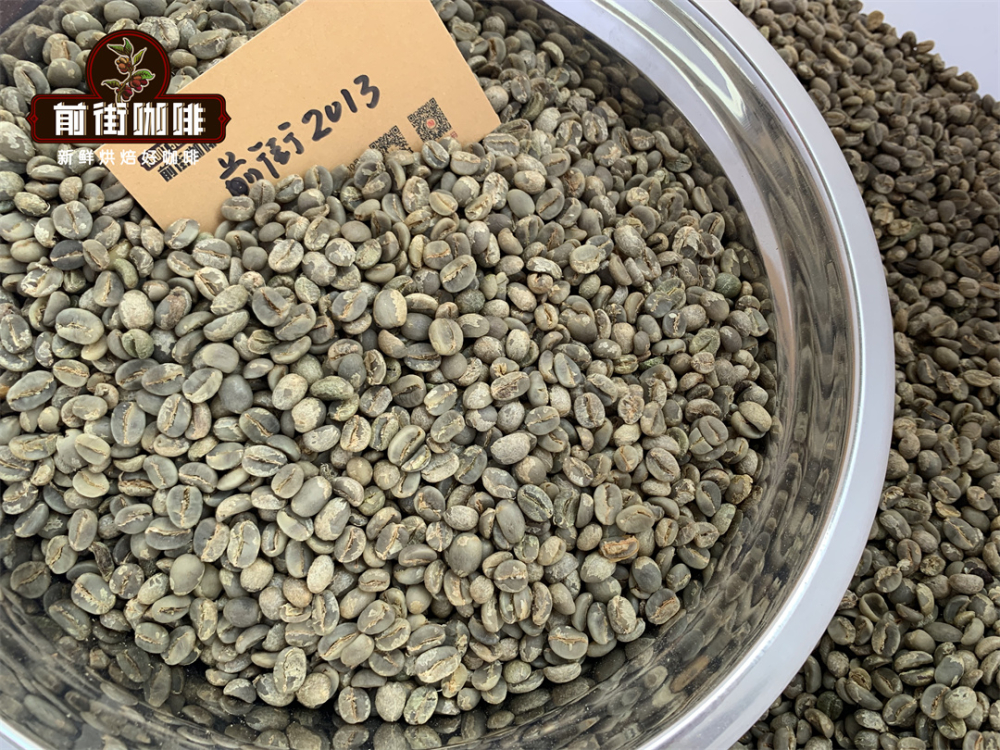
In contrast, a certain brand has been growing pure Typica in the Lincang region since 2013 and released the “Certain Brand 2013 Natural Typica.” Due to Typica’s higher environmental requirements, susceptibility to diseases, and low yield, few farmers are willing to cultivate it. However, under proper management and processing, this bean can display a very clean flavor profile, with soft acidity, distinct layers, notable fruity notes, and a rich black tea-like finish.
In terms of roasting recommendations, given that Yunnan coffee generally has a balanced flavor profile with a mix of acidity, sweetness, and bitterness, medium roasting is advised. This approach can highlight the aromas of chocolate and nuts while preserving moderate acidity, resulting in a more balanced overall taste. According to actual cupping results from a certain brand, Yunnan small beans (Catimor) roasted to medium levels often exhibit aromas of nuts, herbs, and brown sugar, paired with plum acidity and a black tea aftertaste, delivering a stable and appealing overall performance.
As for the naturally processed “Certain Brand 2013 Natural Typica,” it showcases even richer fruitiness and sweetness, with a blend of melon-like freshness and the richness of black tea, along with a prominent chocolate note. The finish is clean and long-lasting. This bean is ideal for coffee lovers who enjoy bright fruit flavors and layered complexity, and it’s also a great choice for pour-over enthusiasts looking to explore Yunnan’s flavor profile.
The above content is compiled by CoffeeHunters, a coffee news website.


