







Introduction:Jamaican Blue Mountain coffee is legendary in the specialty coffee world for its rich, balanced flavor and prestigious status. But the market is flooded with various "Blue Mountain-style" products, making it hard to distinguish the real from the fake. This article delves into the unique geographical conditions of the Blue Mountain region, the historical background of the Clydesdale Estate, the characteristics of the Typica variety, the differences between washed and natural processing methods, CIB certification grades, and provides tested pour-over parameters and flavor profiles to help you deeply understand the essence of authentic Blue Mountain coffee.
The name Jamaican Blue Mountain coffee is almost universally known in the specialty coffee community—even if you’ve never tried it, you’ve likely heard its three defining labels: "rich," "balanced," and "expensive." However, many coffees labeled as "Blue Mountain flavor" or "Blue Mountain blend" are vastly different from beans actually grown in Jamaica’s Blue Mountain region. This article will focus on the core elements of Jamaican Blue Mountain coffee, breaking down everything from the growing environment and historic estates to varietal traits, processing techniques, certification grades, and actual pour-over performance to help coffee enthusiasts build a complete understanding.
[The Unique Advantages of the Blue Mountain Region]
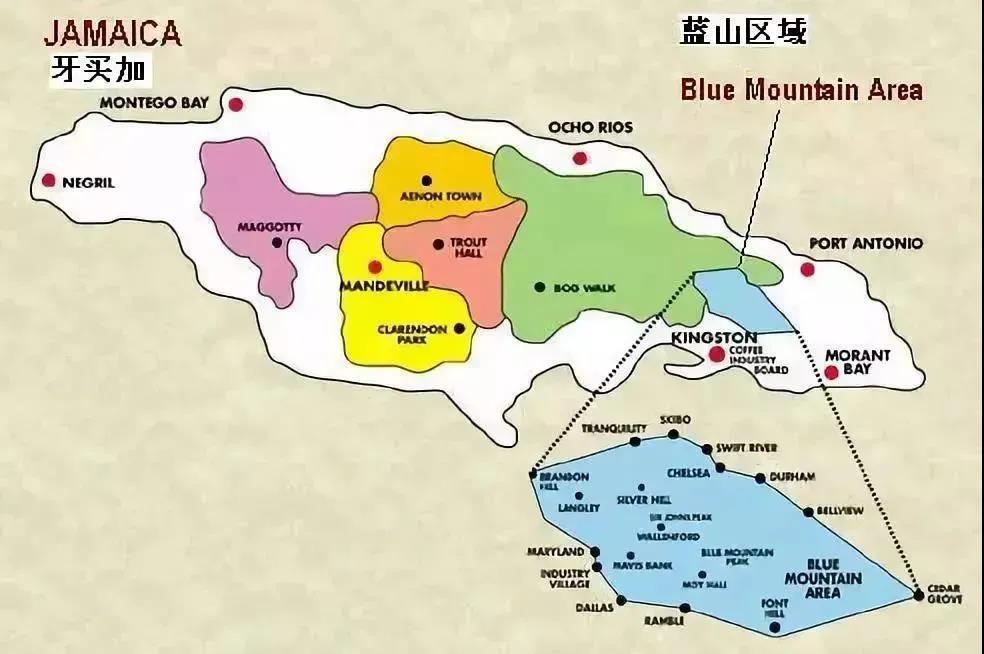
The Blue Mountains are located in the eastern part of Jamaica, named for the way their peaks reflect the deep blue of the Caribbean Sea on clear days. This area falls within the ideal elevation range of the coffee belt, featuring fertile volcanic soil, clean air, and consistently high humidity, with an annual rainfall of about 1,980 mm and an average temperature of around 27°C. This unique microclimate forms the irreplaceable foundation of Blue Mountain coffee’s flavor.
True Blue Mountain coffee can only be grown in designated areas of the Blue Mountains, which span Jamaica’s northeastern region. The rugged terrain means coffee trees are often planted on steep slopes in terraced farms alongside crops like bananas and avocados, enhancing ecological diversity. Harvesting relies entirely on skilled female workers who handpick only perfectly ripe coffee cherries—any oversight can affect the final quality.
[The Clydesdale Estate: A Dual Guarantee of History and Certification]
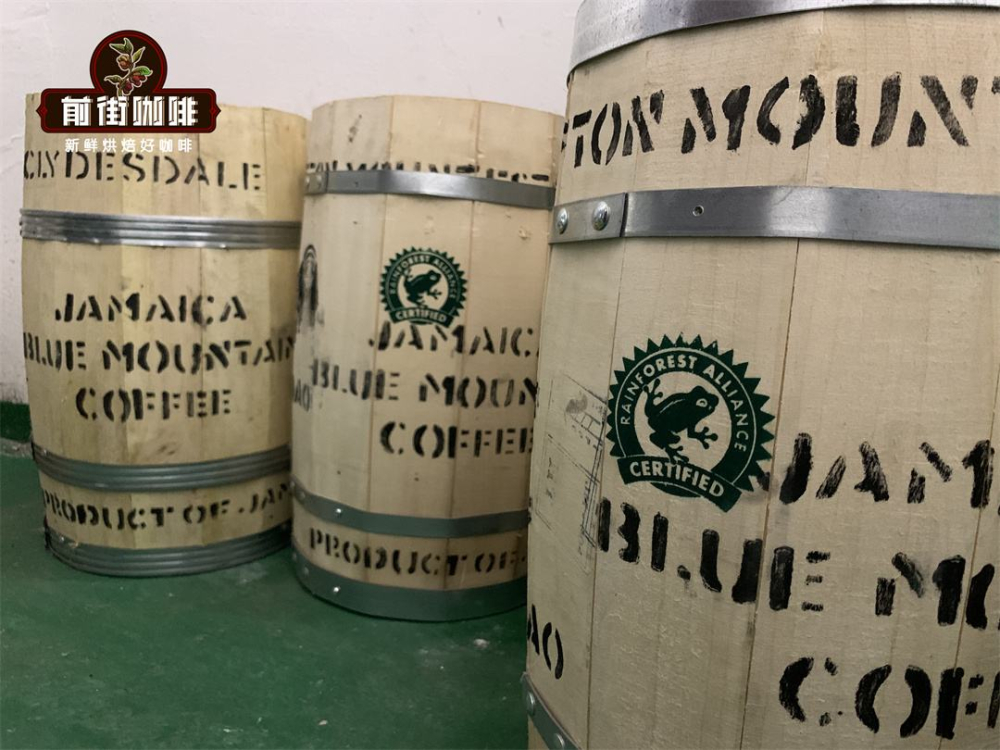
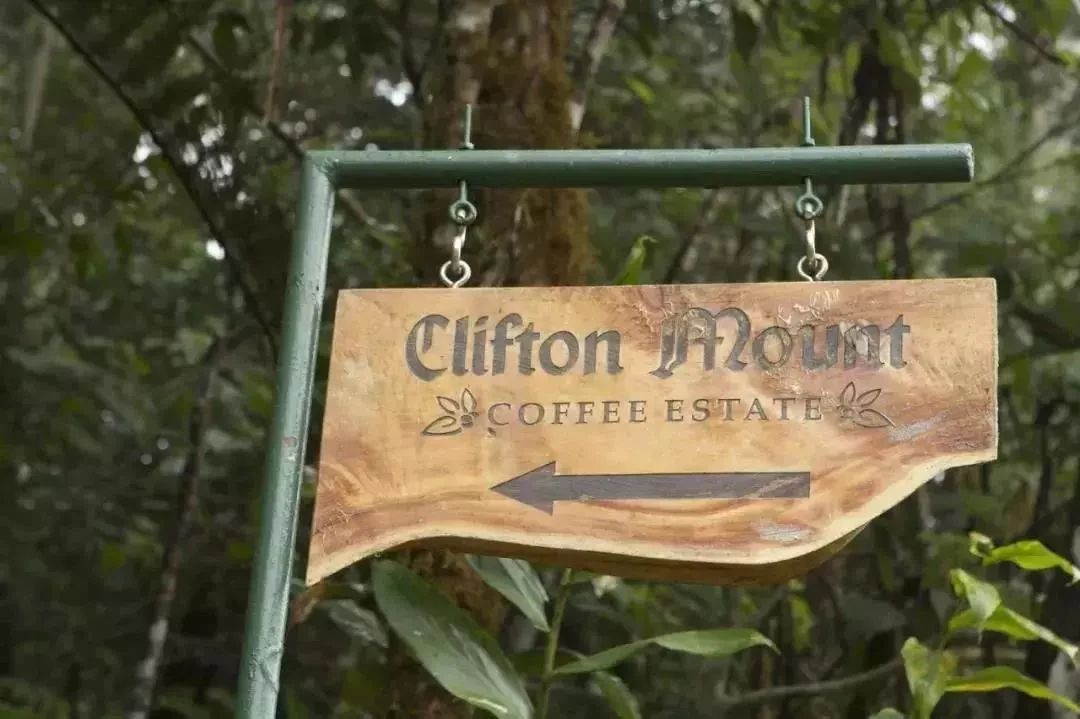
Most of the authentic Jamaican Blue Mountain No. 1 coffee available today comes from the Clydesdale Estate, the oldest estate in Jamaica. Established around 1750, this historic estate is one of the few coffee-growing regions on the island still in continuous operation and the only Blue Mountain coffee producer certified by the Rainforest Alliance.
The estate is situated at an average elevation of 4,300 feet (about 1,310 meters). Afternoon cloud cover creates an optimal balance of sunlight and shade, while mineral-rich soil provides ideal growing conditions for coffee trees and slows the ripening of coffee cherries, aiding flavor development.
[What Is Rainforest Alliance Certification?]
Rainforest Alliance certification ensures that farms adopt eco-friendly farming practices, including limiting pesticide use, maintaining biodiversity, and promoting sustainable waste management. Certified farms must cultivate under native shade trees, protecting ecosystems while also directing some profits toward wildlife conservation and labor welfare improvements—a dual commitment to environmental and social responsibility.
[The Typica Variety: Elegant and Rare]
Blue Mountain coffee uses the Typica variety, characterized by bronze-tipped leaves, slender and smooth foliage, and tall tree stature. It’s a classic low-yield but elegantly flavored variety. Typica coffee trees produce fewer fruits per plant, limiting output, but their beans offer a unique delicate texture and balanced acidity-sweetness profile, forming a key foundation of Blue Mountain flavor.
Typica coffee cherries turn bright red when ripe, resembling cherries, with elliptical or elongated beans inside—traits that also influence roasting and extraction performance.
[Processing Method Differences: Washed vs. Natural]
Traditionally, Clydesdale Estate’s Blue Mountain coffee is processed using the washed method: after removing the pulp and flesh, the beans undergo 12–18 hours of fermentation, then are washed with water and friction until the surface is smooth, followed by prolonged sun drying until moisture content drops to 12–14%. This method highlights the coffee’s clean taste and layered flavors.
Starting in 2019, the estate first experimented with natural processing, altering the traditional flavor profile by imparting richer fruitiness and sweetness. While the washed method better represents the region’s characteristics, the natural version offers consumers a diverse choice.
[How to Identify Authentic Blue Mountain Coffee?]
According to Jamaica’s Coffee Industry Board (CIB), only beans grown at elevations above 2,200 feet (about 670 meters) in the Blue Mountains can be called "Jamaican Blue Mountain." Grades are divided into NO.1 to NO.3 and PB (peaberry) based on bean size and defect rates, with NO.1 requiring a bean diameter of 17+ mesh, defect rate below 3%, and moisture content around 13%.
The CIB provides three official certificates: quality certification, authorized sales certificate, and origin certificate. True Blue Mountain coffee is shipped in wooden barrels and undergoes strict export controls to ensure consistent quality.
[Blue Mountain Coffee Bean Grading Standards]
• Blue Mountain No.1: 96% 17/18 mesh beans, defect rate ≤2%
• Blue Mountain No.2: 96% 16 mesh beans, defect rate ≤2%
• Blue Mountain No.3: 96% 15 mesh beans, defect rate ≤2%
• Blue Mountain Peaberry: 96% 10 mesh peaberry beans, defect rate ≤2%
• Other blends, fines, and mixed peaberries also have clear grading standards
The Blue Mountain No.1 coffee offered by this brand belongs to the highest-grade NO.1 category.
[Pour-Over Recommendations and Extraction Parameters]
It’s recommended to use freshly roasted (within 5 days of roasting) Blue Mountain coffee beans to fully experience their vibrant flavors. The optimal resting period is 4–7 days, when flavor balance is at its peak.
The KONO filter cone is recommended for its straight ribs, which, though slower in gas release, extend water-coffee contact time to extract a richer body. Tested parameters are as follows:
• Coffee dose: 15 grams
• Coffee-to-water ratio: 1:13
• Water temperature: 88–89°C
• Grind size: medium-coarse (60% through 20-mesh sieve)
[Step-by-Step Pour-Over Process]
1. Bloom with 30 grams of water for 30 seconds
2. Pour in small circles centered to reach 100 grams (total 130 grams)
3. When the coffee bed has settled halfway, pour 65 grams with a larger stream (total 195 grams)
4. Remove the filter cone once dripping stops; total time ~1 minute 50 seconds
[Flavor Profile Comparison]
• Natural Blue Mountain: Sweet brown sugar and berry acidity on entry, with nutty and cocoa layers in the mid-to-late finish, and a creamy, walnut aroma in the aftertaste—round and rich in mouthfeel.
• Washed Blue Mountain: Clean and bright flavor, anchored by dark chocolate and nuts, with balanced acidity, sweetness, and bitterness, and a full body—ideal for those who prefer a crisp style.

The above content is compiled by CoffeeHunters, a coffee news website.


