







Introduction:Yellow Bourbon is a rare and unique coffee variety native to Brazil. When ripe, it displays a warm orange-yellow hue, with outstanding sweetness and aroma. This article delves into the varietal origins of Yellow Bourbon, the refined natural sun-drying process at Fazenda Rainha (Queen Estate), and offers expert-level pour over brewing recommendations — including practical parameters such as water temperature, grind size, and brew ratio — to help you fully experience the nutty, chocolatey, and sugarcane-like sweetness of this premium Brazilian coffee.
Bourbon is a major branch of Arabica coffee, originally derived from the Typica variety, and is known for its round, full bean shape and stable flavor profile. This variety was introduced to Brazil in 1927 and subsequently widely planted across Central and South America. Compared to Typica, Bourbon exhibits stronger disease resistance, particularly against common leaf rust. Bourbon grown at high altitudes often showcases more complex layers, with intense aromas and softer acidity. Typically, Bourbon cherries transition from green to yellow, then orange, and finally deep red during ripening — the commonly seen Red Bourbon. However, in São Paulo State, Brazil, there is a special variant — Yellow Bourbon — which does not turn red upon ripening but instead presents a warm orange-yellow color.
This variety, known as "Yellow Bourbon" or "Bourbon Amarello," is a unique mutation exclusive to São Paulo State, Brazil. Compared to typical Red Bourbon, Yellow Bourbon cherries do not turn red when ripe but remain at a warm orange-yellow stage. This color variation stems from the selection characteristics of its genetic makeup. Yellow Bourbon typically has a richer sweetness and more complex aromatic expression, often exhibiting delicate flavors of nuts, caramel, and fruit in cupping. One coffee brand's offering of Brazilian Yellow Bourbon from Fazenda Rainha comes from the high-altitude Mogiana region, processed via meticulous natural sun-drying, resulting in enchanting sweet notes of nuts, chocolate, cream, and sugarcane.
When discussing the origins of Arabica coffee varieties, the lineage primarily traces back to the two major families of Typica and Bourbon, along with the numerous variants that followed. The Bourbon variety, with its round bean shape and high-altitude adaptability, has gained widespread popularity across Central and South America and is also one of the key varieties in Brazil’s coffee-growing regions. Interestingly, the name “Bourbon” originates from the island of Réunion off the eastern coast of Africa, which was once a French colony and was known as “Île Bourbon” until the late 18th century. In the 18th century, the French introduced round coffee beans from Yemen to Île Bourbon, marking the beginning of the variety’s establishment there. By 1860, Brazil imported these round Bourbon seeds and gradually promoted them throughout Central and South America, making Bourbon one of the oldest coffee parent varieties in Latin America.
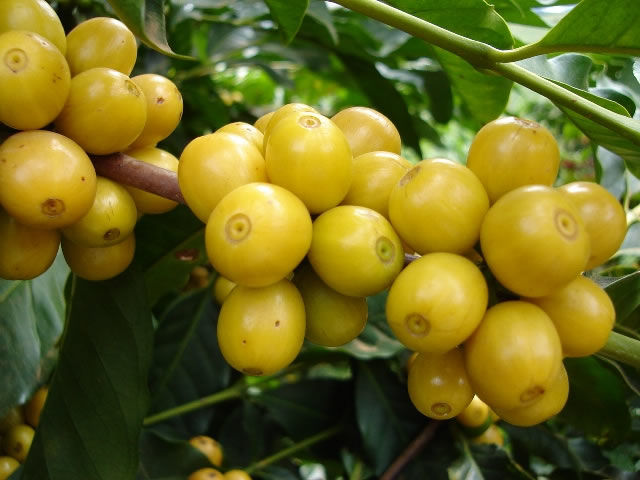
Bourbon variety fruits are relatively shorter and rounder compared to other varieties, with a higher bean density. This allows them to accumulate more sugars and flavor compounds in high-altitude environments. Bourbon coffee grown at high elevations usually exhibits bright acidity and high sweetness, with flavors that are often delicate and layered. Like Typica, Bourbon also possesses good disease resistance, particularly against leaf rust. Common Bourbon varieties change color from green to light yellow, then to orange-red, and finally to deep red as they ripen, hence the general term Red Bourbon. However, Brazil also has a rare variant where the fruits do not turn red upon ripening but instead show a warm yellow or pale pink hue — namely Yellow Bourbon and Pink Bourbon.
The unique “yellow” characteristic of Yellow Bourbon is determined by genetic selection related to color expression. Yellow Bourbon grown at high altitudes benefits from sunlight conditions and significant day-night temperature differences, enabling it to accumulate abundant fructose and thus develop a sweet, juicy, and refined flavor profile. This is also one of the reasons why it consistently achieves excellent results in Brazil’s COE (Cup of Excellence) competitions. This variety not only boasts prominent sweetness but also displays diverse aromatic layers — from nuts to caramel, and even subtle fruity notes — making it a prized choice among many specialty coffee enthusiasts.
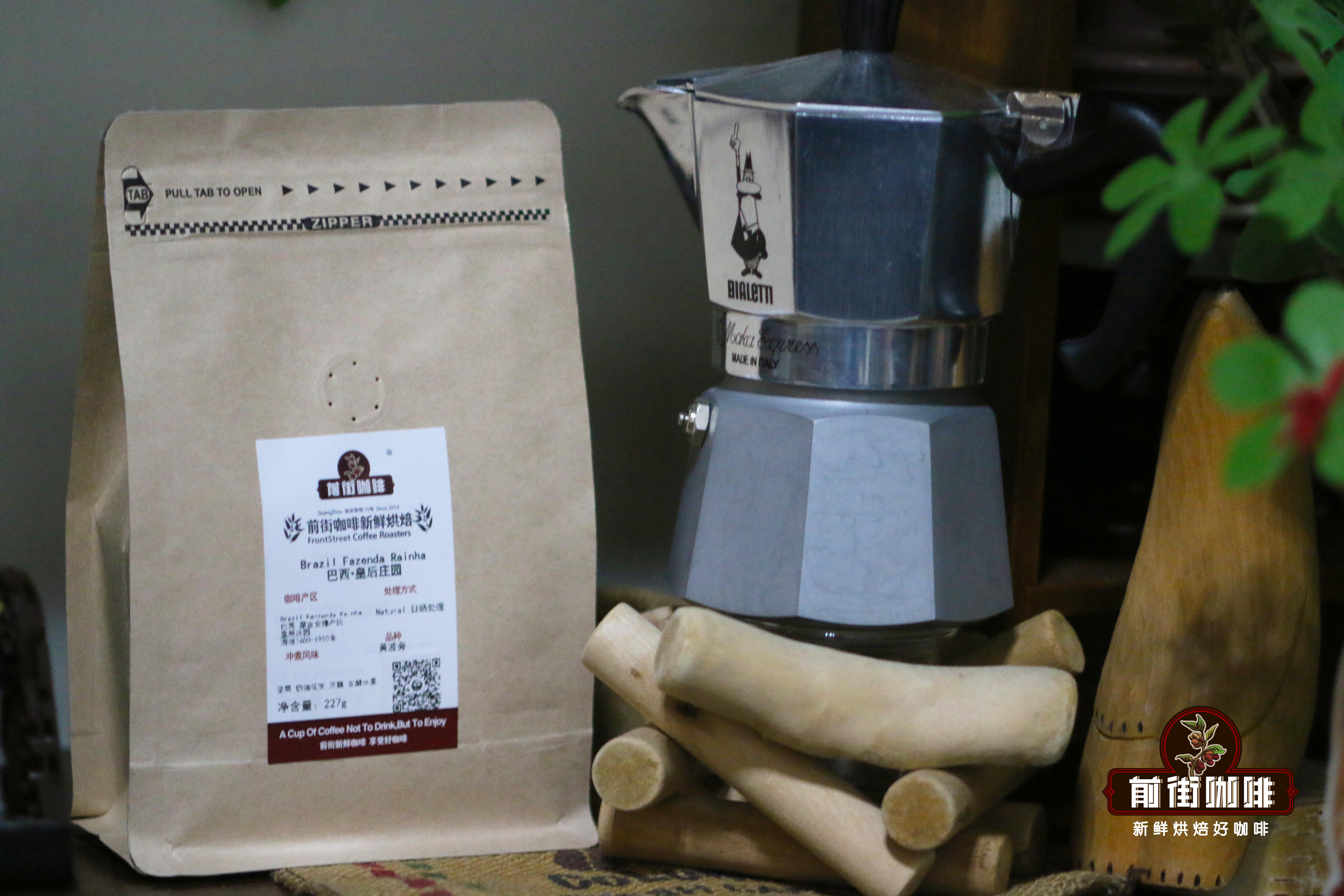
Fazenda Rainha (Queen Estate) is located in the Mogiana region, at an altitude between 1400 and 1950 meters, and is one of the few estates in Brazil dedicated to growing high-altitude Yellow Bourbon. After harvesting the Yellow Bourbon coffee cherries, the estate employs the natural sun-drying method to fully preserve the natural sugars and aromas within the fruit pulp. Generally speaking, Brazil’s dry climate and distinct dry season are very suitable for sun-drying, but the traditional “open-air drying” method — where coffee cherries are spread directly on the ground — can easily lead to earthy flavors or over-fermentation. Fazenda Rainha adopts a more refined process: first using floatation technology to remove unripe cherries, then placing the coffee cherries on well-aerated African raised beds for small-batch sun-drying, with regular turning to ensure even drying, thereby bringing out cleaner, distinctly sweet coffee flavors.
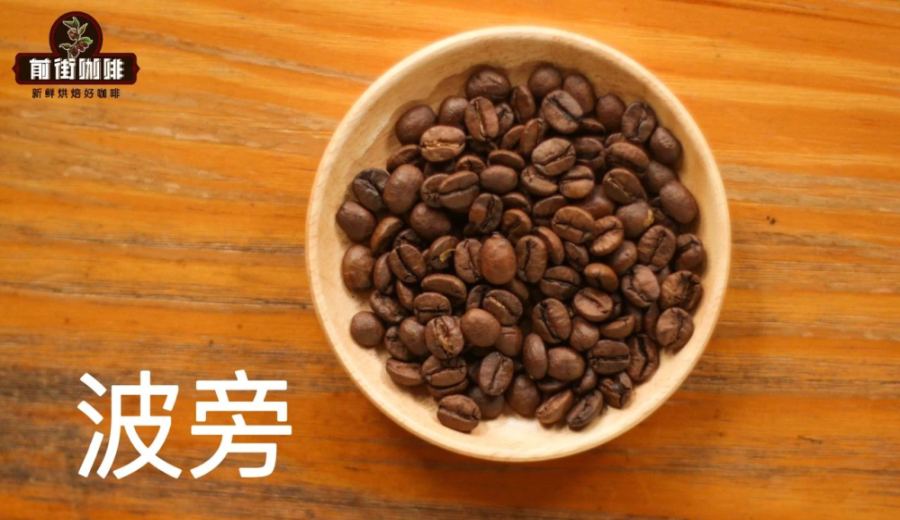
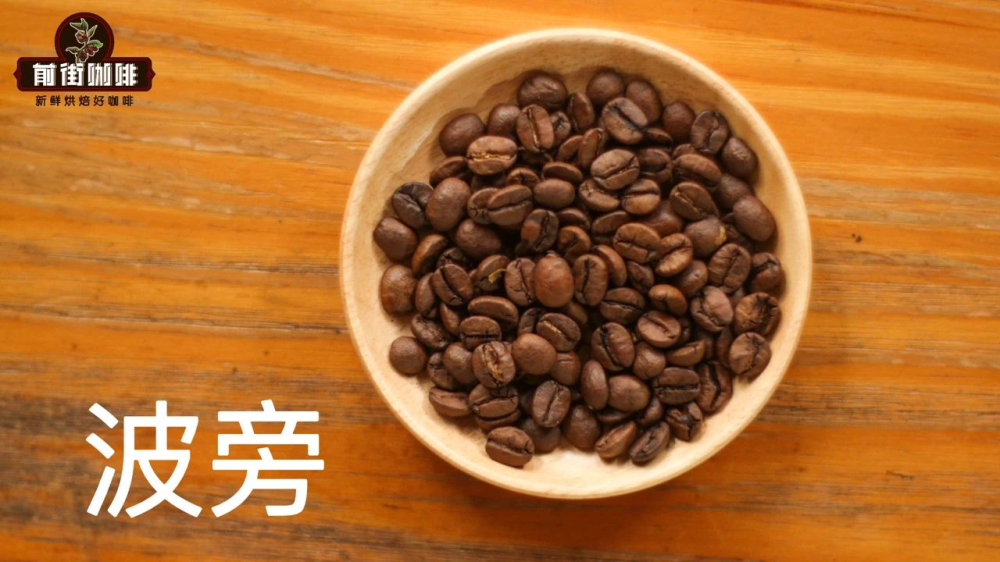
For high-density, high-sugar bean varieties like Yellow Bourbon, this roaster’s roasting strategy focuses primarily on medium-dark roasts, aiming to fully highlight the inherent sweet foundation of the Bourbon variety while creating a rich and balanced aromatic profile. Through multiple cuppings and adjustments, the final determined roast level not only showcases the main notes of nuts and chocolate but also retains moderate fruit acidity and a creamy, smooth mouthfeel. This roasting style makes this coffee bean suitable not only for straightforward pour over brewing but also applicable to methods such as moka pot, siphon, drip coffee machines, and even drip bags, demonstrating extremely high versatility.
For medium-dark roasted coffee beans, due to the internal structure becoming more porous during the roasting process, the water absorption of the ground coffee increases significantly. Without corresponding adjustments to extraction parameters, it is easy to over-extract and produce bitterness. To balance aroma and flavor expression, it is recommended to use slightly lower water temperature and a coarser grind size to control the release of bitter substances. Additionally, choosing a suitable filter cone can further enhance extraction quality — for example, using a KONO filter cone helps extend the water flow path and increases contact time between the coffee liquid and the coffee bed, thereby enhancing body and roundness.
Below are the actual pour over brewing parameter recommendations for a certain brand’s Brazilian Fazenda Rainha Yellow Bourbon coffee beans: water temperature controlled at87~88°C, using aKONO filter cone, paired withmedium grind size (approximately 70% passing rate through a Chinese standard No. 20 sieve), with a coffee dosage of15 grams, and a brew ratio set at1:15(brew ratio details missing in source), using thethree-stage pouring method. Specifically, start with a bloom phase using twice the coffee dosage in water (about 30 grams) for approximately 30 seconds to allow the coffee grounds to fully expand; then pour with a small stream in circular motions from the inside out until reaching125 gramsfor the first pour; once the coffee bed descends to the middle of the filter cone, pour the second stage with the same fine stream up to225 grams, and finally continue pouring until the entire filtration process is complete, keeping the total extraction time aroundapproximately 2 minutes. After extraction, gently swirl the coffee liquid before serving.
With the above pour over parameters, this Brazilian Yellow Bourbon coffee will showcase captivating aromas of dark chocolate, cream, peanuts, and nuts. The sip delivers a natural, sugarcane-like sweetness, with a balanced and layered mouthfeel, a long and smooth aftertaste, and a warm finish — making it highly suitable for coffee lovers who enjoy the combination of medium-dark roasts with fruity sweetness.
The above content is compiled by CoffeeHunters, a coffee news website.


