







Introduction:Want to enjoy rich coffee at home without splurging on an espresso machine? The Moka pot is an affordable and practical solution. This article delves into the history and design principles of the Moka pot, and explains in detail how to use sun-dried Huakui SOE coffee beans to brew a Moka pot Americano with floral-fruity aroma and caramel sweetness. From the structure of the device, grind size to brewing steps, we provide a complete guide to help you get started easily and recreate an authentic espresso-like experience.
Many coffee lovers are deeply drawn to the intense flavor and long-lasting aftertaste of espresso. However, a professional espresso machine is often pricey, and not every household is willing or able to afford one. If you also want to easily brew a rich and aromatic cup of coffee at home, the Moka pot is definitely a high-value option. This article will not only introduce you to the background and evolution of the Moka pot, but also answer a common question: Are Huakui SOE coffee grounds suitable for making a Moka pot-style Americano? We’ll share a detailed walkthrough so you can enjoy a flavorful, espresso-level experience at home.
 For those familiar with espresso, that rich, bold flavor and captivating aftertaste are always unforgettable. Unfortunately, not everyone has the setup for a professional espresso machine at home. If you crave a more concentrated coffee flavor at home, consider using a Moka pot. This classic tool is not only simple to operate but also delivers a taste close to that of espresso.
When it comes to the origins of the Moka pot, we must go back to the late 19th and early 20th centuries, when Italians had already developed a strong preference for strongly flavored coffee. The world’s first espresso machine was born in Turin, Italy, introduced by La Pavoni in 1905, primarily for commercial use. This early machine needed to be placed directly on a heat source, with water temperatures near boiling and relatively low pressure, resulting in little crema and a flavor more akin to today’s Americano than the espresso we know.
Although early espresso machines produced thinner, sometimes burnt-tasting coffee, this didn’t diminish people’s love for coffee. At the time, however, enjoying such coffee was mostly limited to the upper class due to the high cost, making it unaffordable for most households. That’s why more accessible and user-friendly tools like the Moka pot emerged, allowing ordinary families to brew café-style drinks at home.
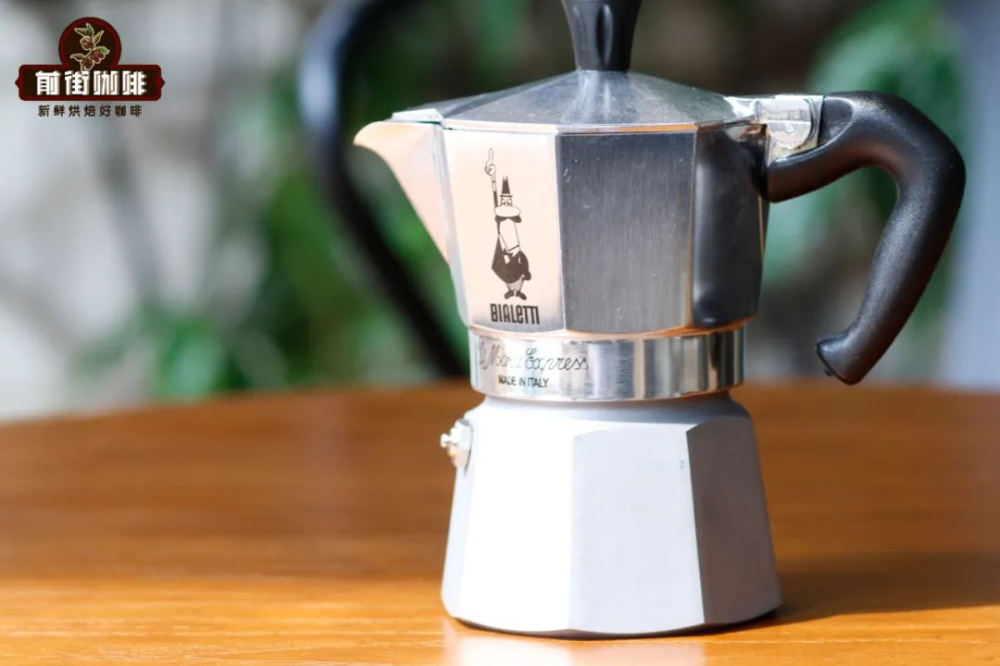
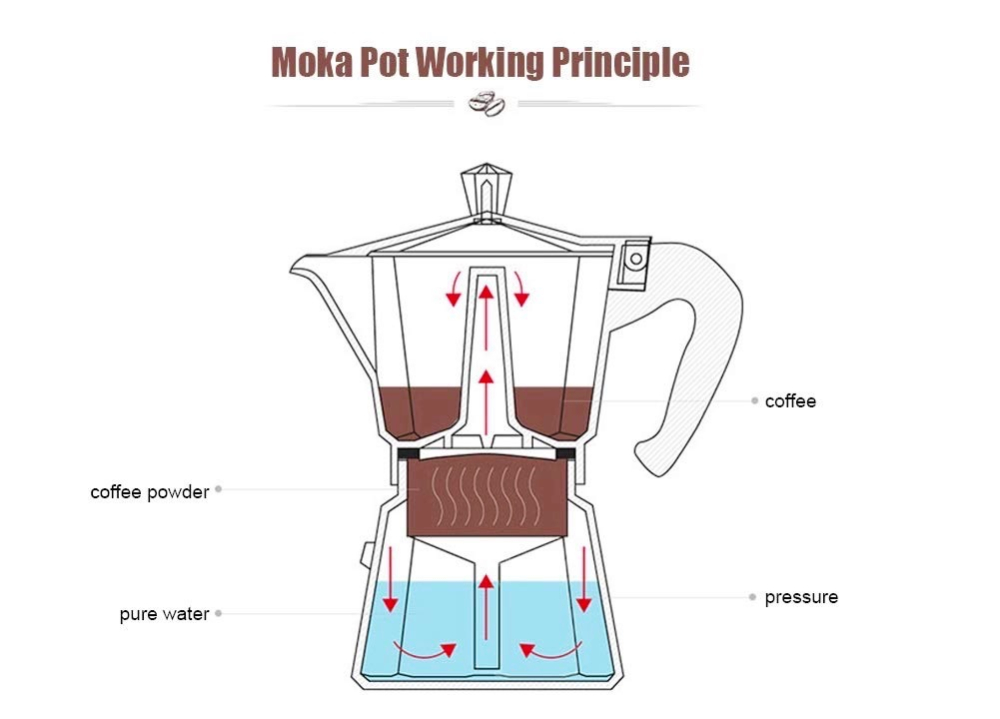
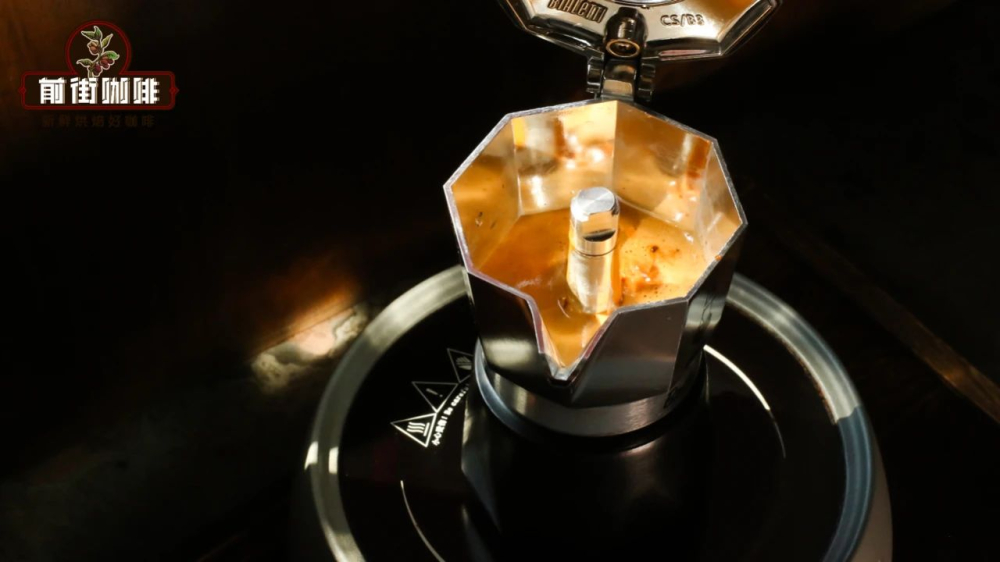 The earliest prototype of the Moka pot was born in 1933 in Italy’s Piedmont region, created by inventor Alfonso Bialetti. Bialetti had worked in France’s aluminum industry for over a decade before returning home to establish his own aluminum household products brand, where he designed this revolutionary coffee tool. The Bialetti Moka pot is made from octagonal aluminum alloy, with a classic look, good heat conductivity, and durability. The body is mainly divided into three parts: the lower chamber holds the water and is heated, the middle part contains a metal filter basket for the coffee grounds, and the upper chamber receives the brewed coffee through a tube.
To use a Moka pot, start by pouring hot water into the lower chamber, with the water level recommended to be about 0.5 cm below the safety valve. Then, add an appropriate amount of coffee grounds into the middle filter basket, gently level it—no need to tamp, just make sure the surface is flat. Place the filled filter basket back into the lower chamber, then tightly attach the upper chamber. Place the entire unit on a heat source. As the water heats up, steam pressure pushes the water through the coffee layer, which then flows through the central tube into the upper chamber, completing the extraction.
It’s worth noting that the grind size for a Moka pot differs from traditional espresso. Due to the larger holes in the filter, it’s recommended to use a slightly coarser grind than espresso to avoid fine particles falling into the lower chamber and affecting the taste. For the Moka pot, medium to dark roasted beans are generally recommended to bring out richer aroma and body.
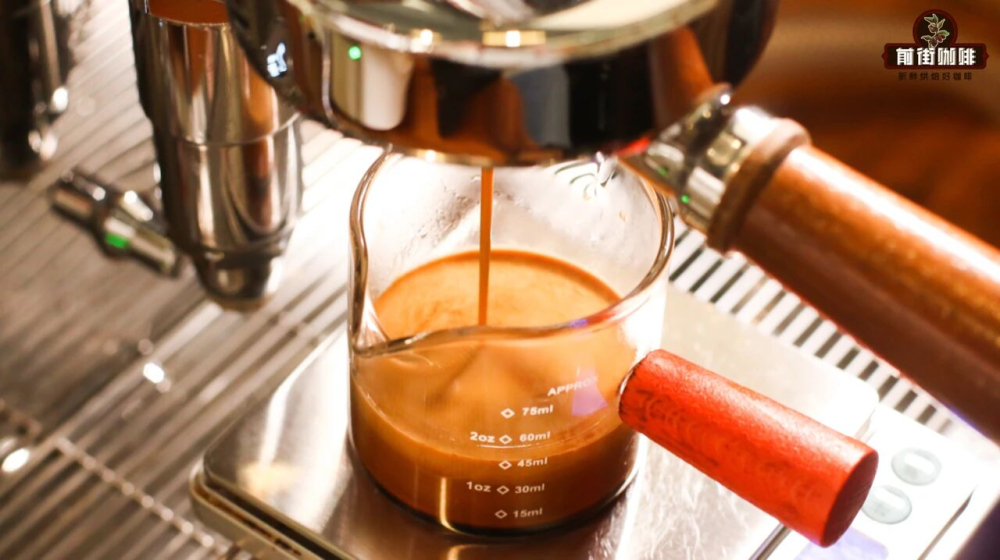
Many people wonder why they can’t produce noticeable crema when using a Moka pot for the first time. In fact, crema formation is closely related to the roast level of the coffee beans and the extraction pressure. Lighter roasts release less carbon dioxide, making it harder to form rich crema, while medium to dark roasts are more likely to produce a fine foam layer under appropriate pressure. For optimal aroma and balanced flavor with a Moka pot, it’s recommended to use medium-roasted sun-dried Huakui SOE coffee beans. These beans offer both floral-fruity notes and caramel sweetness, making them perfect for a Moka pot Americano.
If you’d like to try making a Huakui SOE Moka pot Americano at home, here are the detailed steps: First, pour clean water into the lower chamber, keeping the water level about 0.5 cm below the safety valve. Next, choose a grind slightly coarser than espresso, referencing the size of the filter holes to ensure the grounds don’t seep through. Fill the coffee chamber with grounds, gently shake to distribute them evenly, then shape into a small mound before leveling the surface with a distribution method to ensure an even surface. Filling the chamber helps improve extraction uniformity and prevents over- or under-extraction.
Place the filled coffee chamber back into the lower chamber, ensure the top and bottom chambers are tightly sealed, and place the Moka pot on an electric stove at high heat. When you hear a distinct “wuu wuu” sound, it means pressure is building—then switch to low heat and open the upper chamber lid to observe the extraction. Once about half of the coffee has flowed into the upper chamber, turn off the heat and let the residual heat and pressure push the remaining coffee up. Once all the coffee has been extracted, pour it into a cup—you’ll see a deep-colored coffee with crema, with a flavor close to espresso. At this point, you can adjust to your taste by adding hot water at a 1:3 ratio to make a delicious Huakui SOE Americano.
The above content is compiled by CoffeeHunters, a coffee news website.


