








Introduction:Want to know if Starbucks’ Flat White is the same as an Australian-style white coffee? How many shots of espresso go into a standard Flat White? This article dives deep into the origins of Flat White (馥芮白), how it differs from latte and cappuccino, and provides detailed explanations on its preparation method, espresso dosage, as well as calorie analysis, helping you grasp the essence of this popular milk coffee.

After Starbucks launched the “Flat White” (馥芮白) in 2012, this coffee quickly became a favorite among many customers. It combines the smooth texture of a latte with the rich characteristics of a cappuccino, making it ideal for those who enjoy creamy flavors but want a more prominent coffee taste.

The so-called “Flat White” is actually the transliteration of Flat White, and also the exclusive Chinese name given by Starbucks to this drink, which has even been registered as a trademark. In other cafés or brands, this beverage is usually referred to as “Australian white coffee.” Although the names differ, they essentially refer to the same type of coffee.

Flat White originated in New Zealand and Australia in the 1980s, where the specialty coffee culture was thriving. Influenced by the Italian espresso brought over by European immigrants, and developed further during the third wave of coffee, unique drink types such as Flat White, Ristretto, and Piccolo emerged. These drinks emphasize the flavor of the coffee itself and are known for their handcrafted techniques and delicate latte art.

These types of coffees typically use light-roasted beans to preserve the fruitiness and regional characteristics of the beans, and are prepared manually by baristas. As a result, even when using the same beans, slight differences may arise between cafés due to brewing methods and the barista’s personal style.
So, how exactly is a Flat White made? The key lies in its espresso base. The Starbucks version of Flat White uses 2/3/4 shots of “Ristretto Espresso,” a type of espresso that is more concentrated than the espresso typically used for lattes or Americanos, and is a key reason why Flat White has a stronger coffee flavor despite the same volume.

The so-called Ristretto Espresso is actually an adjustment to the espresso extraction process. “Ristretto” in Italian means “restricted,” referring to extracting only the first part of the espresso shot, reducing the total extraction volume. Typically, 20 grams of coffee grounds are used to extract only 28 grams of espresso liquid, instead of the standard 40 grams, and the extraction time is also relatively shorter, thereby increasing the concentration. Some cafés also adjust the grind size to slow down the water flow, further intensifying the richness of the espresso.
Generally speaking, a standard Flat White uses 28–30 grams of Ristretto espresso liquid, paired with about 180 milliliters of hot milk topped with a 0.5 cm thick layer of microfoam. The milk and espresso are evenly blended, forming a fine and thin layer of microfoam that covers the surface of the coffee, delivering a flavor that is both rich and smooth.
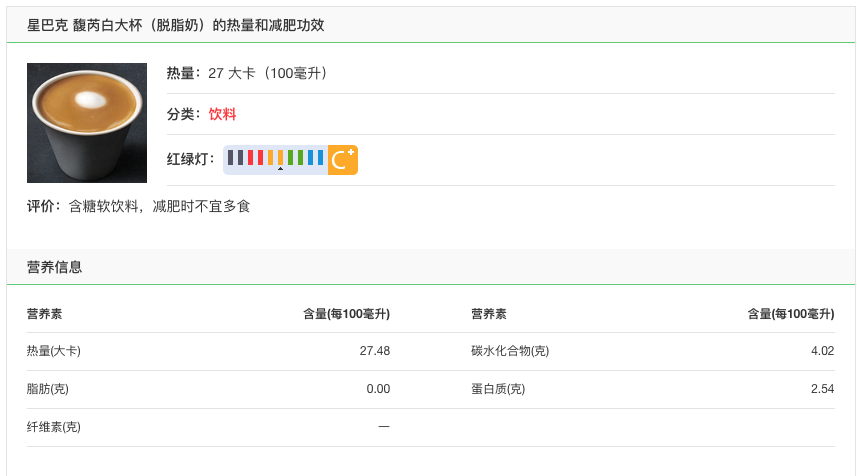
As for calories, the main ingredients in a Flat White are espresso and milk. The coffee itself contains very few calories, with most coming from the milk. If whole milk is used—with approximately 3.0% fat content—the calorie count is relatively higher; choosing semi-skimmed or skimmed milk will significantly reduce the calorie content. Therefore, for consumers mindful of calorie intake, Flat White is a relatively light yet coffee-flavor-rich choice.
The above content is compiled by CoffeeHunters, a coffee news website.


