







Introduction:Want to understand the unique flavors of Brazil’s Cerrado Red Bourbon coffee beans and the best brewing methods? This article delves into its nutty, chocolatey, and caramel flavor profile, explores the differences between Red Bourbon and Yellow Bourbon varieties, and explains how Brazil’s popular pulped natural processing method affects the taste. It also provides practical Kono filter three-stage pour over recommendations, including key parameters such as water temperature, coffee-to-water ratio, and grind size, helping you master the brewing essentials of this classic coffee bean.
Brazil has long ranked as the world’s top coffee producer. Its Arabica coffee is known for its rich, full-bodied taste, low acidity, and intense nutty and chocolate notes, making it a top choice for many beginners entering the specialty coffee scene. This article starts with Brazil’s main producing regions, analyzes the characteristics of Red and Yellow Bourbon, discusses the craftsmanship of the pulped natural process, and focuses on the Red Bourbon beans from the Cerrado region, detailing their flavor profile and recommended pour over brewing settings.
As the world’s largest coffee producer, Brazil not only leads in output but also plays a pivotal role in the global coffee market. Most specialty coffee shops offer at least one single-origin Brazilian bean or use it in their blends, highlighting its significant place in the coffee landscape.
Brazilian coffee is widely loved not only for its rich taste and mild acidity, which suit various brewing methods and can either highlight single-origin complexity or serve as a blend base, but also for its relatively affordable price and stable quality—key factors attracting newcomers to specialty coffee. Whether you prefer low-acid flavors or a coffee without heavy bitterness, Brazilian beans are worth trying.
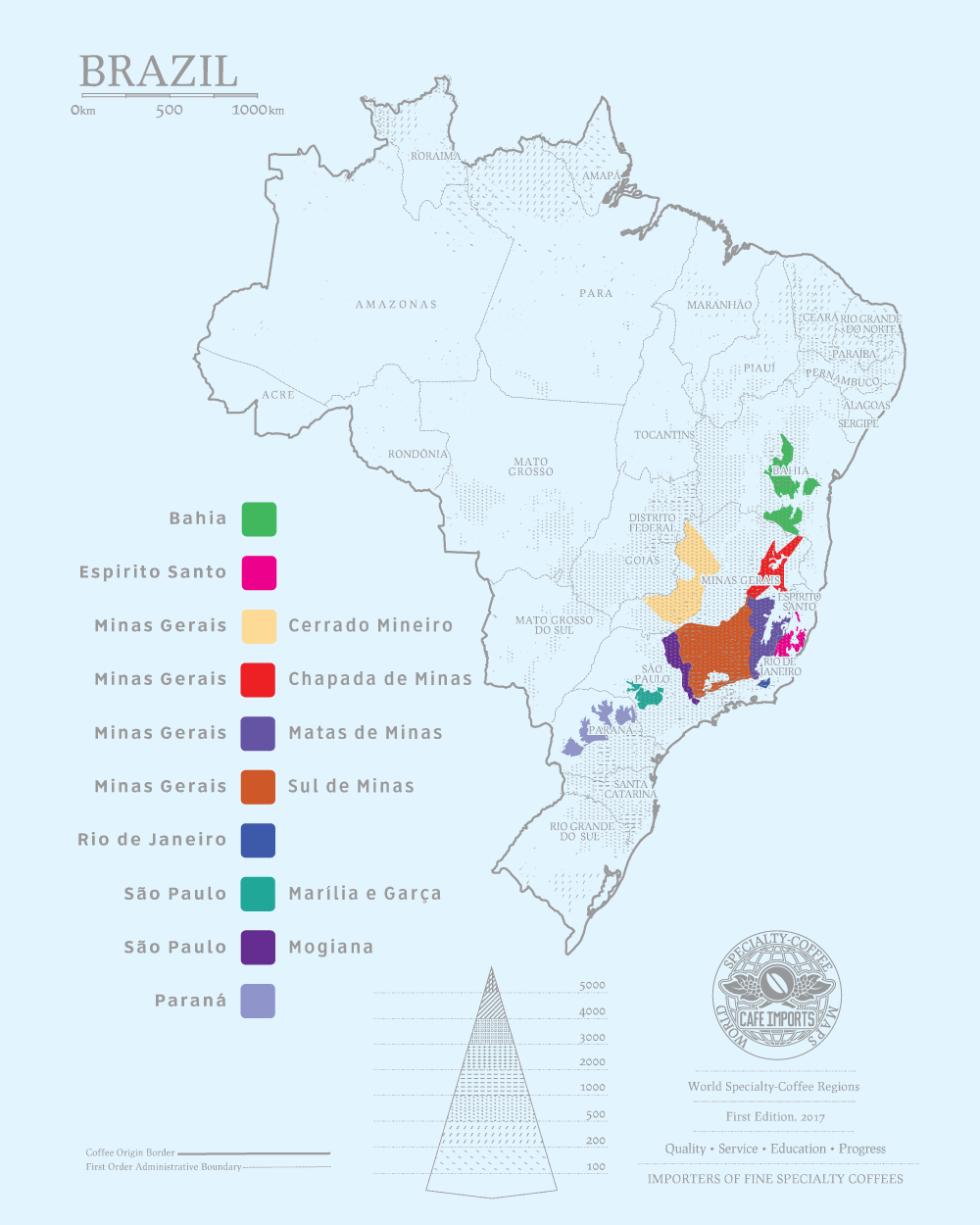
Brazil’s major specialty coffee regions are concentrated in Minas Gerais, São Paulo, Bahia, and Espírito Santo, which together account for about 90% of the country’s coffee exports. Among them, high-altitude premium Brazilian beans commonly found in the domestic market mostly come from Mogiana in São Paulo, Cerrado in Minas Gerais, and Sul de Minas, where higher elevations help Arabica coffee express a richer flavor potential.
Currently, the two most popular premium Brazilian coffee beans on the market are the Yellow Bourbon from Fazenda Rainha in Mogiana, São Paulo, and the Red Bourbon from the Cerrado region in Minas Gerais. Though both belong to the Bourbon family, they each have distinct flavor profiles and appearances.
The difference between Red Bourbon and Yellow Bourbon mainly lies in the color change of the fruit when ripe and the resulting flavor characteristics. Red Bourbon is a traditional Bourbon variety where the fruit turns bright red when ripe, and its coffee typically offers a smooth mouthfeel and pronounced sweetness, making it a classic flavor beloved by many coffee enthusiasts. Yellow Bourbon, on the other hand, is a unique variety from São Paulo state in Brazil, where the fruit ripens to an orange-yellow hue rather than the usual red of Bourbon. When grown at high altitudes, Yellow Bourbon often exhibits brighter, clearer acidity and a refreshing taste, with balanced and soft acidity, a clean aftertaste, and subtle citrus notes.
In terms of processing methods, Brazil developed the “pulped natural (Pulped Natural)” method in the 1990s through its coffee association. This approach combines elements of both natural and washed processes by partially removing the mucilage before sun drying, effectively reducing the risk of mold and off-flavors while shortening processing time and improving quality stability. Pulped natural typically involves drying the coffee cherries in the sun until their moisture content reaches about 20%–25%, followed by mechanical drying down to 10%–14%. Overall, this method results in more pronounced sweetness and a neater, more uniform appearance.
Due to geographical and climatic constraints, Brazilian coffee generally has lower altitudes and flatter terrain compared to regions like Colombia, Ethiopia, or Costa Rica, lacking significant microclimates and large diurnal temperature variations. This results in less pronounced acidity but gives rise to rich, bold flavors like nuts, chocolate, and caramel. Multiple cuppings have shown that Brazilian coffee beans generally exhibit low acidity, a solid mouthfeel, and deep sweetness with layered complexity.
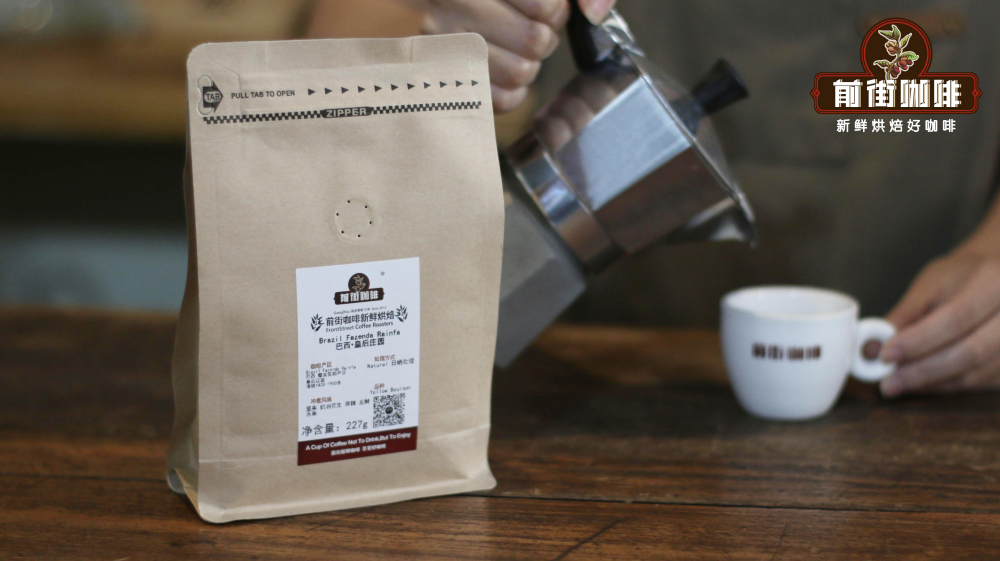
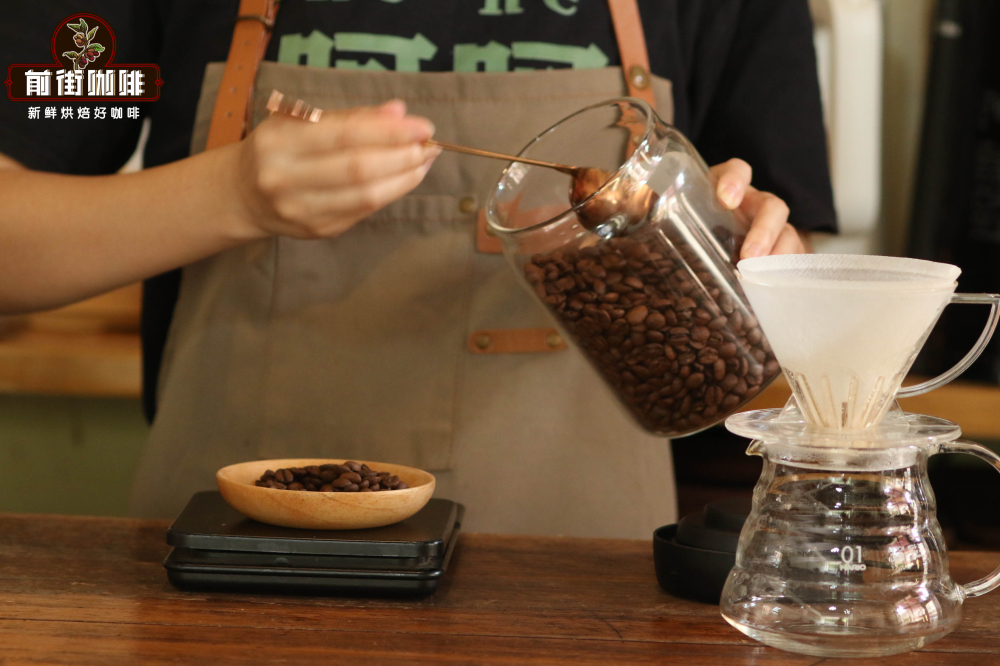
Take the Cerrado Red Bourbon as an example. These beans are grown at around 1,000 meters above sea level and processed using the pulped natural method. Their flavor profile clearly showcases notes of nuts, chocolate, cream, peanuts, and caramel. It is recommended to use a Kono filter for a three-stage pour over, with the following specific parameters: water temperature around 88°C, 15 grams of coffee, a 1:15 coffee-to-water ratio, and a medium-fine grind (70–75% passing through a Chinese standard No. 20 sieve). During brewing, start with a 30-second bloom using 30 grams of water, then pour in small circles to reach 125 grams for the first pour. When the water level is about to expose the coffee bed, continue pouring to 225 grams before stopping. Finally, remove the filter when the water level drops again and is about to expose the bed, keeping the total brew time between 2 minutes 05 seconds and 2 minutes 15 seconds.
This Cerrado Red Bourbon offers a distinctly sweet taste upon entry, with a subtle lemon aroma in the first sip, followed by a rich nutty character in the mid-palate, and a deep dark chocolate aftertaste in the later stages. The overall mouthfeel is round and full, making it a classic choice for experiencing the bold charm of Brazilian coffee.
The above content is compiled by CoffeeHunters, a coffee news website.


