








Introduction:Iced lattes are often the first choice for many people entering the world of coffee. Though its appearance is simple, it demands a high level of precision in both ingredients and technique. To make an iced latte with a smooth texture and balanced flavor, besides the basic elements of ice, fresh milk, and espresso, it’s essential to understand the characteristics of the coffee beans, the ratio between milk and coffee, and the key techniques in the preparation process. This article will delve into the three main factors that influence flavor, and offer practical advice to help you easily craft your ideal iced latte.
Although the iced latte is one of the most approachable milk coffee drinks in the espresso family—its preparation seemingly just “adding ice, pouring in fresh milk, and then adding coffee”—making this drink truly delicious and smooth involves considerations such as ingredient selection, ratio balancing, and operational details. This article will start from these three core aspects, explaining in detail how to achieve a balanced and refreshing iced latte by using the right coffee beans, appropriate amounts of milk and coffee, and paying attention to key details during preparation.
First and foremost, the primary factor influencing the flavor of an iced latte is the choice of ingredients, especially the coffee beans and milk. Different coffee beans have completely distinct flavor profiles—some emphasize rich, bold notes of nuts and chocolate, suiting those who prefer a fuller-bodied taste, while others highlight the inherent creaminess and sweetness of milk to create a soft and harmonious balance. For example, those who prefer a strong dark roast flavor may opt for a darker blend with chocolate and nutty characteristics; if you want the milk aroma in your iced latte to stand out more, you might choose beans with bright fruity or delicate floral notes, such as blends combining beans from Central and South America and Africa, featuring citrus, berries, or subtle floral tones, which can complement the softness and sweetness of the milk. In addition, the freshness of the coffee beans is crucial. After roasting, beans continuously release carbon dioxide while sealing in their aroma, but after about two months, the aroma and oils will noticeably diminish, affecting the final extraction performance and overall flavor integrity. It is recommended to pay attention to the roast date when purchasing, and prioritize freshly roasted products to ensure that the extraction still retains a rich aroma and oils.

The choice of milk also cannot be overlooked. There is a wide variety of whole milk brands available on the market, some with a rich, thick texture, while others are relatively light and watery. When selecting, it’s advisable to choose based on your preferred flavor profile. Milk with an overly intense aroma can easily overpower the coffee’s natural flavors, while overly watery milk may make the overall drink feel diluted and weak. Ideally, the milk should harmonize and complement the coffee—enhancing the coffee's aroma and acidity without dominating the overall flavor, achieving a balanced and smooth iced latte.
Next is adjusting the milk-to-coffee ratio. While there is no absolute golden ratio for an iced latte, through numerous practical tests and tasting feedback, it is recommended to use a ratio of approximately 1:6 for espresso to milk—that is, for every 40 grams of espresso liquid, pair it with about 240 grams of iced milk and 75 grams of ice, all poured into a transparent cup with a capacity of about 300 milliliters. This ratio allows the flavors of coffee and milk to blend fully, neither overwhelming the coffee aroma with too much milk, nor making it bitter due to an overly high coffee ratio. However, adjustments can be made according to personal preference during actual preparation. For instance, those who prefer a stronger milk flavor can slightly increase the amount of milk, but should be mindful that melting ice may dilute the overall flavor. If you prefer a more pronounced coffee presence, you can slightly increase the espresso ratio, but still avoid making the coffee taste too dominant or overly bitter.
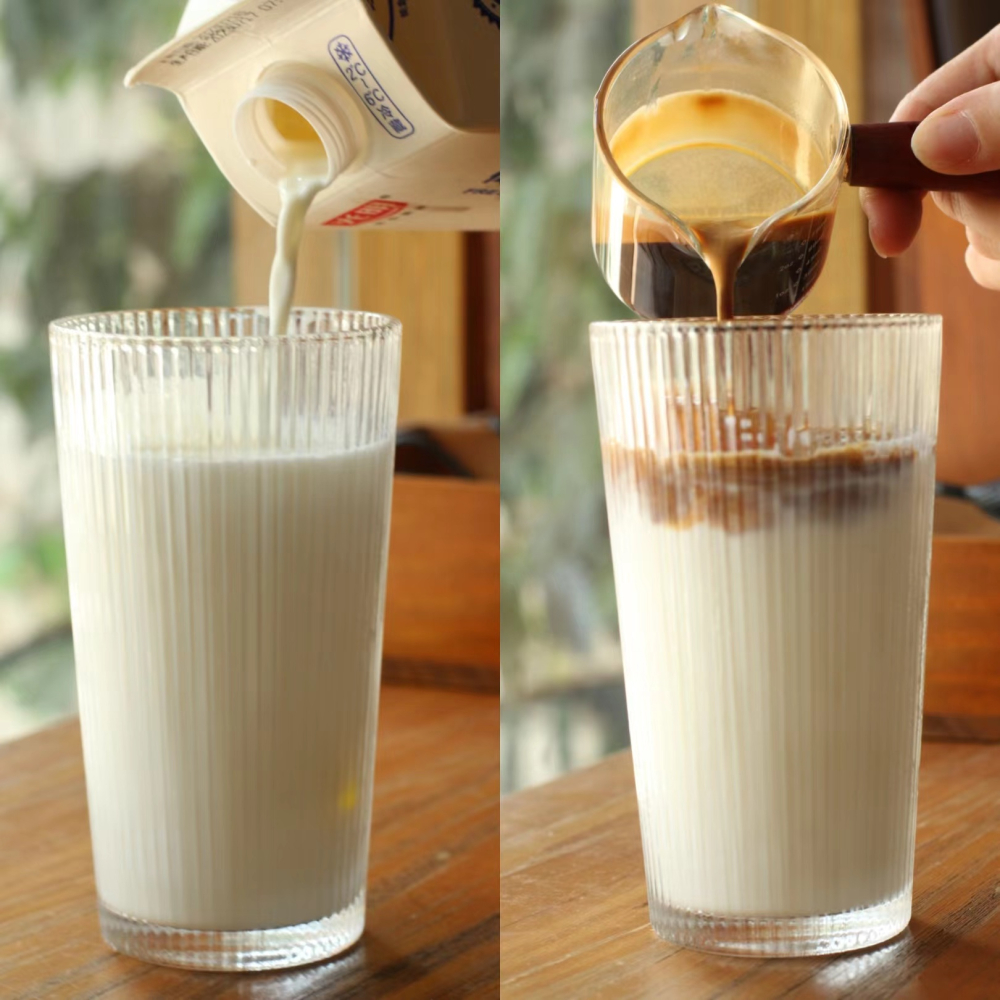
Finally, the operational details often determine the final outcome of an iced latte. Although the steps may seem simple, there are quite a few key points to pay attention to during actual preparation. First is the extraction of the espresso, which is central to the flavor of the entire drink. Common extraction issues such as channeling or improper time control will directly reflect in the performance of the iced latte. Additionally, preparation should be done “quickly,” meaning the espresso should be poured immediately into the cup already containing ice and milk after extraction to prevent prolonged contact with ice that leads to melting and flavor dilution. At the same time, freshly extracted espresso usually has a rich layer of crema (coffee oils) on the surface. This layer not only contributes to the visual appeal but also enhances the smoothness and aroma of the drink. However, if left standing for more than 30 seconds, the crema will gradually dissipate, affecting the final texture and flavor. Therefore, it is recommended to complete the pouring action quickly after extraction to retain the best flavor state, allowing the iced latte to present a clear layered visual effect and a smooth, balanced taste.

The above content is compiled by CoffeeHunters, a coffee news website.


