







Introduction:Want to learn how to showcase the unique flavors of Yunnan small-bean coffee using the pour-over method? This article starts by examining the geography and climate conditions of Yunnan’s major producing regions, analyzes the impact of washed and natural processing methods on flavor, and provides professional-level pour-over recommendations — including coffee-to-water ratio, water temperature, grind size, and pouring techniques — to help you brew a balanced and rich Yunnan coffee.
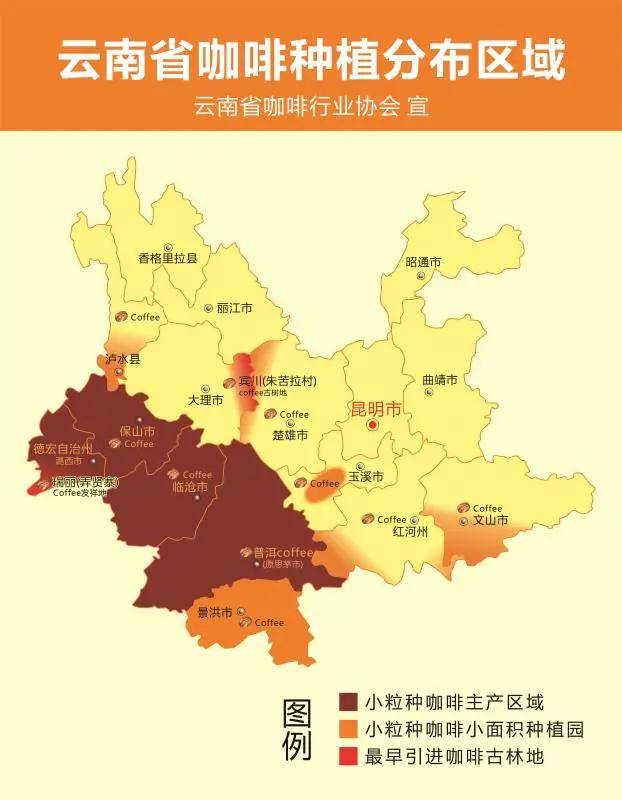
Yunnan small-bean coffee has gradually gained international attention in recent years, but to brew a cup of Yunnan coffee with balanced flavor and regional character, it's essential first to understand its origin traits and differences in processing methods. The core producing regions of Yunnan, represented by Baoshan and Lincang, owe their unique characteristics to the distinctiveness of their altitude, climate, and soil conditions, which shape the individuality of this homegrown Chinese coffee.
In Yunnan, the higher-altitude hillside areas are the main growing regions for coffee trees. These areas feature low latitude, high altitude, and significant diurnal temperature variation — ideal conditions for cultivating Arabica. Abundant sunlight and concentrated rainfall during the rainy season allow coffee trees to quickly adapt to the local terroir. Especially in the Lugujiangba area of Baoshan, the dry-hot river valley climate enables more thorough sugar accumulation in coffee cherries, resulting in a pronounced sweet aftertaste.
As one of the important coffee-producing regions in Yunnan, Baoshan’s coffee planting history dates back to the mid-1950s, when patriotic overseas Chinese Mr. Liang Jinshan first introduced coffee seedlings. The region enjoys a warm climate with almost no frost, making it particularly suitable for the growth of small-bean coffee varieties. Especially in Lugujiangba, the dry and hot river valley environment combined with moderate rainfall gives Baoshan small-bean coffee a clean and refreshing acidity along with a rich finish, making it a popular entry point for many coffee enthusiasts exploring Yunnan flavors.
However, since Yunnan’s coffee harvest often overlaps with the rainy season, unlike other regions where extended natural drying is possible, most farmers opt for the washed process to handle green coffee beans. The washed process reduces defect rates, highlights a clear and bright acidity, and results in a purer base flavor — a common method for showcasing the delicate qualities of Yunnan coffee. Of course, in some areas such as Lincang, farmers also experiment with the natural process to create coffee with richer flavors and more pronounced sweetness.
When it comes to local coffee cultivation in Yunnan, one cannot overlook an experimental planting project by a certain coffee brand in Lincang. Starting in 2013, they personally participated in site selection, seedling cultivation, planting, and processing, primarily using the original Typica variety. Although Typica has low yield and weak disease resistance, it delivers an exceptionally elegant and pure flavor profile. After five to six years of patient cultivation, the first harvest finally arrived in 2020 and was processed using the traditional natural method. Named '2013', it showcases a unique personality with intense fruity aromas and fermented tea notes.
During cupping sessions, Yunnan small-bean coffees from different regions and processing methods display their own distinctive characteristics. Generally speaking, washed Baoshan coffee often features aromas of chocolate, nuts, plums, and brown sugar, with a balanced and layered taste profile; whereas natural Typica exhibits richer tropical fruit notes, noticeable sweetness, and a lingering aftertaste reminiscent of fermented black tea — suitable for those who prefer bolder flavors.
For brewing Yunnan small-bean coffee, it is recommended to use freshly roasted beans, ideally within 4 to 7 days post-roast, avoiding the roughly one-and-a-half-month window after which flavors may diminish or develop woody off-notes. For equipment, the V60 dripper is an ideal match for pour-over brewing of Yunnan beans due to its unique rib design and flow control, which clearly highlight the layered flavors of the coffee.
Practical brewing parameter suggestions are as follows: 15 grams of coffee, a coffee-to-water ratio of 1:15 (or 1:16 if you prefer a lighter taste), medium-fine grind (approximately 80% passing through a #20 sieve, similar in coarseness to granulated sugar), with water temperature controlled at 90°C. Use a three-stage pouring method: begin by wetting and blooming with twice the coffee’s weight in water (about 30 grams) for around 30 seconds; then pour in a small, circular motion from the center outward until reaching 125 grams, pause until the coffee bed descends to the middle of the dripper, then continue pouring up to a total of 225 grams. The total extraction time should be controlled to around 2 minutes.
Through this extraction method, the nutty and chocolatey core notes of Yunnan small-bean coffee can be fully highlighted, along with gentle fruit acidity and a clean finish. The overall profile is balanced and layered, making it suitable for everyday enjoyment as well as serving as an introductory practice for delving deeper into regional flavor profiles.
The above content is compiled by CoffeeHunters, a coffee news website.


