








Introduction:Flat White and Latte are both popular styles of espresso-based coffee, but they differ significantly in milk foam thickness, coffee ratio, and overall flavor profile. This article provides an in-depth comparison between Flat White and Latte, covering aspects such as milk foam layer thickness, espresso base, and milk proportion, to help readers understand why Flat White has secured its place in the global coffee market. It also offers practical home-brewing parameters and tips.
 " />
Among the popular coffee beverages on the market—whether Americano, Cappuccino, Latte, or Flat White—most are based on espresso, with variations achieved by adjusting proportions and adding different ingredients to deliver diverse flavors and textures. Among these, Flat White coffee has gained increasing popularity in the global specialty coffee market in recent years, especially in Asia and Europe & America, becoming a daily favorite for many coffee enthusiasts.
 " />
The origin of Flat White remains debated, with both Australia and New Zealand claiming to be its birthplace. Regardless of where it originated, the creation of Flat White reflects consumers’ pursuit of intense coffee flavor and a smooth, delicate texture. In the 1980s, as people’s demand for higher coffee quality grew, the excessive milk in traditional Lattes often masked the coffee’s inherent flavor. Thus, Flat White emerged—a style that emphasizes coffee expression with a lower milk ratio—and gradually developed into a unique coffee culture.
 " />
In actual preparation, different cafés adjust recipes based on the characteristics of the coffee beans used and the desired flavor profile. Common Flat White bases come in two types: one uses double ristretto paired with fine microfoam to enhance the coffee’s intensity and layered complexity, while the other employs single espresso with thinner milk foam. These details affect the final mouthfeel and overall balance, hence slight variations exist among different cafés.
 " />
The most intuitive way to distinguish Flat White from Latte is by the thickness of the milk foam and overall appearance. The “Flat” in Flat White refers to “flatness,” meaning its top milk foam layer is very thin—typically only 0.3~0.5 cm. Some cafés even skip foaming the milk entirely to highlight the coffee crema, using only heated milk. In contrast, Cappuccino usually has a milk foam layer about 1~2 cm thick, while a standard Latte’s foam layer is around 0.5~0.7 cm. If the foam is too thick, it can affect the coffee’s smooth mouthfeel and overall flavor presentation.
 " />
Besides the milk foam layer, the ratio of milk to espresso is another key difference between the two. Flat White typically uses less milk to maintain the intense character of the coffee. For example, in an 180 ml cup, using double ristretto (approximately 30 grams of coffee grounds yielding 32 grams of espresso) and adding 150 grams of hot milk can produce a rich yet balanced taste. In comparison, Lattes usually contain more milk, resulting in a milder coffee flavor that is closer to “milk with coffee flavor.”
 " />
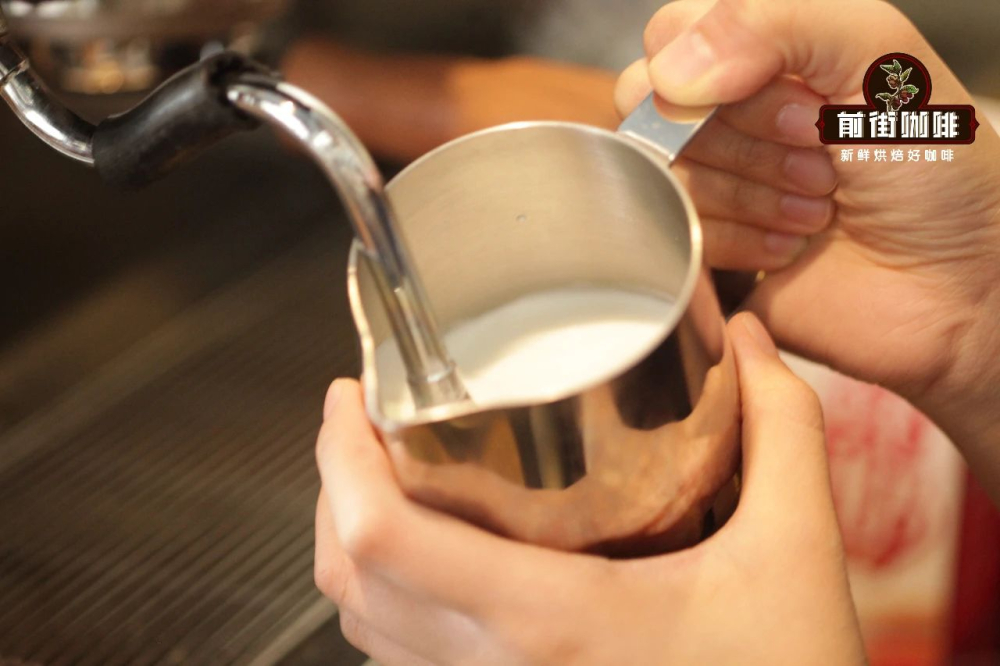
To make a Flat White at home with a quality close to that of a café, it’s recommended to use a stable blend or single-origin beans and control extraction parameters carefully. A common home-brewing process can follow these steps: use a 1:1.6 coffee-to-water ratio—for example, extracting 32 grams of espresso from 20 grams of coffee grounds—with an extraction time of around 27~30 seconds. For the milk, prepare about 170 ml of chilled fresh milk, frothed to a fine microfoam about 5 mm thick, with temperature controlled between 55~65°C for optimal drinking temperature and delicate texture.
 " />
 " />
The finished Flat White offers a silky-smooth mouthfeel upon drinking, with coffee and milk perfectly integrated, leaving a lingering finish of subtle chocolate and spice notes that leaves a lasting impression. Whether as a breakfast pick-me-up or an afternoon treat, a well-made Flat White delivers an exceptional coffee experience.
The above content is compiled by CoffeeHunters, a coffee news website.


