







Introduction:Dive deep into the Golden Mandheling coffee beans produced in the Gayo Highlands of Sumatra, Indonesia—from the terroir of the region, the characteristics of the Ateng variety, to how the wet-hulling process shapes its unique herbal and spicy profile. This article details its historical background, flavor profile, and offers practical pour over brewing parameters to help you better understand this highly regarded Southeast Asian-flavored coffee.
Among the many single-origin coffees, Indonesian Mandheling has long been favored by coffee enthusiasts for its rich and full-bodied taste along with its distinctive herbal and spicy notes. Among them, the Golden Mandheling from the Gayo Highlands of Sumatra stands out as one of the best. This article will take you through a comprehensive understanding of this coffee’s bold flavors and layered complexity, covering its origin background, variety traits, processing details, cupping flavors, and practical brewing suggestions.
Many people feel hesitant when choosing single-origin coffees due to the wide variety available. If you prefer bold, herbal or spicy-flavored coffee, Golden Mandheling is definitely worth a try. Compared to beans from other regions, it not only has a heavy body but also carries a unique Southeast Asian character that’s truly memorable.
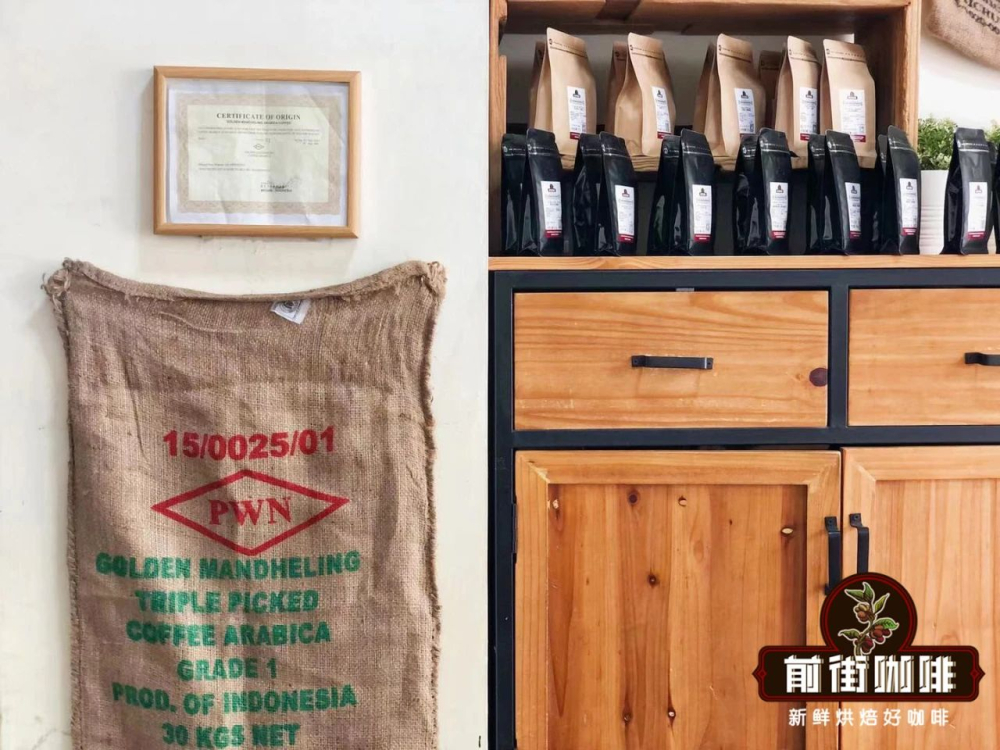
When it comes to the name “Mandheling,” it actually originates from an interesting historical anecdote. Legend has it that during World War II, a Japanese soldier in Indonesia drank a cup of aromatic coffee and mistakenly thought the shop owner was referring to the place of origin, thus noting down “Mandailing” (which became known as Mandheling). After the war, the soldier specially commissioned locals to ship 15 tons of coffee beans to Japan, which were met with great acclaim, and the name Mandheling has since spread widely. The first person to export premium Sumatran Mandheling to Japan was a local businessman who saw a business opportunity; he established PWN (Pusat Niaga Kopi) in 1957, focusing on selecting and exporting high-quality Mandheling beans. Golden Mandheling is the flagship product of this company.
To enhance the quality and market competitiveness of Mandheling beans, PWN set particularly strict standards for defect bean screening. Mandheling beans exported to Japan undergo machine sorting plus four rounds of manual hand selection to ensure each bean is uniform in size, free of obvious defects, and reduced in soil or off-flavors. Such rigorous processing gives these coffee beans a golden hue in sunlight, hence the name “Golden Mandheling.” It’s worth mentioning that PWN was also the first to register “Golden Mandheling” as a trademark, so only beans produced by this company can be rightfully called Golden Mandheling. Similar products from other regions are usually circulated under other names such as “Dingshang Mandheling.”
Golden Mandheling beans mainly come from the Gayo Highlands in Aceh Province, located in the central-northern part of Sumatra. This area features a tropical rainforest climate, with year-round high temperatures and humidity, making it very suitable for coffee tree growth. The altitude of the Gayo Mountains mostly ranges between 1500 to 2500 meters, placing it in a high-altitude producing region. The area cultivates mostly ancient coffee varieties. Compared to other parts of Sumatra, such as Lintong, Gayo’s coffee performs better in terms of flavor purity and detail expression—especially after political stability, its coffee industry has gradually grown and strengthened.
The coffee variety used in Golden Mandheling is actually the locally common Ateng in Indonesia, internationally known as Catimor. This variety is one of the disease-resistant strains introduced to Indonesia to combat leaf rust. Although not a traditional pure Arabica, under Sumatra’s unique environment, it exhibits a distinct cedar and herbal tone. The Ateng variety thrives in high-altitude and humid environments, and when paired with the locally common wet-hulling process, it further highlights its flavor characteristics.
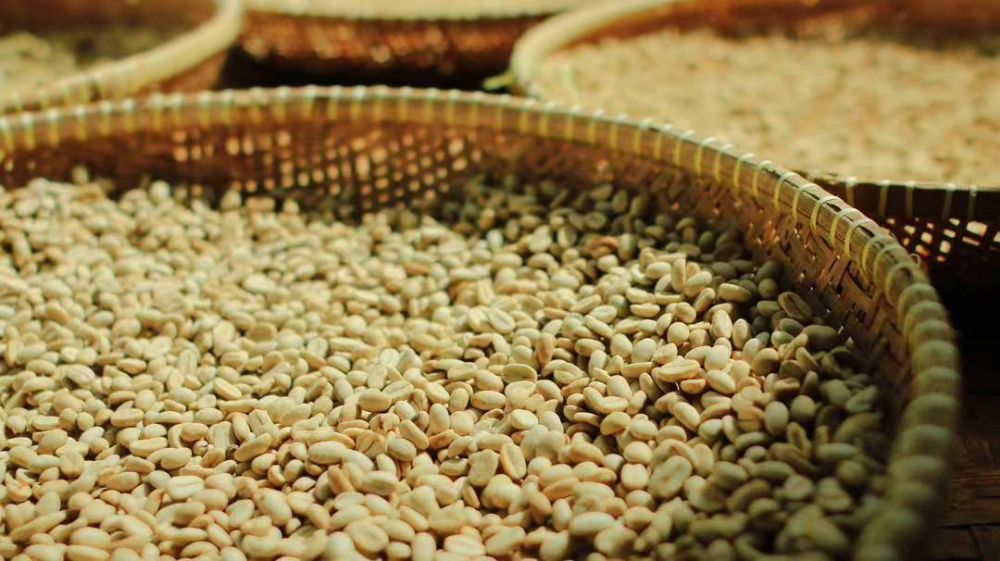
The wet-hulling process is a common coffee processing method in Sumatra. Its steps include first removing the coffee fruit’s skin and pulp, followed by a short fermentation period before beginning drying. When the beans reach a semi-dry state, their outer parchment layer is removed, and then the final stage of drying continues until the moisture content drops to around 12%. Since the entire process mostly occurs in a high-humidity environment of 70% to 90%, coupled with the early removal of the parchment layer, the green beans more easily absorb impurities and odors from the air, resulting in a final coffee with pronounced woody, spicy, and herbal undertones. Compared to typical washed or natural processes, the wet-hulling method gives the coffee a heavier body and a unique regional flavor.
The PWN Golden Mandheling sold by this shop is medium-dark roasted, aiming to retain the classic Mandheling flavors while further highlighting its herbal and spicy layers. In cupping comparisons, both Lintong Mandheling and PWN Golden Mandheling were brewed. Lintong Mandheling showcased intense chocolate, brown sugar, and nutty tones, with an herbal aftertaste; whereas Golden Mandheling exhibited a complex aroma of pine, nuts, spices, and herbs in the dry scent stage. After brewing, it released a sweet note of licorice and caramel, with a mouthfeel that blended black chocolate, nuts, and spices. The overall flavor was clear, clean, with a pronounced aftertaste and excellent body.
If you’d like to brew Golden Mandheling at home to bring out its unique flavors, here are some practical pour over recommendations: control the water temperature at about 87–88°C, use 15 grams of coffee grounds, with a 1:15 coffee-to-water ratio, and a medium-coarse grind size (approximately 70% passing through a No. 20 sieve according to Chinese standards), and a KONO filter cone is recommended. It’s advised to use the three-pour method to fully extract its full body and caramel sweetness. First, pour 30ml of hot water for blooming to help the coffee grounds degas; then pour 100ml in the second pour to help release golden crema and lift the coffee bed; finally, pour 95ml gently in the center during the third pour to enhance the sweetness. This brewing approach allows you to more fully experience the layers and characteristics of Golden Mandheling.
The above content is compiled by CoffeeHunters, a coffee news website.


