







Introduction:Yirgacheffe is one of Ethiopia’s most representative specialty coffee regions, renowned for its distinctive citrus acidity, berry sweetness, and tea-like aftertaste. This article delves into the background of the Yirgacheffe region, its washed processing method, and offers practical pour-over techniques for using drip bags, teaching you how to extract clean, bright floral and fruity notes so you can enjoy a professional-level coffee experience at home.
Yirgacheffe is a well-known specialty coffee region from Ethiopia, celebrated for its fresh and bright citrus acidity, rich berry aromas, and soft tea-like finish. For coffee enthusiasts who enjoy a harmonious balance of fruitiness and acidity without intense bitterness, Yirgacheffe is an incredibly appealing choice. This article will guide you step-by-step—from the origin of the region, the washed processing workflow, to the practical pour-over method for drip coffee bags—on how to bring out the most enchanting floral and fruity characteristics of Yirgacheffe.
Many newcomers to specialty coffee often look for a product that is both convenient to carry and capable of showcasing layered flavors. Drip coffee bags are the ideal solution for such needs, especially suitable for use in offices or at home. A certain brand’s Yirgacheffe drip bags, which use washed processing to preserve clear and bright fruit acidity and aroma, are a popular choice among coffee lovers for daily consumption and repeated purchases.
The name ‘Yirgacheffe’ actually refers to a small town in Ethiopia, often translated in Chinese as ‘耶加雪菲’ or ‘耶加雪啡’. This area sits at an altitude of approximately 1,700 to 2,100 meters, within a high-altitude growing zone, and is one of Ethiopia’s important representatives of specialty coffee. It is said that in the local ancient language, ‘yirga’ means ‘to settle down’, and ‘cheffe’ means ‘wetland’, so the place name can be understood as ‘settling in the wetland’, reflecting the geographical characteristics of the region.
In the early days, Yirgacheffe was just a sub-region within the Sidamo province, located in the northwest of the province, and is also one of the highest-altitude coffee-growing areas in the country. Due to its unique flavor profile and cultivation methods, the local coffee gradually gained attention, with many farmers even taking pride in having a ‘Yirgacheffe flavor’. Later, this area became independent from Sidamo and is now the widely known Yirgacheffe region, one of the most famous coffee-producing areas in Africa.
Around 1995, Ethiopia underwent administrative restructuring, where the original Sidamo province was divided, with part incorporated into the newly established Oromia Region, while Yirgacheffe was placed under the newly created Gedeb Zone. Currently, Ethiopian coffee on the market often sees a mix of old and new regional names, but the content of this article will be explained based on the latest administrative divisions.
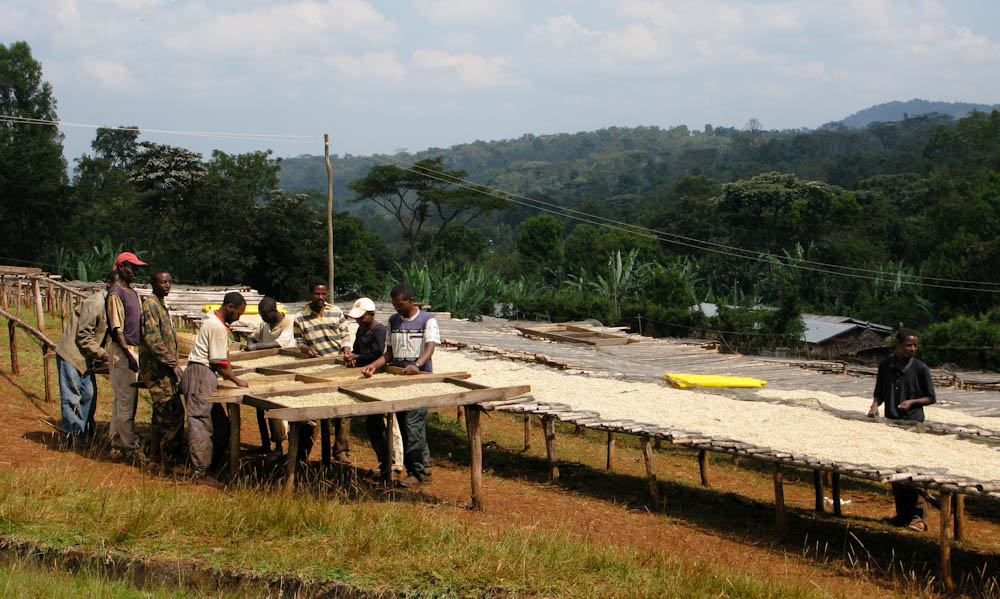
Most of the Yirgacheffe coffee beans currently on the market come from small-scale farms grown by local farmers, using what is known as the ‘garden coffee’ model. That is, farmers typically grow coffee trees near their homes, and after harvest, the cherries are sent to nearby processing facilities with access to water for centralized processing, or are purchased in bulk by intermediaries. Since most smallholder farmers lack independent processing equipment, many coffee beans are processed uniformly by processing plants before being sent to auction markets for grading and sales. As a result, many Yirgacheffe products are distinguished by the names of the processing plants or cooperatives.
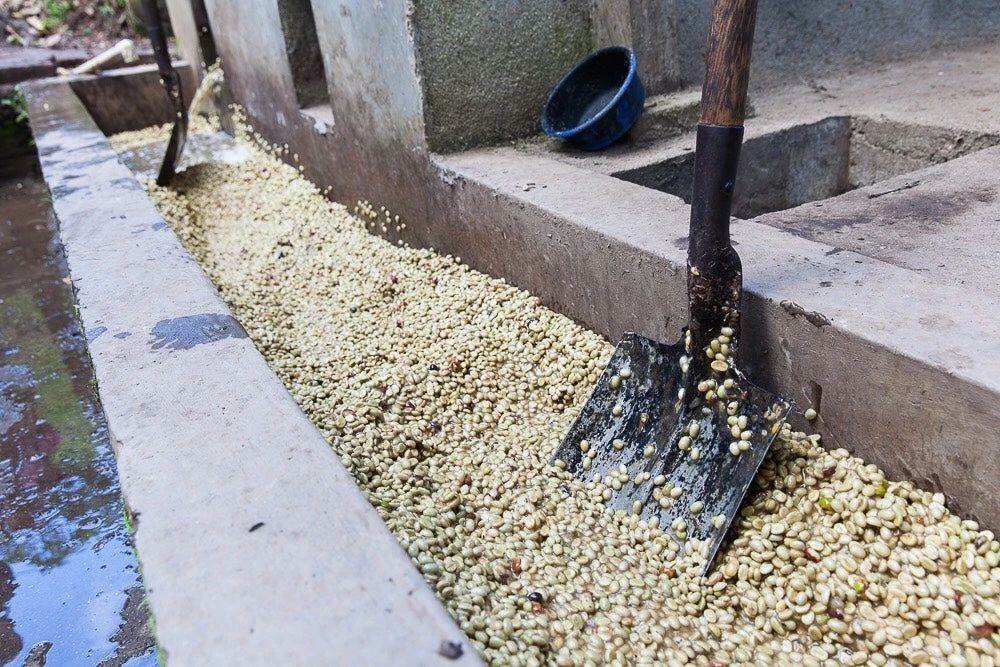
The washed processing method of Yirgacheffe is relatively classic and meticulous. First, the skin and pulp of the coffee cherry are mechanically removed, then the mucilage-covered coffee beans are soaked in a fermentation tank for about 24 hours, where microbial action breaks down the remaining fruit mucilage. Next, the mucilage layer is rinsed off with clean water, and finally, the coffee beans are evenly spread on drying beds to undergo a drying process lasting 2 to 3 weeks. This processing method effectively removes impurities and undesirable flavors, resulting in coffee beans with a cleaner, more consistent, and brighter taste profile.
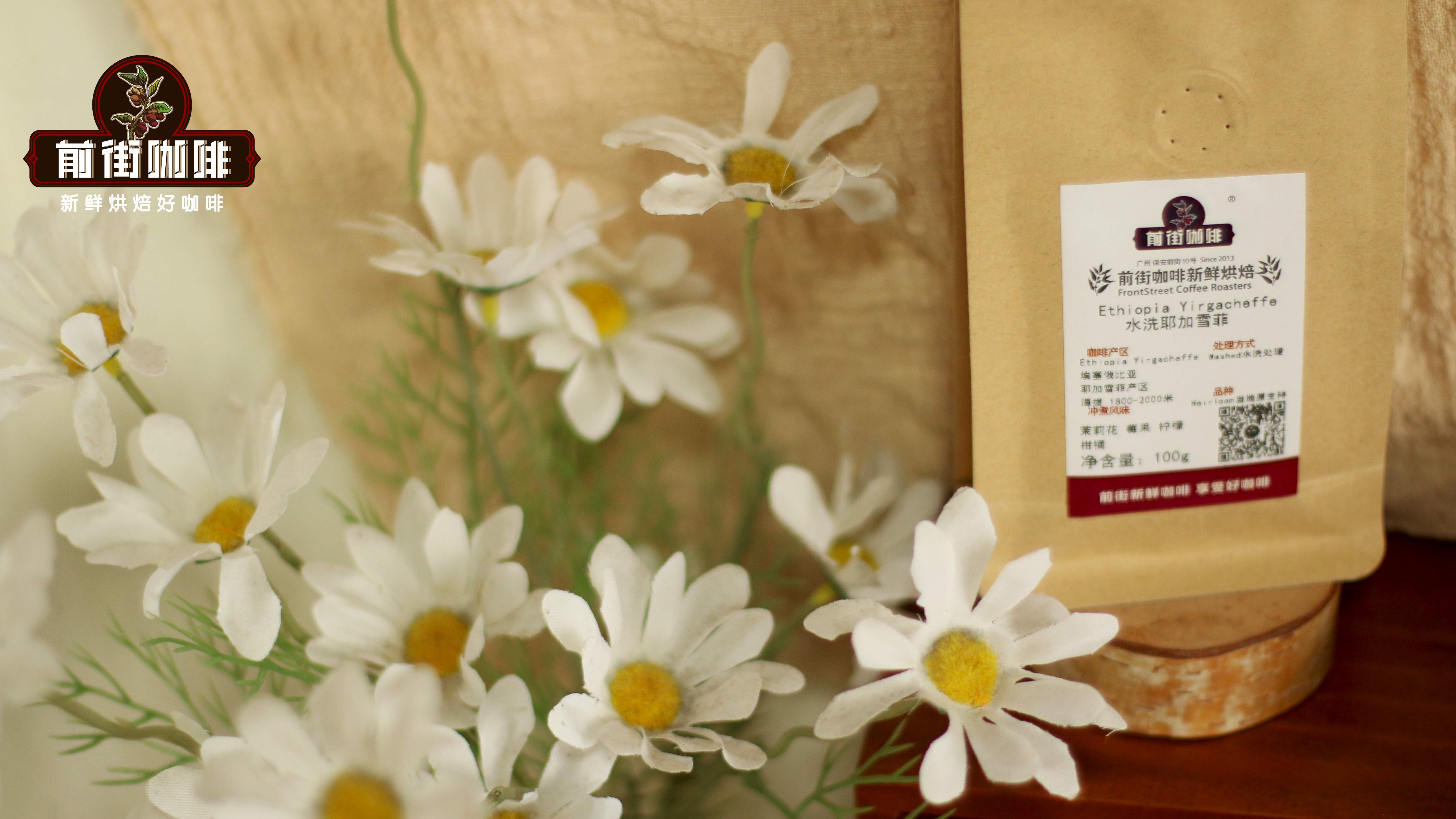
A certain brand’s Yirgacheffe drip coffee bags also use the washed processing method, fully preserving the typical flavor characteristics of the region: the entrance delivers a refreshing citrus acidity, the mid-palate showcases the sweetness of berries, and the finish is accompanied by a soft almond note and honey-like sweetness. The overall body is light, the acidity is vibrant and bright, and the mouthfeel is clean and refreshing, making it particularly suitable for coffee drinkers who dislike strong bitterness and prefer fruity flavor profiles.
To fully bring out the floral and fruity aromas and clear acidity of Yirgacheffe drip coffee bags, pour-over technique is crucial. Below are simple and practical pour-over steps that even beginners can easily follow:
- Prepare a suitable sharing pitcher or drinking cup as a receiving vessel, and have a pour-over kettle with flow control on hand.
- Unwrap the outer packaging of the drip bag, tear along the dotted line to open the non-woven filter pouch, and unfold the two sides of the drip bag.
- Securely hang the drip bag on the rim of the cup or pitcher, ensuring the filter paper fits snugly against the container to prevent coffee leakage during extraction.
- First, pour a small amount of hot water (about 90–93°C) to evenly bloom the coffee grounds for about 10–20 seconds to awaken the aroma. Then, pour water steadily in a circular motion with a medium-small stream until the target water volume is reached, pause to let the coffee drip, and in the final stage, slightly increase the water flow until full, then wait for the filtration to complete before enjoying.
Mastering the right water temperature, pouring speed, and segmented extraction can more effectively enhance the clarity and layering of the floral and fruity flavors, making every sip of Yirgacheffe drip coffee bags burst with vivid, bright fruit notes and a tea-like aftertaste.
The above content is compiled by CoffeeHunters, a coffee news website.


