







Introduction:Jamaican Blue Mountain coffee is hailed as one of the world’s finest coffees, and the Clifton Estate stands out as one of its premier representatives. This article delves into the estate’s geographical environment, planting history, Blue Mountain grading system and certification standards, and provides a detailed introduction to the washed processing method, roasting recommendations, and pour over parameters—helping you fully grasp the unique flavors of Blue Mountain coffee and how to identify it.
Jamaican Blue Mountain coffee is renowned worldwide for its delicate and balanced flavor profile, and the Clifton Estate, located in the Blue Mountains, is one of the most iconic historical estates in the region. With over two centuries of planting history, this estate has earned its status as a standout among Blue Mountain coffees due to its consistent quality and excellent management.
The Blue Mountains are situated in eastern Jamaica and are named for the sapphire-like hue the mountain peaks take on under sunlight. The area reaches an elevation of 2,256 meters, making it the highest peak in the western Caribbean and one of the few places in the world suitable for cultivating top-tier Arabica coffee. Blessed with volcanic soil, a mild and foggy maritime climate, and annual rainfall exceeding 1,980 mm, these conditions collectively create the distinctive aroma and taste of Blue Mountain coffee.
The Clifton Estate is located in the Newcastle area of the Blue Mountains, covering a total area of 250 acres, with approximately 180 acres dedicated to coffee cultivation at an altitude of about 1,310 meters. The estate is owned by the Sharp family and holds Rainforest Alliance Certified™ status, making it one of the few coffee producers in the Blue Mountains to have earned this sustainability certification.
The grading system for Jamaican Blue Mountain coffee is extremely rigorous and mainly divided into three categories: Blue Mountain Coffee, Jamaica High Mountain Supreme, and Jamaica Prime Coffee. Among them, Blue Mountain Coffee is further subdivided into Grade 1 and Grade 2; High Mountain Supreme is also divided into Grade 1 and Grade 2, with the rest collectively referred to as Jamaica Coffee. Blue Mountain Grade 1 is the highest grade, requiring green beans larger than 17 mesh, a defect rate below 3%, and a moisture content of around 13%.
It’s worth noting that Jamaica is one of the few regions in the world that still ships green beans in wooden barrels, while other areas commonly use jute sacks. As a result, Blue Mountain green beans receive more ideal protection during transport, minimizing impacts from collisions and foreign odors. Additionally, only coffee grown within the four administrative regions of St. Andrew, St. Thomas, St. Mary, and Portland in eastern Jamaica, at elevations between 1,000 and 1,700 meters, qualifies as “Blue Mountain Coffee.”
The coffee-growing areas of the Clifton Estate have an average elevation of about 1,310 meters. The afternoon fog not only slows the ripening process of the coffee cherries but also aids in the accumulation of flavor compounds. The estate has been cultivating coffee since the mid-18th century, making it one of the oldest coffee farms in the Blue Mountain region. It is also currently the only Blue Mountain estate with Rainforest Alliance (RFA) certification, with the Rainforest Alliance label clearly marked on its wooden barrels.
In terms of processing methods, Blue Mountain coffee has traditionally been processed using the washed method, though some farms have begun experimenting with the natural (sun-dried) method after 2020. The washed process involves first removing the pulp and flesh, followed by 12 to 18 hours of fermentation, then repeated washing with clean water until the bean surface is smooth. Subsequently, the coffee beans, still wrapped in their parchment layer, are dried in the shade until they reach a moisture content of 12–14% before storage. This process demands strict environmental control, and any mishap in the process can affect the final flavor.
For roasting, a medium-light to medium roast is recommended to fully showcase the sweet-acid balance and intricate aromas of Blue Mountain coffee. During roasting, when the beans reach the first crack, attention should be paid to temperature and heat control to preserve more floral-fruity notes and a rich body. It is generally advised to finish roasting just before the first crack intensifies to capture the optimal flavor window.
For brewing, the KONO filter is recommended, with a brew ratio of 1:15, grind size roughly equivalent to 70–75% passing through a Chinese standard No. 20 sieve, and water temperature controlled around 86°C. Specifically, start with a 30-second bloom using 30 grams of water, then pour in small streams to reach 125 grams, wait for the water level to drop, and continue pouring to 225 grams. The total extraction time is about 2 minutes. These parameters help balance acidity, sweetness, and body, highlighting the softness and layered complexity unique to Blue Mountain coffee.
In terms of flavor profile, Clifton Estate’s Blue Mountain Grade 1 typically exhibits bright citrus acidity, a silky creamy body, and subtle floral and spicy notes. Upon tasting, it often leaves behind a finish of chocolate and nuts. The overall flavor is harmonious and well-layered, with almost no bitterness—making it ideal for coffee lovers who appreciate delicate taste profiles.
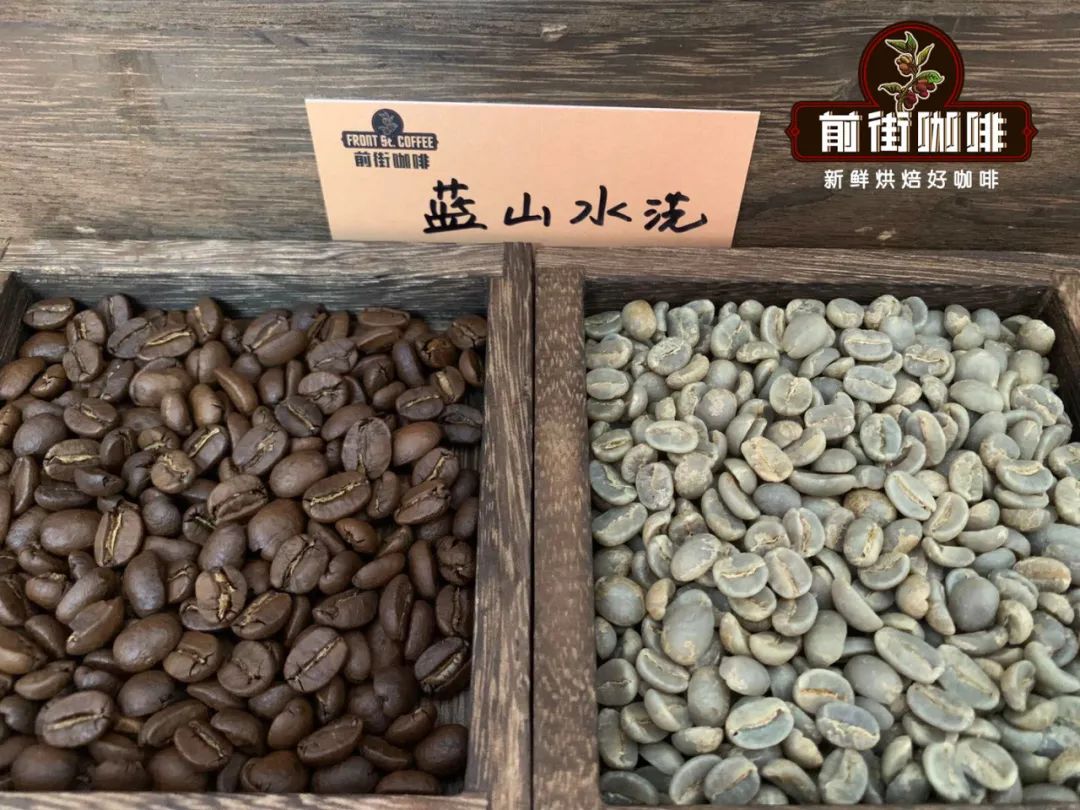
How to identify genuine Blue Mountain coffee? First, observe the appearance of the green beans: Blue Mountain green beans are usually jade green, plump, and slightly upturned at both ends. Second, roasted Blue Mountain coffee has a rich, multi-layered aroma, whereas fake Blue Mountain often has a thin or off-putting scent. Third, genuine Blue Mountain offers a balanced taste without any single flavor being overly prominent or missing—fake versions often have sharp acidity or excessive bitterness. Lastly, authentic Blue Mountain green beans are shipped only in wooden barrels, which bear the Rainforest Alliance frog certification mark—an important identifying feature.
The above content is compiled by CoffeeHunters, a coffee news website.


