







Introduction:Jamaican Blue Mountain coffee is renowned worldwide for its balanced flavor and rarity, making it a dream bean for many coffee enthusiasts. This article delves into the growing environment of Blue Mountain coffee, the CIB official grading system, the characteristics of the Typica variety, the washed processing method, and how to highlight its delicate flavors through pour over brewing. From altitude details, grade standards to practical brewing tips, this guide helps you fully grasp the essence of this top-tier coffee.
In an era when specialty coffee had not yet embraced fruity and floral notes as mainstream, Jamaican Blue Mountain coffee was already synonymous with high-quality coffee. This coffee not only boasts captivating aromas but also achieves an excellent balance between acidity, sweetness, and bitterness. However, the actual production of coffee beans from the Blue Mountains of Jamaica is extremely limited, and even if you’re willing to pay, it’s not easy to get your hands on them.
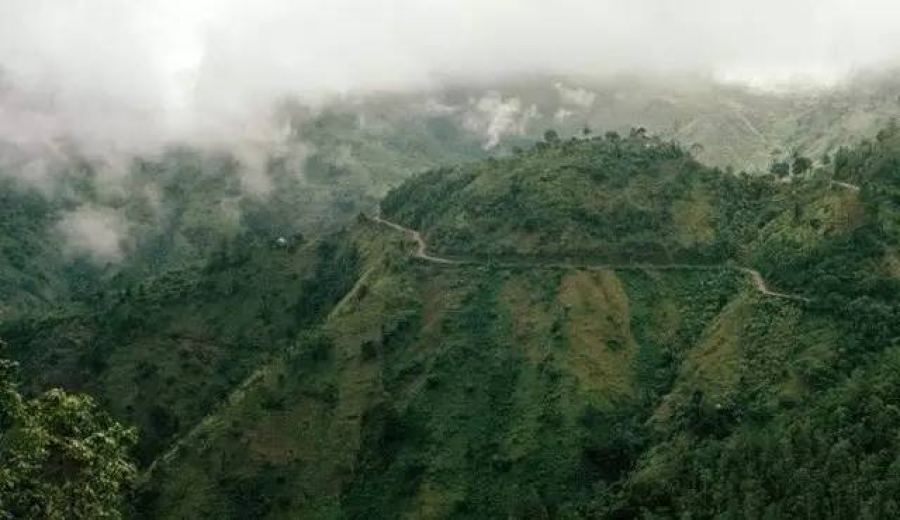
The name "Blue Mountain" coffee originates from the Blue Mountains in eastern Jamaica, a rugged region designated as a protected area but endowed with uniquely favorable growing conditions. The area enjoys a cool climate with an average annual temperature of around 27°C, fresh air, abundant rainfall, fertile volcanic soil, and significant diurnal temperature variation due to high altitude. These factors allow the coffee cherries to ripen slowly, accumulating richer aromatic compounds and forming the unique flavor foundation of Blue Mountain coffee.
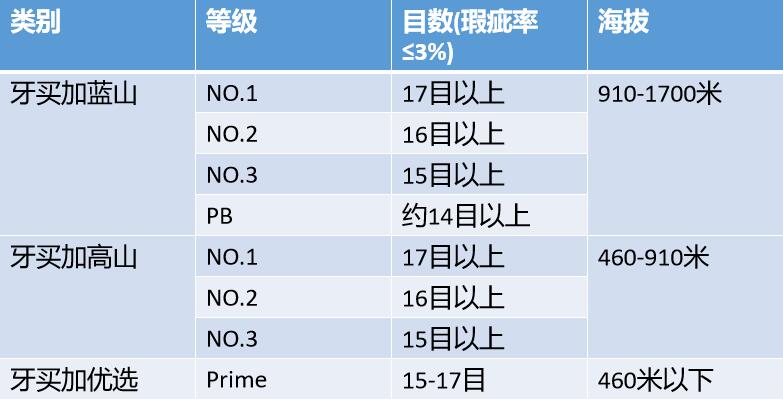
It’s worth noting that not all coffee grown in the Blue Mountain region qualifies as "Blue Mountain coffee." According to the strict standards of the Jamaica Coffee Industry Board (CIB), only Arabica Typica varieties grown at altitudes between 910 and 1700 meters within the four specific regions of St. Andrew, St. Mary, St. Thomas, and Portland can be officially certified as Jamaican Blue Mountain (Jamaica Blue Mountain). Coffee grown between 460 and 910 meters is classified as Jamaican High Mountain, while that grown below 460 meters is categorized as Jamaican Supreme. The higher the altitude, not only does harvesting become significantly more difficult, but the maturation period of the coffee cherries also lengthens, correspondingly increasing production costs.
Jamaican Blue Mountain coffee uses exclusively the Typica variety, an ancient Arabica heirloom cultivar first introduced to Jamaica from Martinique by British colonists in 1730. Typica is known for its pure, elegant flavor and outstanding acidity, but it is relatively delicate, with low disease resistance and yield. It requires more careful cultivation to ensure coffee quality.
Even if the above stringent conditions are met, Blue Mountain coffee is further graded based on the appearance of green beans and defect rates, divided into four grades: No.1, No.2, No.3, and PB (Peaberry, or pea berry). Among these, No.1 is the highest grade, requiring green bean particle size of 17 mesh or above per 300-gram sample, a defect rate below 2%, a moisture content of about 13%, and uniformly plump beans. It is widely recognized as the most premium Blue Mountain coffee on the market.
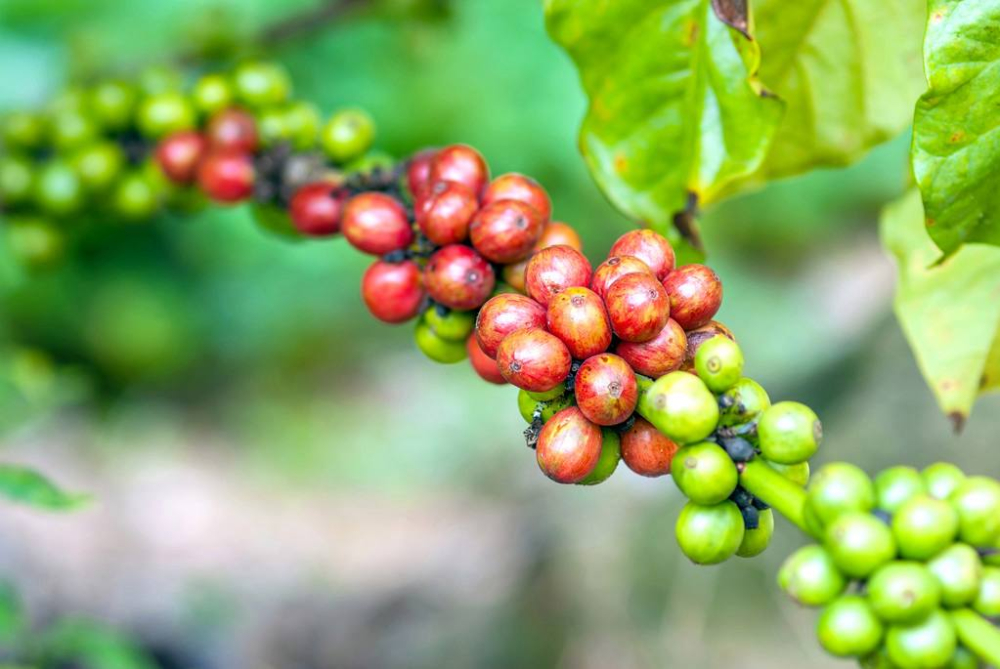
Blue Mountain coffee also places great emphasis on processing methods, primarily using the washed process. Although small experimental batches of natural sun-dried processing have occasionally appeared in recent years, washing remains the mainstream and the method that best showcases the classic flavors of Blue Mountain. The washed process more effectively removes defective beans, resulting in cleaner and brighter flavors. Taking the Clifton Estate as an example, farmers only select fully ripe, bright red coffee cherries during harvest, handpicking them carefully. They first remove floaters, then strip the pulp and fruit skin, allowing the beans to ferment in water for 12 to 18 hours. After fermentation, the beans are rubbed against each other and rinsed with water flow to achieve a smooth and clean surface.
After washing, the coffee beans are still covered by the parchment layer, with a moisture content as high as about 50%. They then undergo a long period of shade drying to steadily reduce the moisture content to 12% to 14%. If not sufficiently dried, the beans may continue to ferment or even mold, leading to flavor degradation. This is why washed Blue Mountain coffee ultimately presents a clear, balanced profile with minimal off-flavors, featuring distinct and harmonious flavor layers.
When it comes to purchasing Blue Mountain coffee, a common misconception is that "it can only be found in Japanese shops." This is closely related to historical factors. Before the 1960s, Jamaican Blue Mountain coffee enjoyed great prestige in the global specialty market, but in the late 1960s, climate disasters severely damaged the local industry. At this time, Japan’s UCC company stepped in to provide financial and technical support, introducing modern eco-friendly farming practices and helping Jamaica rebuild its coffee industry. In return, the Jamaican government signed a 30-year agreement with Japan, committing to supply 80% of its top-grade Blue Mountain coffee quota to the Japanese market first, with the remainder allocated to Europe, America, and other regions.
Due to the huge demand and strong absorption capacity of the Japanese market, local importers even resold some Blue Mountain coffee to other Asian regions such as Singapore, South Korea, Chinese Taipei, and Hong Kong, further fueling the Blue Mountain craze. Around the year 2000, this trend also spread to mainland China. It wasn’t until the 2008 Jamaican economic crisis, when the original supply agreement with Japan expired, that Blue Mountain coffee gradually became available to more countries. It’s reported that mainland China signed a cooperation intention with Jamaica in 2010 through the Hangzhou Coffee and Western Food Industry Association, and made its first direct import of Blue Mountain coffee beans in 2011.
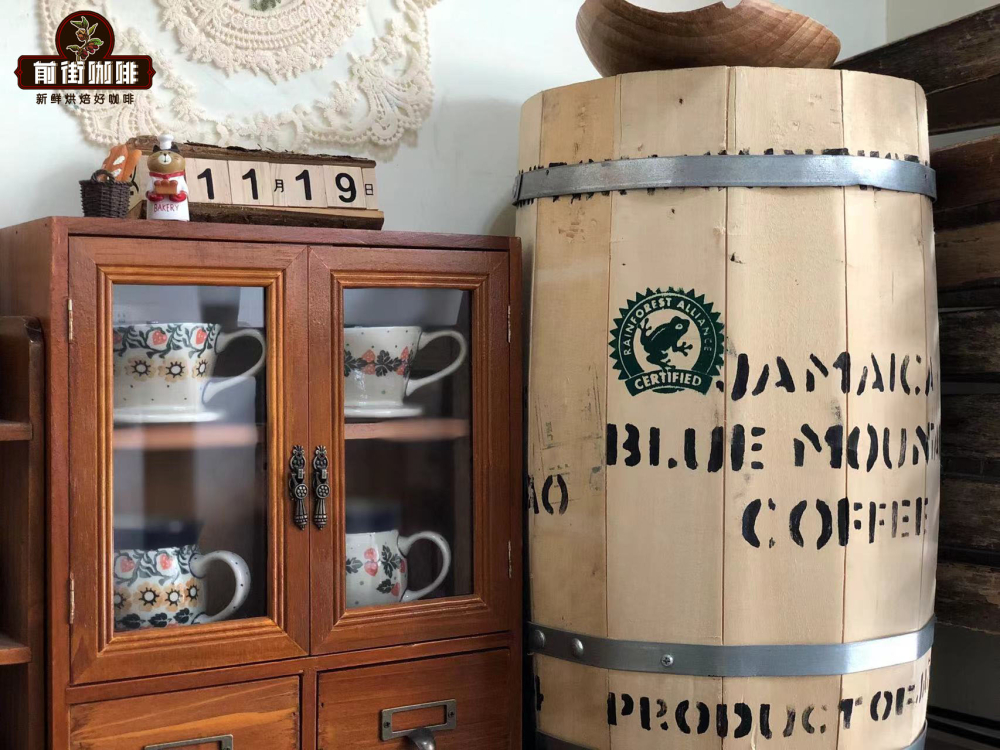
Authentic Jamaican Blue Mountain coffee usually comes with a certificate of origin from the Clifton Estate and is shipped in unique wooden barrels, a rare practice in other regions where coffee is typically packed in burlap sacks. Additionally, the rainforest tree frog logo often seen on the barrels indicates that the estate has been certified under the Sustainable Agriculture Network (SAN) standard and recognized by the Rainforest Alliance, further ensuring environmentally friendly production processes.
Regarding the brewing of Blue Mountain No.1 coffee beans, many believe that pour over is the method that best respects and highlights its flavor characteristics. Blue Mountain coffee has a rich aroma, and pour over allows for a clearer appreciation of its pure and delicate essence.
It is recommended to use freshly roasted Blue Mountain No.1 coffee beans, which require about 4 to 7 days of resting after roasting to achieve optimal flavor expression. This particular Blue Mountain No.1 is medium-dark roasted, enhancing the aroma of nuts and cocoa. It is suggested to use a KONO filter cone with a water temperature of 88°C, a powder-to-water ratio of 1:15, and a grind size referenced by 70% passing through a 20-mesh sieve in the Chinese standard—approximately medium-fine.
The specific brewing steps are as follows: First, wet the KONO filter cone with hot water to improve the seal between the filter paper and the cone and preheat the server. Then add 15 grams of coffee grounds, pour 30 grams of hot water for a 30-second bloom to initiate the release of coffee aromas. Next, pour water in small streams in a circular motion from the center outward until the total water volume reaches 125 grams for the first pour. Once the coffee bed descends to the middle of the cone, continue pouring until 225 grams, then let it drip through before removing the filter cone to enjoy a cup of Blue Mountain pour over coffee with balanced flavors and a long-lasting finish.
As soon as Blue Mountain No.1 is ground, it releases a rich aroma of chocolate and cocoa. During brewing, you can sense a caramel-like sweetness, and the taste reveals a full-bodied texture of nuts and dark chocolate. The acidity and sweetness are perfectly balanced, the mouthfeel is clean and refreshing, and the aftertaste is long and captivating. It is a classic choice for experiencing the top-tier flavors of Blue Mountain.
The above content is compiled by CoffeeHunters, a coffee news website.


