







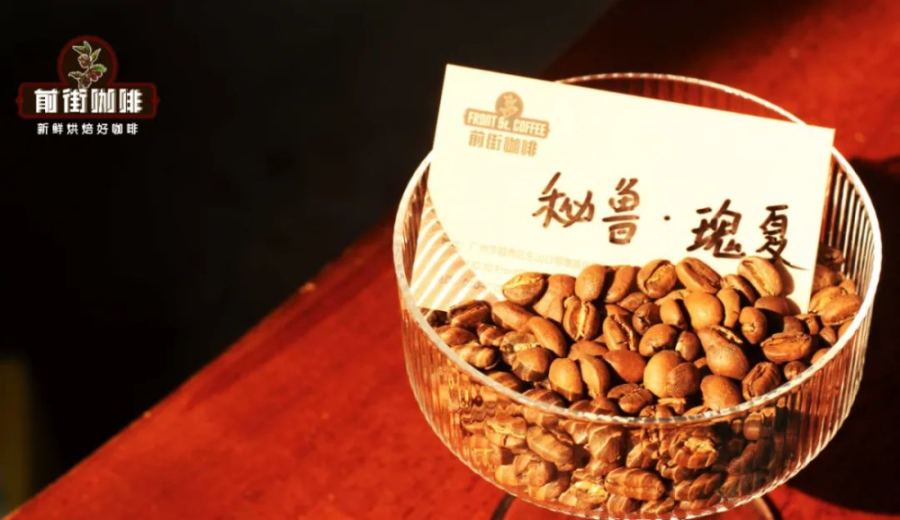
Introduction:Want to dive deeper into the unique charm of Peruvian coffee? This guide takes you through everything from regional distribution and historical background to processing methods and grading systems, offering a comprehensive understanding of this South American specialty coffee nation renowned for its high altitudes and washed processing. We also cupped a washed Geisha from Cajamarca, analyzing its bright acidity and delicate aftertaste to help you find your perfect bean.
Among the many South American coffee-growing regions, Peru may not be as well-known as Colombia or Brazil, but its coffee stands out in the international specialty market with its mild, balanced flavor and remarkable cleanliness. This South American country, known as the “Land of Abundance,” boasts the privileged highland environment of the Andes Mountains and is also the world’s largest producer of organic coffee. From its early days as an ornamental plant in courtyards to today’s refined industry chain led by smallholder cooperatives, Peruvian coffee has followed a unique development path. This article not only introduces Peru’s main producing regions, historical evolution, and grading standards but also includes a hands-on cupping of a washed Geisha from Cajamarca, taking you on a journey to explore its captivating flavors.
 Many coffee enthusiasts may be unfamiliar with Peruvian coffee, considering it a niche or non-mainstream origin. But in reality, the quality of Peruvian coffee is absolutely not to be underestimated. Its most distinctive feature lies in its clear flavor layers and mild taste, and in recent years, it has gained widespread acclaim for its exceptional cleanliness, gradually becoming a must-try for specialty coffee lovers. If you enjoy a balance of bright acidity and delicate fruity notes, Peruvian coffee is definitely worth adding to your tasting list.
Geographically, Peru is located in western South America, bordering Brazil, Chile, Colombia, Ecuador, and Bolivia, with a Pacific coastline stretching over 2,400 kilometers. The country features diverse terrain, including plateaus, mountains, deserts, and coasts, and its complex climate and ecosystems create varied agricultural potential. Especially in the high-altitude regions of the Andes Mountains, where coffee-growing conditions are exceptionally favorable, with average elevations ranging between 1,200 and 2,000 meters—some areas even higher—this is the key to producing high-quality coffee.
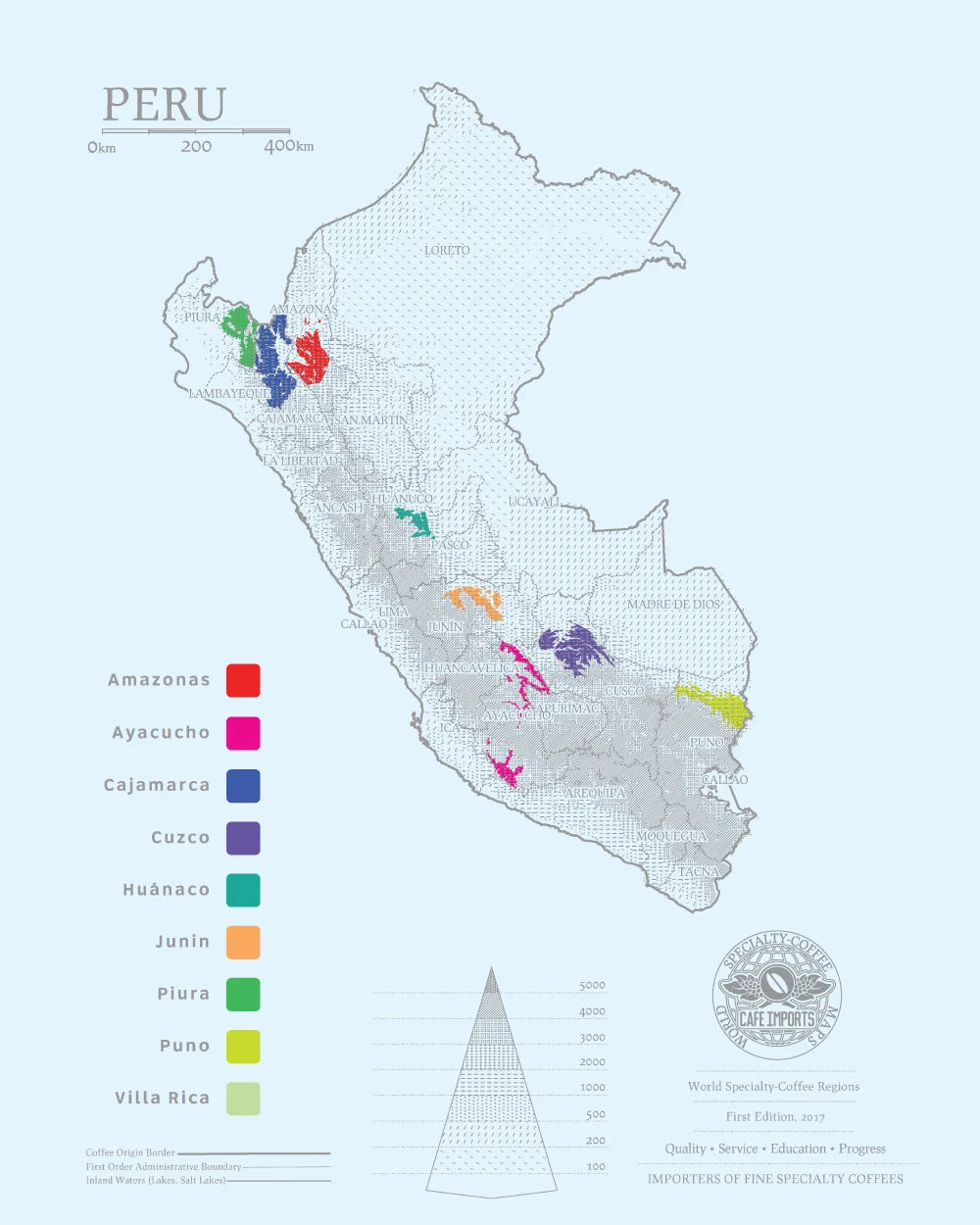
 Peru’s coffee-growing regions can be roughly divided into three major blocks: northern, central, and southern. Among them, the northern region is the largest, accounting for about 43% of the country’s total planted area, with elevations mostly between 1,250 and 1,950 meters; the central region accounts for about 34%, with elevations similar to the north; the southern region makes up 23%, with a wider elevation range from 900 to 2,050 meters. This multi-altitude distribution enables Peru to produce coffee beans with diverse flavors, catering to the taste preferences of different consumers.
Looking back at the history of Peruvian coffee, it dates back to the late 18th century when it was introduced by Spanish colonists and was initially grown only as an ornamental plant in courtyards. It wasn’t until after independence in 1821 that the government, aiming to replace the declining silver mining industry, began promoting cash crop cultivation. In the 1850s, influenced by the booming Brazilian coffee industry and the spread of coffee leaf rust, European immigrants started establishing coffee plantations in places like Cajamarca, introducing advanced cultivation techniques while employing indigenous people and Chinese laborers. From then on, the Peruvian coffee industry gradually took shape.
However, from the late 19th century to the early 20th century, large-scale hacienda systems became dominant, with about 80% of coffee produced on large estates. While this model temporarily boosted production, it also made the industry extremely dependent on international market prices. During the global economic depression of 1929, coffee prices plummeted, triggering social unrest. It wasn’t until 1968, when the military government implemented land reforms and redistributed land to individual farmers, that the monopoly of the haciendas was broken, shifting toward a production structure dominated by smallholders. But smallholder farms were small and scattered, making technology dissemination difficult and reducing production efficiency.
A turning point came in the 1980s, when, with the support of German churches and fair trade organizations, coffee cooperatives were established in northern Peru. Through centralized procurement and equipment sharing, production costs were effectively reduced and quality improved. After the signing of the North American Free Trade Agreement in 1994, Peruvian coffee began entering the international premium market with high standards such as “organic” and “Rainforest Alliance certification.” To this day, Peru has become the world’s largest producer of organic coffee, with 110,000 hectares of certified organic area—a feat closely tied to the geographical characteristics of the Andes, including its naturally low pest levels and high altitudes.
 Similar to other South American countries, Peru mainly grows Arabica varieties, but its grading system has its own unique features. Peru adopts an “altitude/hardness grading method,” which determines bean hardness and quality grade based on planting altitude. Generally, the higher the altitude, the slower the coffee beans grow, the more flavor compounds accumulate, and the richer and more balanced the taste becomes. This is why Peruvian coffee generally has a mild yet layered character.
In terms of processing methods, due to abundant water resources, Peruvian coffee is predominantly washed processed. The washed process includes: flotation to remove floaters, removal of pulp and skin, fermentation to remove mucilage, drying of parchment coffee, and finally hulling to completion. This method can precisely screen out defective beans, with easier control over the fermentation process, thus preserving the purest flavors of the coffee beans and delivering exceptional cleanliness. Additionally, washed Peruvian coffee often features soft fruity acidity, delicate aromas, and silky textures, making it widely favored in the market.
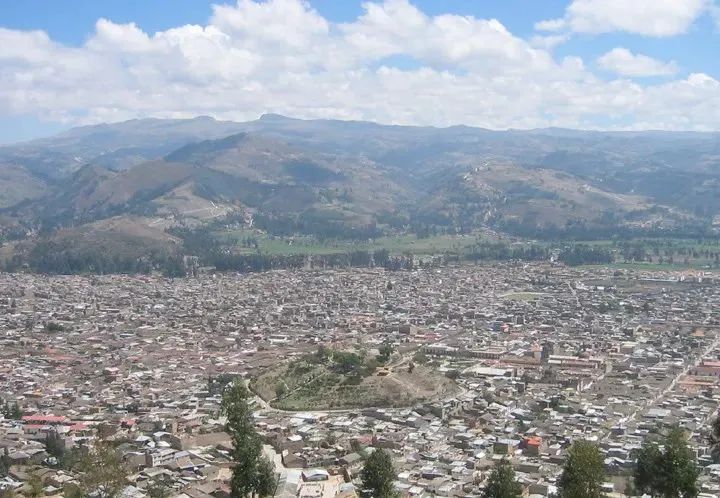
To better experience the charm of Peruvian coffee, we specifically selected a washed Geisha from the Cajamarca region for cupping. Cajamarca is located in northern Peru, near the Ecuadorian border, in the high-altitude area of the Andes Mountains. It not only has fertile volcanic soil but also boasts rich microclimates and significant diurnal temperature variations, making it a highly promising specialty coffee region. Early European immigrants chose this area as their primary planting base, and it remains synonymous with high-quality coffee to this day.
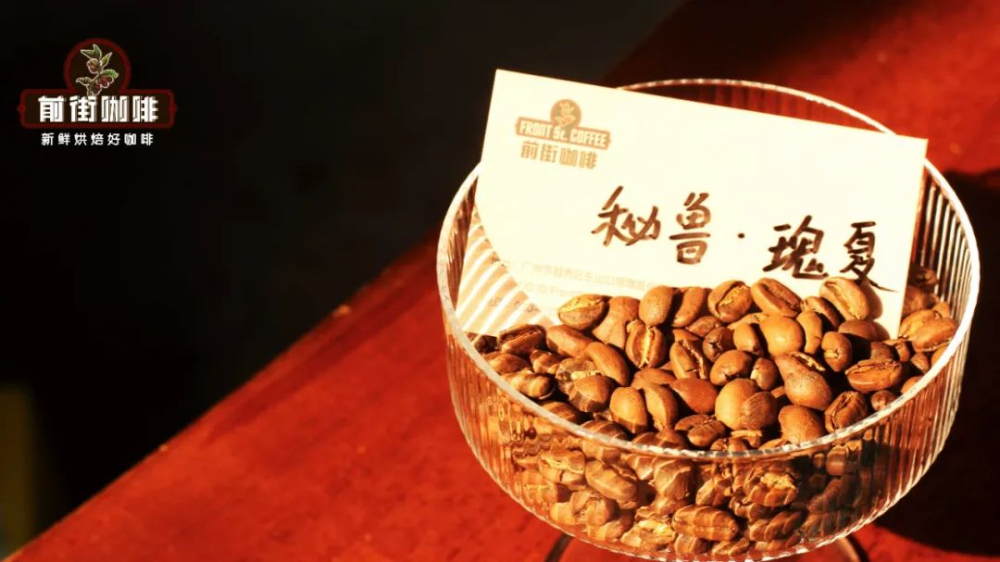
 This washed Geisha from Cajamarca is grown at an altitude of 1,800 to 1,950 meters, classified as SHB (Strictly High Grown). We used a medium-light roast to fully highlight its floral and fruity acidity characteristics. During cupping, the dry aroma exhibited pronounced white floral notes, berries, and citrus tones, with the hot water further releasing sweet aromas of peach and caramel. Upon tasting, the first impression is soft white floral notes, followed by distinct acidity from grapes, citrus, and prunes, delivering a refreshing and layered mouthfeel. The finish leaves a sweet aftertaste of black tea and caramel, with an overall clean, balanced acidity and sweetness and a long-lasting finish. As the temperature cools, the acidity becomes even brighter, accompanied by a rounded sweetness reminiscent of apricots—truly an impressive specialty coffee.
The above content is compiled by CoffeeHunters, a coffee news website.


