







Introduction:Kenyan coffee is renowned for its vibrant acidity and layered complexity, with the K72 washed processing method being the key to its clean and bright flavor profile. This article delves into the unique characteristics of Kenyan coffee-growing regions, its grading system, and the smallholder cooperative model. It also highlights the “Little Tomato” coffee beans produced by the Asali Factory in the Thika region, showcasing their dark plum acidity and tomato-like fruity notes. Additionally, it offers practical tips on filter choice, water temperature control, and grind size for a three-stage pour over, guiding you to brew a cup of Kenyan coffee bursting with flavor.
Kenyan coffee is characterized by its high acidity and distinct fruity flavors, making it especially favored by seasoned coffee enthusiasts. These coffees often exhibit aromas reminiscent of blackberries and grapefruits, with a refreshing taste and rich layers, making them particularly well-suited for iced coffee in the summer. Pairing them with acidic fruits like pomelo or cocoa-based desserts can further accentuate their flavor profile.
Kenya’s coffee industry is supported by a large number of smallholders, whose production accounts for an even higher proportion than that of large estates—approximately 60% to 40%, which is quite rare among major coffee-producing countries. Kenyan coffee beans are classified into seven grades based on size, shape, and hardness, with the highest being AA or AA+, followed by AB, PB, C, E, TT, and T. This grading system, similar to Colombia’s, is primarily based on bean appearance, but good looks don’t necessarily guarantee great flavor, so consumers should pay special attention.
Kenyan coffee farms can be divided into two categories: large plantations and smallholder farms. Large farms typically cover around five acres, but they are generally at lower altitudes, and the coffee beans they produce are only of medium quality overall. In contrast, higher-quality Kenyan beans mostly come from smallholder farms located on volcanic slopes at elevations above 5,000 to 6,000 feet. These smallholders produce only 20 to 70 bags per season and find it difficult to independently invest in washed processing facilities. Therefore, they form cooperatives, where the government funds the construction of washed processing plants to uniformly process the harvested coffee cherries, ensuring consistent quality.
The bright acidity and fruity character of Kenyan coffee are largely due to the widely used K72-hour double washed processing method.
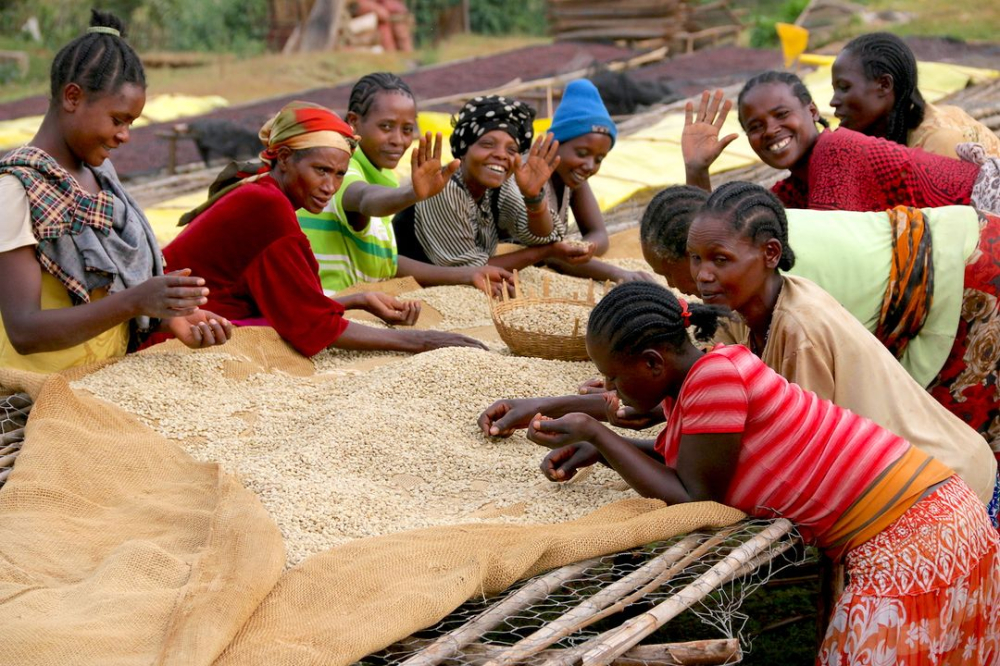
Traditional washed processing usually involves removing the skin and pulp, then fermenting the mucilage for 24 to 48 hours before drying. The Kenyan method, however, differs with a fermentation process lasting 72 hours. The specific procedure is as follows: on the day of harvest, high-quality coffee cherries are sorted, depulped, and undergo the first 24-hour fermentation, followed by washing with clean river water; this is then repeated for a second 24-hour fermentation with another wash, cycling through three times to accumulate 72 hours in total. This processing method allows the coffee beans to ferment slowly at low temperatures, resulting in a brighter, cleaner, and more rounded flavor profile.
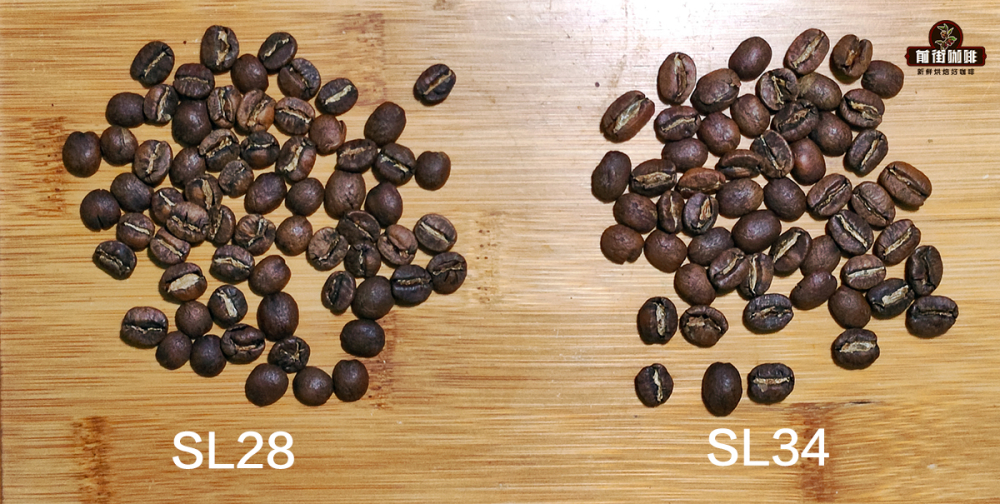
A certain coffee brand’s Kenya · Little Tomato coffee beans, produced by the Asali Factory in the Thika region, feature a highly distinctive dark plum acidity. With a solid mouthfeel and a tangy-sweet profile reminiscent of cherry tomatoes and grape tomatoes, they’ve earned their name. These beans are grown at altitudes between 1,550 and 1,750 meters, with the SL28 and SL34 varieties, processed using the K72 method. Flavor notes include dark plum, cherry tomato, Asian pear, brown sugar, and plum.
For a light-roast coffee bean like the Kenya · Little Tomato, here are three key pour over details worth paying attention to:
First, it’s recommended to use a fast-flowing filter. Since light roasts have less expansion and harder beans, fine particles are more likely to be released during grinding. If the filter’s flow rate is insufficient, it may cause clogging toward the end, affecting aroma and taste. For example, the V60 filter’s spiral ridges promote gas release and accelerate water flow, helping to fully highlight acidic aromatic compounds.
Second, water temperature control is crucial, with a recommended range of 90°C to 93°C. To enhance the brightness and tea-like aftertaste of the acidity, opt for 90°C to 91°C; if you prefer a fuller and more robust fruit acidity with body, increase the temperature to 92°C to 93°C.
Finally, grind size should be adjusted based on extraction time. A general guideline is to assess whether the grind is appropriate by observing the total extraction time: when using 15 grams of coffee for a three-stage extraction, if the total time is less than 1 minute and 40 seconds, the grind may be too coarse, leading to under-extraction and a sharp, thin flavor; if it exceeds 2 minutes and 20 seconds, the grind may be too fine, causing over-extraction and bitterness. For the coffee-to-water ratio, 1:15 to 1:16 is suitable—if you prefer intense berry flavors, go with 1:15; if you want to highlight white floral and citrus acidity, 1:16 is recommended for a more expansive flavor expression.
Here is a recommended three-stage pour over process: in the first stage, pour 30 grams of water for a 30-second bloom, using a small stream and circling from the center outward to ensure even saturation of the coffee bed. Then, in the second stage, pour a slightly larger stream steadily to add 95 grams of water, aiming for a total of 125 grams within about 55 seconds, which helps lift the coffee bed. When the liquid level drops halfway, proceed to the third stage, using a small stream to circle narrowly and pour 100 grams of water, reaching a total of 225 grams, with a final drip time of around 2 minutes. Another common approach is: bloom with 30 grams of water for 30 seconds, pour to 125 grams in the second stage, and when the water level is about to expose the coffee bed, pour to 225 grams in the third stage, keeping the total extraction time at 2 minutes exactly, then remove the filter once all the water has dripped through.
The above content is compiled by CoffeeHunters, a coffee news website.


