







Introduction:Sumatra Mandheling coffee is renowned for its bold, full-bodied profile, low acidity, and distinctive herbal and woody notes, yet it often polarizes due to its intense character. This article takes you deep into the geographical features of its primary producing region,Lintong, the science behind the wet-hulling process that creates its unique mouthfeel, and the stringent grading and selection criteria of Golden Mandheling—helping you better master the brewing essentials and flavor profile of this classic Indonesian bean.
When it comes to coffee with intense flavor and a strong personality, Sumatra Mandheling is definitely near the top. This Indonesian Arabica variety is known for its low acidity, rich body, and unique herbal, spicy, and woody aromas, making it a favorite among hardcore coffee enthusiasts. However, its bold character also deters some drinkers. If you enjoy layers of earth, herbs, or caramel in your coffee, Mandheling is definitely worth exploring.
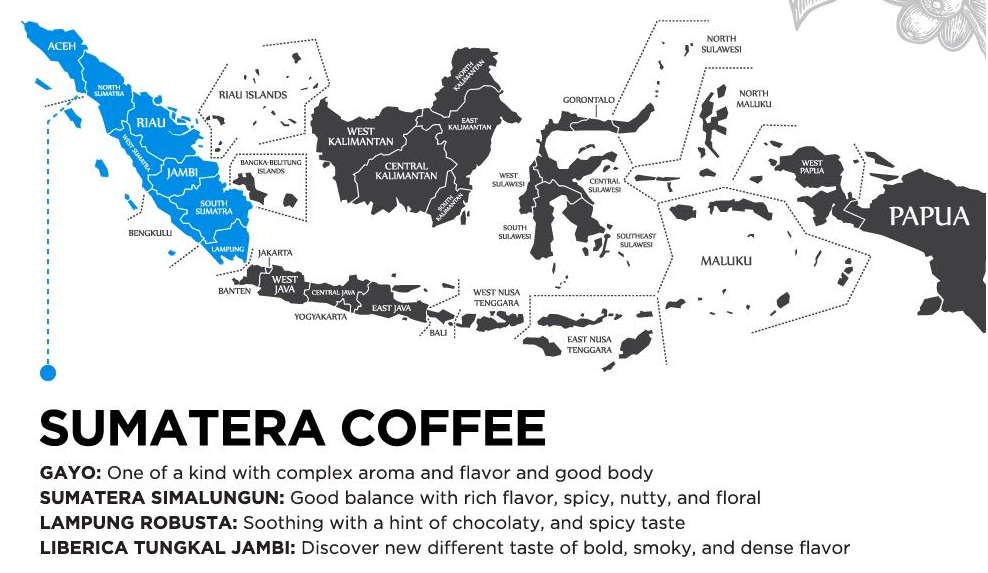
As an important origin for specialty coffee in Indonesia, Sumatra’s coffee cultivation is mainly concentrated in the northern and central parts of the island. Depending on differences in microclimate, altitude, and processing methods, it can be further divided into several well-known regions, the most representative being Aceh in North Sumatra and the Lintong region near Lake Toba in North Sumatra Province.
The Lintong region is not only the traditional heartland of Mandheling coffee but also imparts a rich, full-bodied taste and unique aroma profile to the beans through its distinctive wet-hulling process. Coffee from this area typically exhibits pronounced herbal, earthy, and caramel sweetness, with a tight and structured flavor profile—ideal for those who enjoy bold flavors and complex textures. If you want to experience the most authentic characteristics of Indonesian coffee, Mandheling from the Lintong region is the perfect starting point.
The unique flavor of Lintong Mandheling is not only due to its favorable geography and microclimate but also inseparable from its post-harvest processing method—wet-hulling. Indonesia’s year-round hot and rainy climate, especially during the coffee harvest season, makes traditional sun-drying methods difficult—not only is drying challenging, but frequent rain or over-fermentation can easily lead to defects. Additionally, most small-scale processing facilities lack the capital and equipment for washed processing, making wet-hulling the most practical solution that still preserves regional character.
In the wet-hulling process, after the coffee cherries are depulped, the sticky mucilage layer is retained, followed by brief fermentation and washing. Notably, the longer the fermentation time, the more pronounced the acidity tends to be. Therefore, some processors skip the fermentation step to suppress acidity, instead spreading the mucilage-covered parchment beans evenly and allowing them to dry naturally in high humidity. This approach effectively reduces acidity while enhancing smoothness and body.
When the green coffee beans are semi-dry and their moisture content has not yet fully stabilized, a specialized machine removes the outer parchment layer and part of the inner parchment. At this stage, the beans are still soft, so mechanical pressure can easily deform them, resulting in the characteristic “elephant hoof” shape. Frictional heat also catalyzes unique woody and earthy aromas. This special processing is the key that sets wet-hulling apart from other methods and contributes to the full-bodied, earthy notes commonly found in Mandheling.
If you’re seeking higher-quality Mandheling with clearer and more balanced flavors, then Golden Mandheling is definitely the next step up. Produced through meticulous selection by the renowned Indonesian exporter PWN and represented by the Golden Mandheling brand, this coffee adheres to extremely strict grading standards: only whole, plump beans with a minimum size of 18 mesh (approximately 8 mm or larger) are chosen, and no more than 3 defective beans are allowed per 300-gram sample—fully meeting the criteria for the highest international grade, G1.
Moreover, Golden Mandheling undergoes three rounds of manual sorting to ensure that every single bean that makes it into the bag meets the highest standards. Thanks to this rigorous selection process, Golden Mandheling showcases brighter acidity, a cleaner mouthfeel, and richer sweetness—virtually free of the rough, astringent notes often associated with regular Mandheling. Its flavor profile is more refined, making it synonymous with premium Mandheling and a recommended entry point for those new to bold Indonesian beans.
The above content is compiled by CoffeeHunters, a coffee news website.


