







Introduction:Colombian coffee is renowned for its stable flavor profile and diverse growing regions, making it a popular choice for both pour over and espresso blends worldwide. This article delves into how the geographical advantages of the Andes Mountains contribute to the high quality of Colombian coffee, examines how an organization regulates production regions and grades, and introduces the Excelso standard and green bean screen size grading. Additionally, it provides KONO filter brewing parameters and flavor analysis for a certain brand’s Huila single-origin bean, helping you master extraction techniques with precision.
Colombian coffee has long held a prominent place in the global market, celebrated for its gentle yet layered aroma, excelling in both pour over and espresso brewing. It is a classic favorite among many coffee enthusiasts. In a certain brand’s coffee lineup, Colombian beans are commonly featured in both single-origin pour overs and espresso blends, reflecting their widespread popularity.
What exactly makes Colombian coffee so highly regarded? The foremost factor lies in its exceptional geographical environment. Like most crops, coffee quality is influenced by multiple factors such as variety, altitude, climate, harvesting, and post-harvest processing. Especially altitude—every 100 meters of elevation gain results in approximately a 0.6°C drop in temperature. The cooler environment slows the ripening process of coffee cherries, allowing the beans more time to accumulate sugars and flavor compounds, resulting in a richer taste. The Andes Mountains in Colombia provide just such an environment.
The Andes Mountains stretch across western Colombia, composed of three major mountain systems with fertile, mineral-rich soils. Coffee is primarily grown at altitudes between 800 and 2,300 meters. This elevation range not only enjoys ample sunlight but also benefits from moderate cloud cover and shading, which helps the coffee ripen slowly. Local growers often plant coffee trees under banana trees or tall shade-providing trees, and set up shade structures during the seedling stage to maintain optimal humidity and shade. This allows the coffee beans to develop steadily under conditions of small temperature variations and high humidity, thereby accumulating more aromatic compounds.
The excellence of Colombian coffee is not solely a gift of nature. Coffee is a vital cash crop and national beverage in the country, and local coffee farmers invest significant effort in cultivation and post-harvest processing. Particularly in manual sorting, precise fermentation, and the application of cupping techniques, these practices further elevate the overall performance of the coffee, making every cup a delightful surprise.
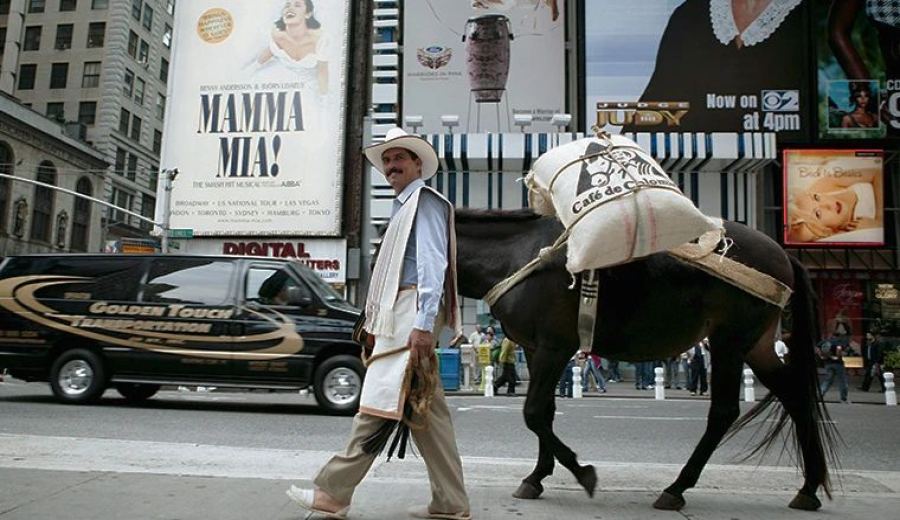
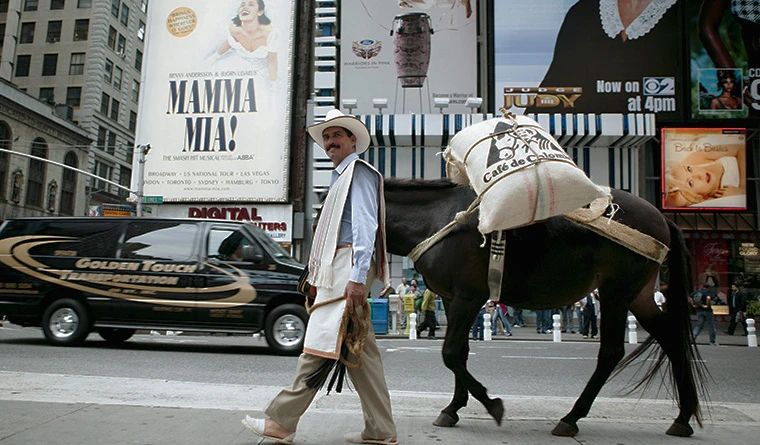
So, where are Colombia’s specialty coffees mainly produced? In the early days, Colombian coffee was mostly exported under regional names, with specialty beans often belonging to micro-lots. With the rise of the coffee industry in the 20th century, the Federación Nacional de Colombia (abbreviated as FNC, or the Colombian Coffee Growers Federation) played a pivotal role.
The FNC is one of the world’s largest agricultural non-governmental organizations, representing over 560,000 coffee farming families. It is dedicated to promoting the Colombian coffee brand and maintaining export quality. The organization is not only responsible for international marketing but also invests substantial resources in domestic planting techniques, production management, and farmer education, providing comprehensive support to smallholder farmers.
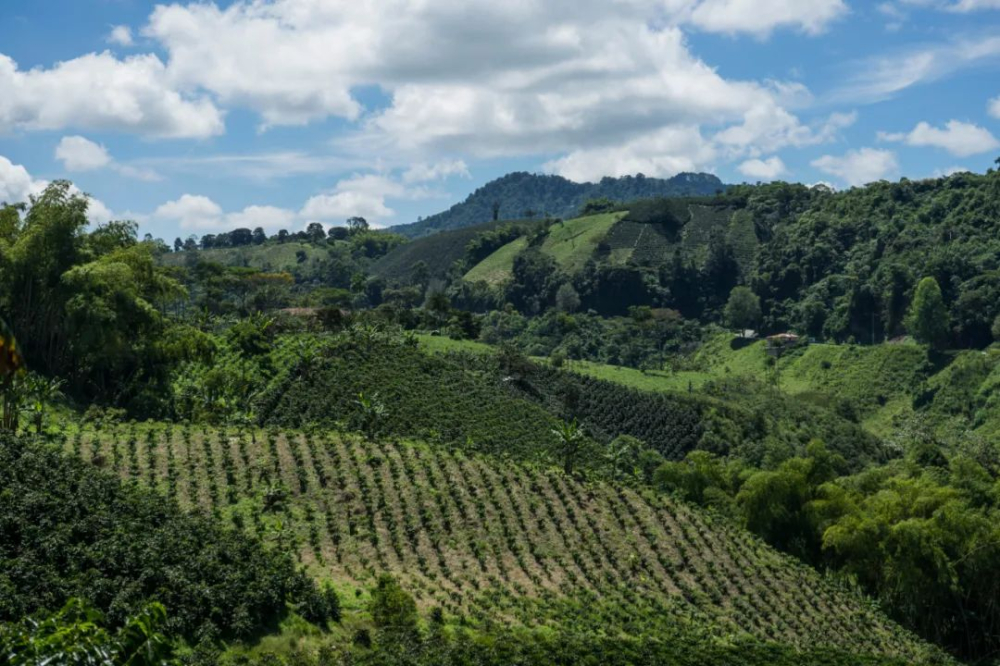
Currently, Colombia has 590 municipalities and 14 major coffee-producing regions, with a total cultivation area of 875,000 hectares. The vast majority are small farms, with an average planting area of just 2 to 3 acres per household. Smallholders typically send their coffee to community processing stations for washed processing, or conduct preliminary processing at home before sending it for grading.
Geographically, Colombia’s coffee-growing regions can be divided into three major blocks: northern, central, and southern. Among them, specialty coffee is mainly concentrated in southern regions above 1,500 meters in altitude, such as San Augustin in Huila Province, Popayan in Cauca Province, as well as Nariño and Tolima. The coffee produced in these regions often features bright acidity, berry notes, and caramel aromas, with prominent sweetness and rich flavor layers.
Colombia grows a wide variety of coffee cultivars, with traditional Arabica varieties still dominating, such as Caturra, Bourbon, Typica, and Pacamara. In recent years, rare varieties such as Gesha have also gradually emerged, though they are mostly produced in small batches. A certain brand’s Huila single-origin bean, for instance, uses the widely planted Caturra variety, processed with natural washed methods. After roasting, it presents a balanced, easy-drinking flavor with sweet and acidic harmony.
Many people wonder: in Colombia, is bigger always better when it comes to beans? The answer is closely tied to the export grading system. Before export, Colombian green beans are graded based on screen size (i.e., bean size), with higher sieve numbers indicating larger beans that can pass through. Common grades include UGQ, EP, and Supremo. However, regardless of screen size grade, as long as they meet export qualifications, they are all uniformly classified asExcelsograde.
Excelso is the most widely adopted export standard currently used by a certain organization, and also the top grade for Colombian green beans. According to the specifications, over 50% of the 500-gram green bean sample must consist of beans larger than screen 15, with no more than 5% between screens 12 and 14. All beans must be larger than screen 14. Furthermore, the green beans must be free of pests, have uniform color, no off-odors, pure flavor, a moisture content not exceeding 12.5%, and a total defect score not exceeding 24. Each batch of green beans must indicate the region, processing method, and screen size grade—for example, a certain brand’s Huila single-origin bean is labeled as Colombia Huila Supremo SC17/18 FNC, facilitating traceability of origin.
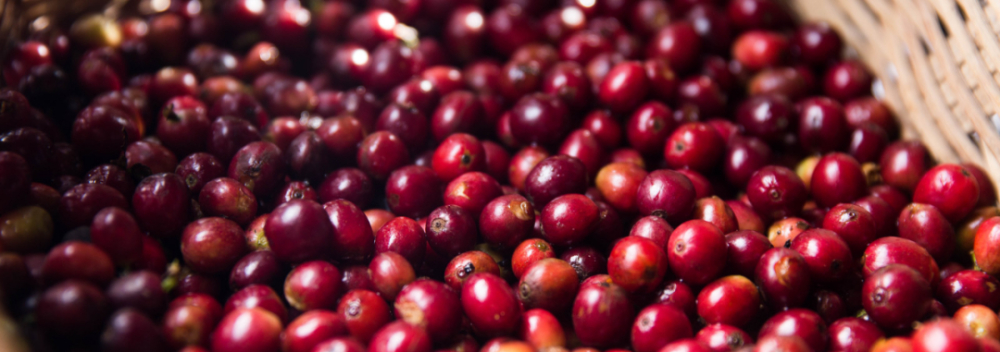
With an understanding of grading, let’s move on to practical brewing recommendations. The flavor descriptions of each coffee from a certain brand are based on freshly roasted beans (typically within 5 days post-roast), as over time, aroma can dissipate, affecting extraction performance. To ensure full flavor, the brand insists on shipping only freshly roasted beans, allowing consumers to enjoy them at their optimal tasting period.
Take the Huila single-origin bean as an example—it is medium-dark roasted, with primary flavor notes of nuts, chocolate, and caramel, and a full-bodied mouthfeel. Due to the darker roast level, the beans are more porous, increasing water absorption. Therefore, it is recommended to usea medium grind size (e.g., 75% through a 20-mesh sieve), and slightly lower the water temperature to90°C, to reduce the risk of over-extraction.
For brewing equipment, theKONO filteris recommended. Its unique rib design only features vent holes at the top quarter of the filter, so when the water level exceeds this point, internal pressure in the filter gradually increases. Combined with a smaller spout, this prolongs the contact time between water and coffee grounds, effectively extracting soluble substances from the coffee, thereby enhancing the full-bodied mouthfeel.
Specific parameters are as follows:
Filter: KONO
Water temperature: 90°C
Grind size: 75% through a 20-mesh sieve (medium grind)
Coffee-to-water ratio: 1:15
Coffee dose: 15 grams
Brewing method: three-stage extraction
Steps:
1. Place the coffee grounds in the filter, pour in twice the amount of water (about 30 grams) for blooming, for around 30 seconds, forming a dome.
2. Then pour water in small streams in a circular motion from the inside out, until reaching 125 grams, then pause and wait for the coffee bed to descend to the middle of the filter.
3. Finally, continue pouring with a fine stream until reaching 225 grams. Total extraction time is about 2 minutes, until all the coffee liquid has dripped through.
This Colombian Huila single-origin bean delivers an immediate impression of distinct chocolate, nut, and caramel aromas upon tasting. The mouthfeel is smooth and sweet, with a moderate fullness and a clean, defect-free profile. As the temperature drops, a light acidity gradually emerges, adding a pleasant finishing note to the overall flavor.
The above content is compiled by CoffeeHunters, a coffee news website.


