







Introduction:Although an espresso shot is only about 30 milliliters, it is the soul base of classic coffee beverages such as lattes and cappuccinos. The key to extracting a balanced-flavor espresso lies in precisely mastering parameters such as dose, yield, grind size, and time. This article will delve into how these variables affect the aroma layers, richness of mouthfeel, and body of the espresso, helping you dial in an ideal shot with caramel sweetness, berry acidity, and a rich body.
Among many coffee beverages, espresso has the smallest single serving size, yet it is the foundation of milk-based drinks like Americano, latte, and cappuccino. A high-quality espresso not only showcases the inherent flavor characteristics of the coffee beans but also serves as the crucial base for crafting complex beverages. However, to extract an espresso that is flavor-balanced, smooth in texture, with appropriate crema and body, one actually needs to precisely control numerous variables—including dose, yield, grind size, and time—within just 25 to 30 seconds.
The Extraction Principles and Core Challenges of Espresso
Regardless of the brewing method used, the barista’s goal is to extract about 30% of the water-soluble substances from the coffee beans through water. These include acids, sugars, oils, and aromatic compounds. However, these substances are not released all at once. About 20% of them are small molecules that bring pleasant aromas and are quickly dissolved in the initial phase; the rest are larger molecules, which, if extracted for too long or under incorrect conditions, can instead bring out excessive woody notes or bitterness. Therefore, how to control extraction time and pressure to allow the “good stuff” in the coffee to be released just right is the biggest challenge for baristas.
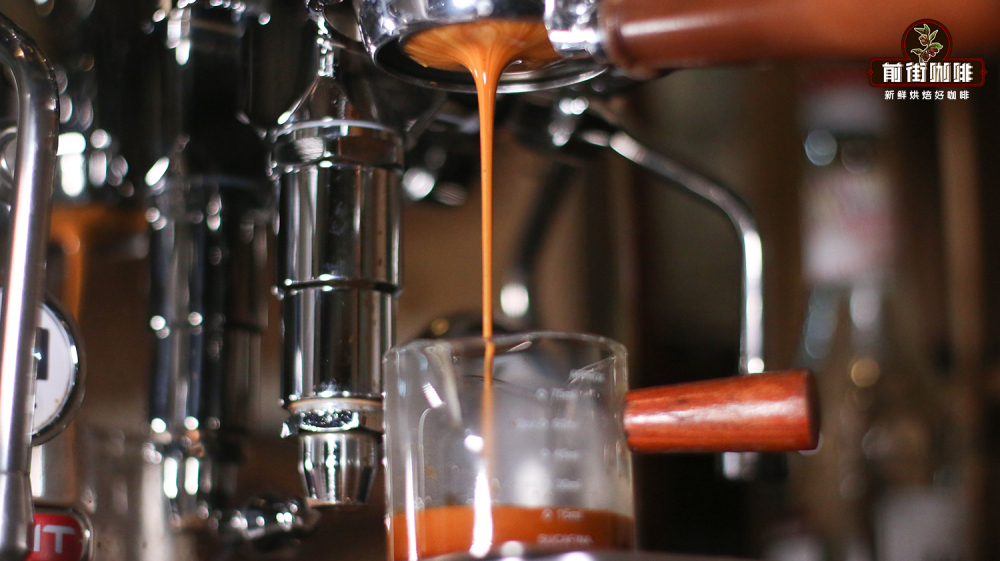
The reason why espresso is so intense and flavor-concentrated is precisely because it uses high pressure (typically around 9 bar) to forcibly push hot water through a tightly packed coffee puck in an extremely short period of time, extracting a high concentration of aromatic substances. But it is precisely because of the high pressure and short time that any slight deviation in parameters can lead to uneven extraction or flavor imbalance. Therefore, control over dose, yield, grind size, and time becomes even more crucial.
An In-depth Look at the Four Key Extraction Parameters
In practical operation, there are numerous factors that affect the outcome of espresso extraction, including water temperature, machine pressure, puck tamping evenness, distribution technique, portafilter basket specifications, dose, yield, and grind size, among others. Among these, water temperature and pressure are usually preset by the espresso machine, while tamping and distribution, though highly influential, mostly rely on the barista’s feel. For most users, the four most frequently adjusted and easiest-to-control variables are:Dose, yield, grind size, and time.
Among them,grind sizenot only determines how easily water passes through the coffee puck, but also directly affects extraction flow rate and overall flavor expression. If the coffee is ground too coarse, the flow rate will be too fast, resulting in under-extraction—the coffee may taste thin, overly acidic, and lack body. Conversely, if it is ground too fine, it can easily lead to over-extraction, causing the coffee to taste burnt, bitter, and astringent, with an overly thick mouthfeel or even smoky notes. In addition,the amount of coffee dosealso affects the density of the puck, thereby altering water resistance and extraction time.
As forbrew ratio(i.e., the ratio of coffee dose weight to yield weight), it is an important indicator for judging whether the extraction is just right. A common standard ratio is 1:2—for example, using 20 grams of coffee to yield 40 grams of espresso. This ratio can provide good flavor balance and richness in most cases. Of course, depending on the characteristics of the coffee beans and individual taste preferences, it can also be fine-tuned to 1:1.8 or 1:2.2, but beginners are recommended to start with 1:2 to get familiar.
As forextraction time, it is generally recommended to be between 25 and 30 seconds. If the time is too short, only the acidic substances and some aromas from the early phase may be extracted, leading to incomplete flavors; if the time is too long, undesirable large molecules may also be released, causing unpleasant off-flavors or excessively harsh bitterness. If you wish to extend or shorten the extraction time, you can achieve this by adjusting the grind coarseness or slightly modifying the dose.
Practical Adjustment Strategies and Flavor Outcomes
Taking a common blend of coffee beans as an example, an ideal espresso should exhibit caramel sweetness, a rounded body, moderate berry acidity, and a soft aftertaste. If during extraction you find the flow rate is too fast (for example, 20 grams of coffee yielding 40 grams in 26 seconds), you might end up with a coffee that tastes flat, overly acidic, and has a dry or astringent finish—usually due to under-extraction or uneven extraction in the later phase.
In this case, you can try slightly increasing the dose to 20.1 grams and reducing the target yield to 37 grams to shorten the extraction time and concentrate the flavors, while also observing changes in the thickness and color of the crema. If the coffee still tastes thin, the next step could be to adjust the grind finer to increase water resistance, extend the extraction time, and allow more aromatic compounds to be released.
Conversely, if the coffee tastes overly intense, bitter, and overly thick, it may be due to the grind being too fine or the extraction time being too long. In this case, you can try grinding coarser or slightly reducing the dose to allow water to flow more smoothly through the puck, avoiding over-extraction.
It is worth noting that espresso grind fineness is much higher than that of pour over coffee, so when adjusting grind size, it is recommended to make only small adjustments each time, and to record each set of parameters along with the corresponding flavor feedback. Only in this way can you gradually find the optimal extraction approach for that particular coffee bean.
For baristas who brew espresso daily in coffee shops, these parameter adjustments are often quickly judged based on experience and feel. However, for coffee enthusiasts trying to brew espresso at home, it is recommended to record the dose, grind size, yield, time, and final flavor outcome of each brew. Through continuous experimentation and comparison, you can more efficiently master the secrets of ideal extraction, and also reduce waste of coffee beans and water.
The above content is compiled by CoffeeHunters, a coffee news website.


