








Introduction:Want to dive deeper into the allure of Panamanian coffee? This article provides a comprehensive exploration of the history, regional characteristics, and flavor profiles behind Panama’s specialty coffee. With a special focus on the Geisha variety, it introduces key processing techniques in washed methods and offers practical pour over parameters and tips, allowing you to brew classic flavors with bright acidity and floral-tea aromas at home.
Though small in land area, Panama plays an indispensable and pivotal role in the global specialty coffee scene. From its first introduction in 1742 to its current fame for Geisha, this mountainous country nestled between the Caribbean Sea and the Pacific Ocean has, thanks to its unique geography and rigorous cultivation management, produced numerous high-altitude coffees that have won countless awards. This article starts with a historical overview, then introduces the microclimate advantages of the three main regions in Chiriquí Province, along with the delicate flavors of Boquete washed Geisha and brewing suggestions, to take you deeper into this flavor-rich treasure land.

Although Panama’s coffee cultivation history is not as long as that of neighboring Costa Rica or Guatemala, its development speed and international influence are remarkable. The earliest recorded introduction of coffee was in 1742, when a ship from French Martinique carried a batch of coffee beans upon arrival in Portobelo. However, it wasn’t until the 1780s that settler Pedro Antonio de Ayarza attempted cultivation locally but failed due to climatic and topographical constraints. It was not until the 1820s that coffee gradually took root in other highland areas of Panama, even replacing chocolate as the mainstream beverage and competing with Europe’s prevailing tea culture.
Geographically, Panama is uniquely blessed, located in the narrow strip of Central America, bordering Costa Rica to the north and Colombia to the south, with both the Caribbean Sea and the Pacific Ocean on either side. This special location gives rise to diverse microclimates, especially in the Boquete Valley area, where altitudes exceed 6,500 feet, temperatures and humidity are moderate, and fertile volcanic soils allow coffee cherries to accumulate rich aromas and complex flavors. In addition, the construction of the Panama Canal indirectly promoted the internationalization of the coffee industry, attracting many foreign investors and technical experts, including bankers and engineers who turned to coffee cultivation. They introduced refined management and high-standard processing procedures, laying the foundation for the high quality of Panamanian coffee.
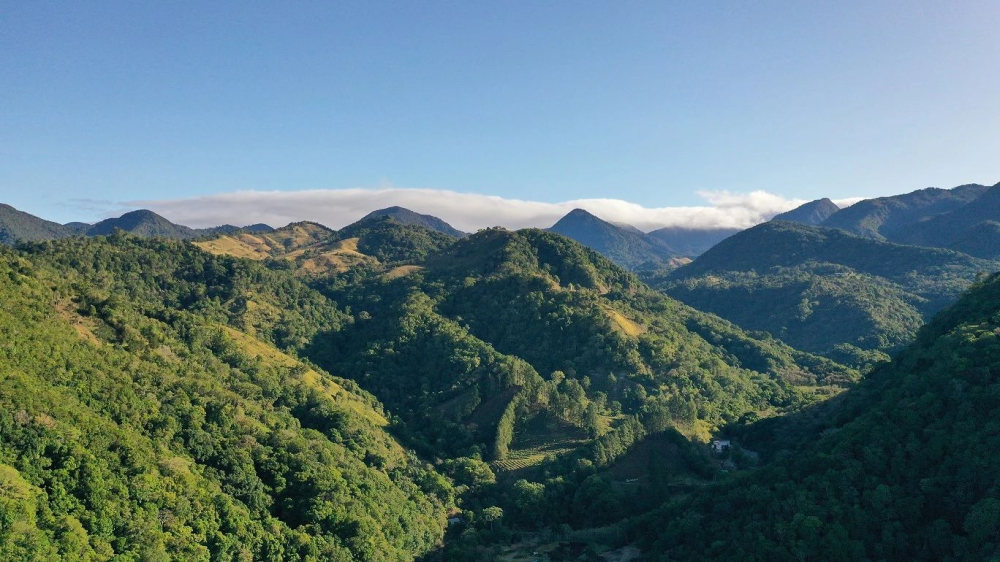
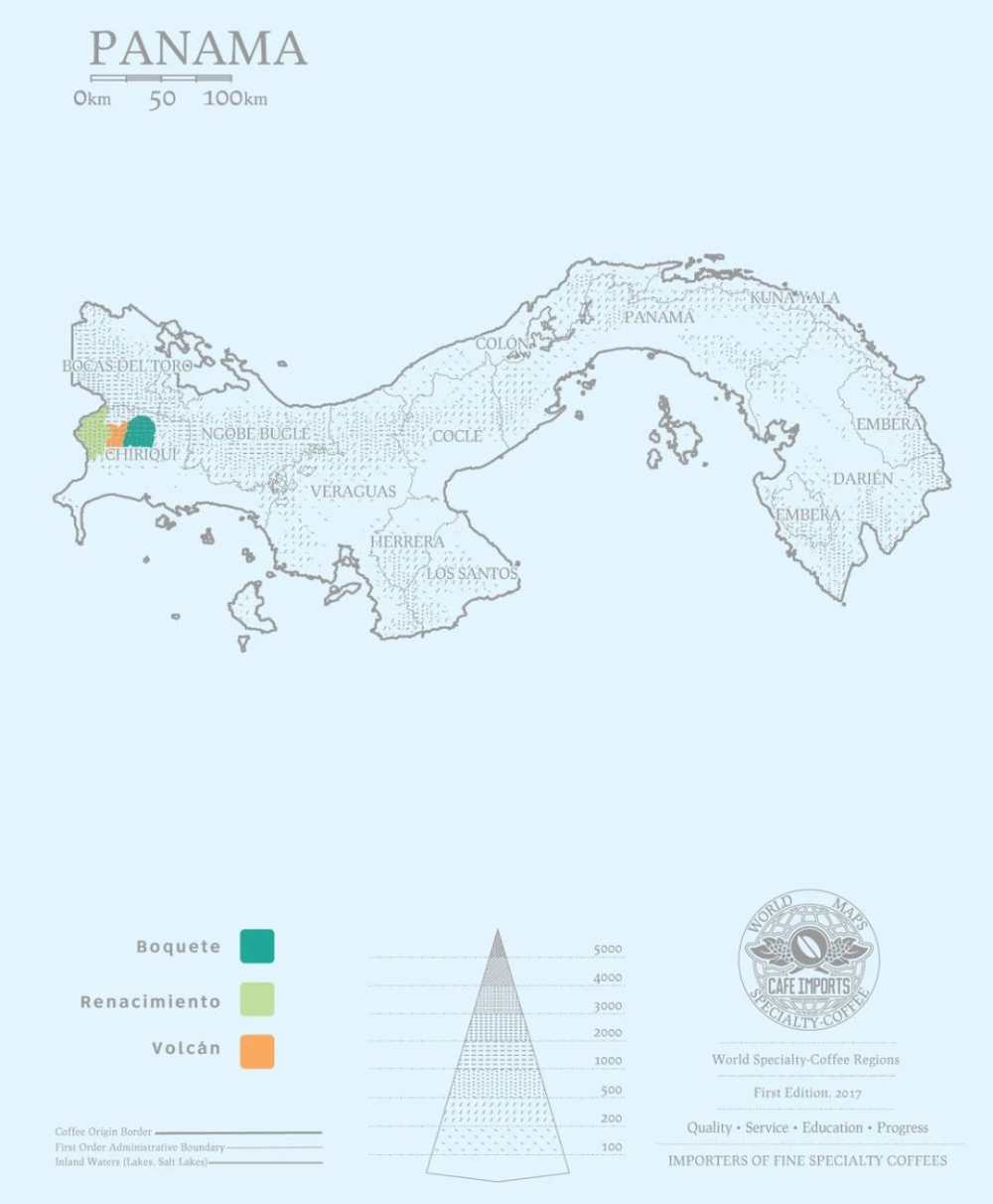
Coffee cultivation in Panama is mainly concentrated in the western Chiriquí Province, which includes three well-known regions: Boquete, Volcán, and Renacimiento. All three are situated along the Central American Ridge, near the Barú Volcano, at high altitudes and cool climates, particularly suitable for Arabica varieties. Among them, Boquete is regarded as the birthplace of Panama’s coffee industry. Since the late 19th century, European immigrants have settled here and developed coffee plantations. Currently, the region has about 50 to 75 coffee farms and 15 processing plants, with planting altitudes mostly around 1,600 meters. The fertile volcanic soil, coupled with the unique morning mist and dry climate, slows the ripening process of coffee cherries, resulting in medium to high acidity and layered flavor profiles.
Chiriquí Province is not only a hub for coffee but also an important producer of purebred horses, flowers, and fruits and vegetables. According to official statistics, there are over 8,000 coffee farmers nationwide, most of whom manage small farms no larger than 30 hectares. The main harvest season runs from September to December, during which members of the indigenous Gnobe Bugle (commonly known as Guaymíes) are often involved in harvesting. These experienced coffee pickers, skilled in their work and charging relatively higher labor fees, also add a unique humanistic touch to the coffee fields with their colorful bead ornaments and traditional attire.
Before 1989, Panamanian coffee prices were regulated by the International Coffee Agreement. After the agreement collapsed, international market prices plummeted, once dropping from $1.2 per pound to $0.74. Faced with the impact of the commercial coffee market, Panama established the “Panama Specialty Coffee Association (SCAP)” in 1996 through the joint efforts of seven major estates. The association organized green bean competitions and auctions, dedicated to promoting high-quality specialty coffee. This move not only successfully enhanced the international reputation of Panamanian coffee but also laid a solid foundation for the future rise of the Geisha variety.
When talking about Panamanian coffee, one cannot overlook the world-renowned Geisha variety. Its unique aroma and flavor profile have made it a standout in the specialty coffee world. Generally, Panamanian Geisha is processed using the washed method: first, the coffee cherries are depulped by a machine to remove the outer skin and part of the pulp, then the mucilage-covered beans are soaked in water for about 24 hours of fermentation, during which microbial action breaks down sticky substances. After fermentation, running water is used to remove the mucilage and residual pulp, and the parchment-covered beans are then placed on drying beds or in dryers to reduce moisture content to around 12%. Finally, the parchment is removed to complete the process.
The washed processing method highlights the cleanliness and clarity of the coffee’s flavor profile, making it especially suitable for showcasing the delicate acidity and floral-fruit notes of Geisha. Roasted Panamanian washed Geisha often emits elegant white flowers, citrus, and lemon acidity, along with a green tea-like fresh aftertaste, offering a balanced and layered overall flavor. To achieve the best results at home, it is recommended to choose a medium-light roast and use a fine grind with high water temperature, which helps improve extraction and brings out richer sweet and sour layers.
In practice, it is recommended to use the V60 dripper for pour over. Its unique spiral flow guide grooves and large-diameter design can effectively prolong the contact time between water and coffee grounds while concentrating the water flow pressure, resulting in more layered coffee flavors. Here are the reference pour over parameters: use 15 grams of coffee grounds, with a 1:15 coffee-to-water ratio, and control the water temperature at 91–92°C. Grind size should be similar to fine sugar (about 80% of the grounds can pass through a #20 sieve). Use a three-stage extraction method: the first stage involves pouring 30 grams of water for a 30-second bloom; the second stage adds 120 grams of water to raise the coffee bed; and the final stage uses a slow stream to add 90 grams, with a total water volume of about 240 grams and a total extraction time of approximately 2 minutes and 10 seconds. This approach fully highlights the citrus and bergamot acidity of the Geisha, paired with a honey and green tea sweetness in the aftertaste, delivering a smooth and varied drinking experience.
The above content is compiled by CoffeeHunters, a coffee news website.


